


Luminous fast blue optical transients (LFBOTs) are the very unsexy name for something spectacular and mysterious: a bright flash of light lasting a couple of days with a dramatic blue hue. They have a distinct ultraviolet signature, leaving behind faint X-rays and radio waves. The source? Unknown. Although, the brightest one yet might have finally provided a clearer idea.
The rest of this article is behind a paywall. Please sign in or subscribe to access the full content.
If you are looking for quick events that might briefly outshine a galaxy, one usually goes for a supernova or a black hole gobbling up some gas. Neither of them seems to be the right fit for LFBOTs. The emissions for those events look very different.
The new LFBOT, called AT 2024wpp, points to a black hole being involved for sure, but instead of gobbling up some gas, it is destroying a whole companion star. And the black hole is not enormous like the ones usually spotted ripping stars apart, but is no larger than 100 times the mass of our Sun.
AT 2024wpp is so bright that it could never have been a supernova. It is 100 times brighter than the average supernova, an explosion that would require turning 10 percent of the star into pure energy in a matter of weeks. Black holes can make that happen.
“The sheer amount of radiated energy from these bursts is so large that you can’t power them with the collapse and explosion of a massive star – or any other type of normal stellar explosion,” first author Natalie LeBaron, a graduate researcher at UC Berkeley, said in a statement. “The main message from AT 2024wpp is that the model that we started off with is wrong. It’s definitely not caused by an exploding star.”
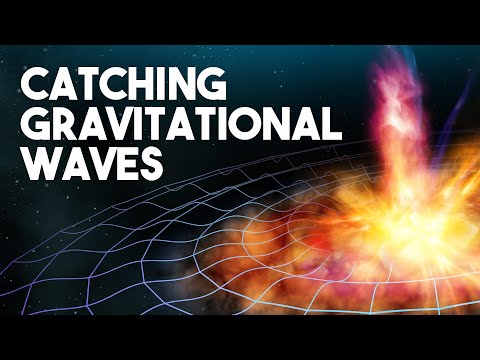
Gravitational wave observatories have been studying black holes that are in the right range to be the source of these LFBOTs. So far, though, no black hole collision has been seen with light-based observatories. Studying these bright blue flashes might give important hints on where to find these black holes and what their histories are.
“Theorists have come up with many ways to explain how we get these large black holes, to explain what LIGO sees,” added Raffaella Margutti, UC Berkeley associate professor of astronomy and physics. “LFBOTs allow you to get at this question from a completely different angle. They also allow us to characterize the precise location where these things are inside their host galaxy, which adds more context in trying to understand how we end up with this setup – a very large black hole and a companion.”
A previous LFBOT known as the Cow (AT 2018cow) was just 10 percent of the brightness of AT 2024wpp. The team believe that a star about 10 times the mass of the Sun was shredded by a black hole. A large portion of the material slammed against the material already swirling around the black hole, producing X-rays, ultraviolet light, and blue light.
Some material also traveled towards the poles of the black hole, and was ejected as a jet at incredibly high speed, maybe 40 percent of the speed of light. The jet of material encountering the surrounding gas was then responsible for the radio wave emission seen in LFBOTs. AT 2024wpp had a tiny hydrogen emission, so researchers believe that the companion star was old and evolved, like a Wolf-Rayet star.
LeBaron’s paper and a second paper have recently been accepted to The Astrophysical Journal Letters and are currently available via arXiv.


Source Link: We May Finally Know What Causes These Bizarre Bright Blue Cosmic Flashes