Some species on Earth are exceptionally long-lived, from ancient trees to the untimely demise of Ming the clam. Whales also can possess lifespans well into the hundreds, but these have often been thought of as outliers for a few individuals and not a general rule for whale species. However, scientists have explored whether this is actually true and whether whales might be much longer lived than we thought. The conclusion is yes, they probably are, and there’s a tragic reason we didn’t know that for sure yet.
Working out the age of whales can be difficult, and while ear plug lamina (essentially whale ear wax), which develops in layers per year, has been used in the past, the longest-lived whales have typically been identified by items embedded in their blubber. For example, in 2007, a Yankee Whaler harpoon tip was found in the blubber of a bowhead whale, which was later found to be manufactured in 1885, and further research has suggested that they can live to at least 200 years.
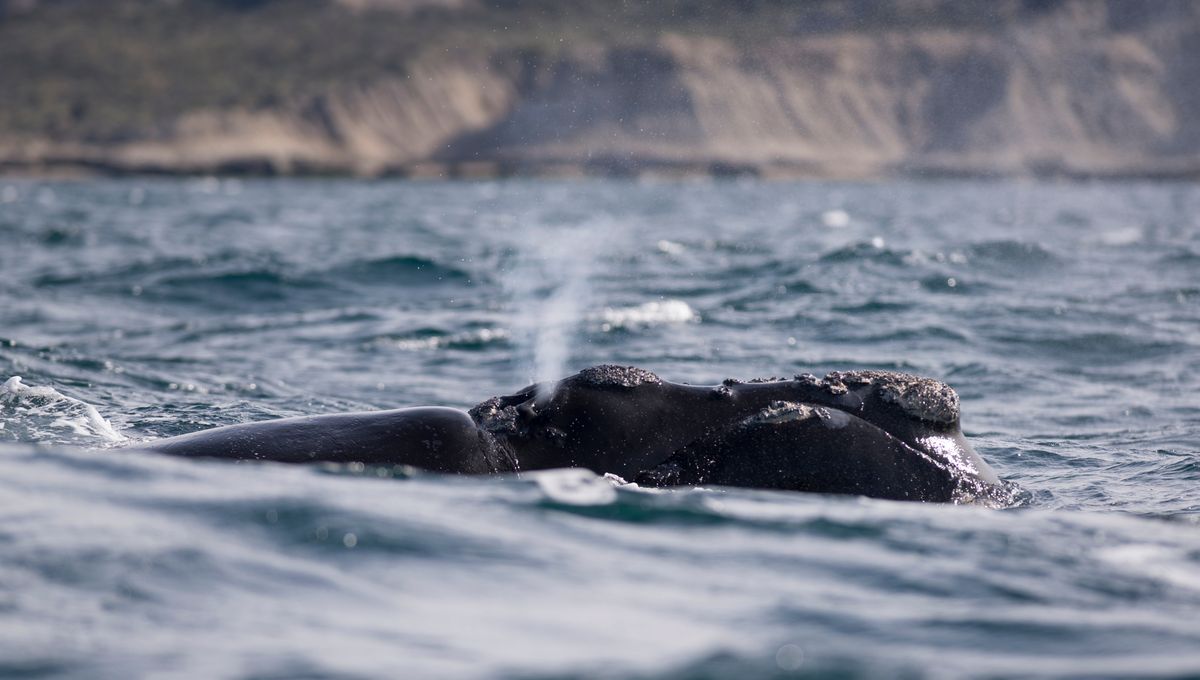
Research into right whales by University of Alaska Fairbanks Associate Professor Greg Breed and colleagues last year revealed that right whales can actually live to probably over 130 years, and that extreme longevity may be the rule, not the exception in balaenid whales (bowheads, right whales, and North Atlantic right whales). However, if you know why right whales are called this, you may have an inkling why we are only starting to know this now.
“We didn’t know how to age baleen whales until 1955, which was the very end of industrial whaling,” explained Breed last year. “By the time we figured it out, there weren’t many old whales left to study. So we just assumed they didn’t live that long.”
In their study, Breed and colleagues used computer modelling to work out the lifespans of southern right whales (Eubalaena australis) and North Atlantic right whales (Eubalaena glacialis). They found that SRWs could live to over 130 years, though current estimates put their lifespans between 70 and 80 years.
For NARWs, the estimates predicted a far shorter lifespan of just 22 years old. However, there are many similarities in the lives and ecologies of these two whale species, so the team thinks they could well have a physiology capable of reaching 100 years or more, and both species could even get close to 150 years old.
They suggested that for the NARWs, the effect of humans has artificially shortened their predicted lifespan. North Atlantic right whales are critically endangered, after whalers hunted the species to the brink of extinction in the 1890s because they were the “right” whale to kill: they are slow, docile, they have baleen that was used for corsets, and they have a high blubber count, which means they float when dead so were easier to recover. While whaling is not the threat it once was, continuous human activities like fishing, deep-sea mining, trawling, and general ocean noise have not allowed the population to recover to pre-whaling numbers. Now it is thought that only a few hundred of this species remain.
“Industrial whaling, which for most species ended only 60 years ago, would have required any individuals now aged over 100 years to have survived at least 40 years of intense whaling, and any individual over 150 would have had to survive 90 years of that same intense hunt,” they wrote in their study. This suggests that even living older whales would only make up a very small portion of today’s population, if they exist.
One technique that has been developed to age whales, especially baleen whales, is called aspartic acid racemization (AAR), which measures the natural conversion of L-aspartic acid and D-aspartic acid in the eye lens. Finding aged whales, though, is difficult. Often, to determine the age of a whale, it can require lethal sampling. For example, lots of the current data points are known because of the extant whaling industry in Japan. Other samples come from stranded individuals, but eye lenses and earplugs decay very quickly, so sampling must be done as soon as possible to get accurate results.
So with bowhead whales reaching up to 200 and right whales potentially living to 130, or even 150, and the industrial whaling industry only ending in 1986 with the International Whaling Commission’s global moratorium, coupled with the difficulty of actually aging whales, it may be a while before we can fully know how many years they can live for.
“To attain healthy populations that include old animals, recovery might take hundreds of years,” Breed said. “For animals that live to be 100 or 150 and only give birth to a surviving calf every 10 years or so, slow recovery is to be expected.”
It’s not just for our knowledge that it’s vital for whales to reach old age. “There’s a growing recognition that recovery isn’t just about biomass or the number of individuals. It’s about the knowledge these animals pass along to the next generation,” Breed said. “That knowledge isn’t just genetic — it’s cultural and behavioral. Older individuals teach survival skills. Younger animals learn by observing and copying the strategies of the older ones.”
When older individuals are lost, the essential transmission of knowledge is broken, which can jeopardize the future survival of the young.

Source Link: Whales Living To 200 May Actually Be The Norm – There’s A Sad Reason Why We Don’t Know Yet
