• Email Us: [email protected]
  • Contact Us: +1 718 874 1545
  • Skip to main content
  • Skip to primary sidebar

Medical Market Report

  • Home
  • All Reports
  • About Us
  • Contact Us

What Are Mexican Jumping Beans?

June 13, 2023 by Deborah Bloomfield

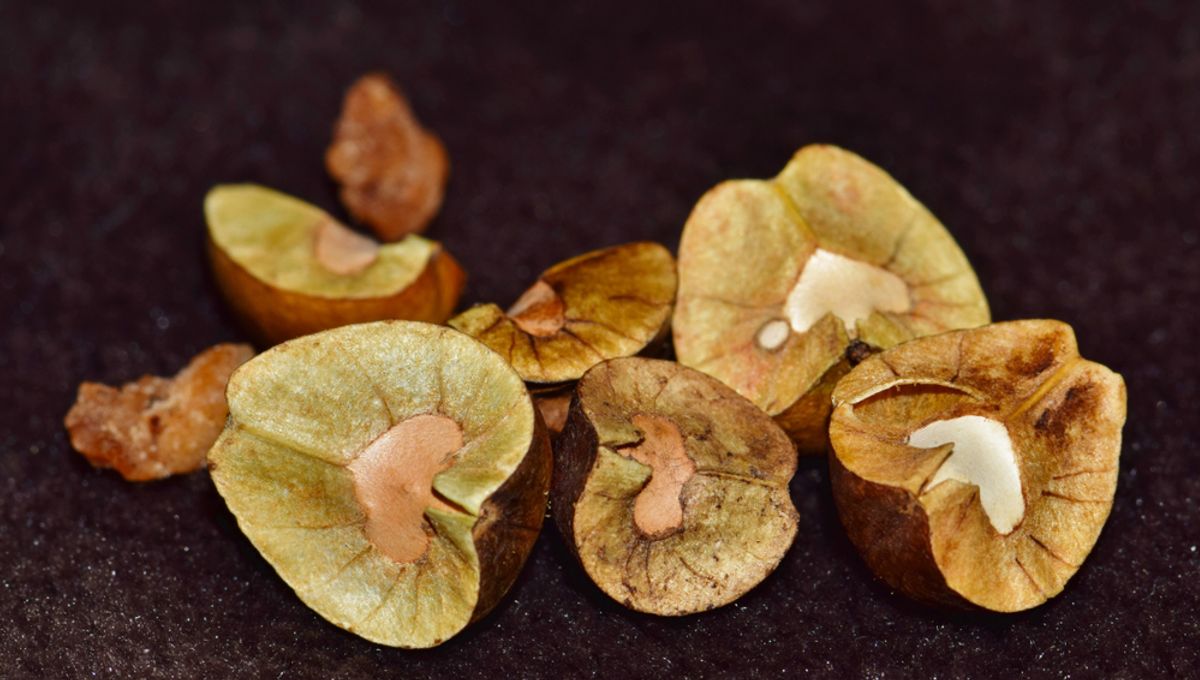
Mexican jumping beans are seed pods that are inhabited by the larvae of a small moth. Due to the tiny larvae flexing and flickering around inside the pod, the seed jumps around. This strange phenomenon is often used as a novelty joke or magic trick, but it’s a perfectly natural part of the bugs’ life cycle – and may even help them to survive the harsh environment they find themselves in.

What are Mexican jumping beans?

As the name suggests, the moth is a native of Mexico. Scientists refer to the species as Cydia saltitans, although most know it as the jumping bean moth. When spring comes, the moths will lay eggs in the flowers of a large shrub called Sebastiania pavoniana.

Advertisement

The eggs eventually hatch and the larvae eat their way into the immature green pods. When the pods ripen, they harden and fall to the ground, still containing the live larvae. This means that the pods are, in fact, not beans but seed pods. 


Why do Mexican jumping beans jump?

The easiest way to get Mexican jumping beans to jump is simply by placing them in your hand. The reason for this is that the larvae are reacting to your body heat and attempting to find a cooler spot. It’s believed this is a survival strategy that evolved to help the “blind” organism find shade in the baking deserts of Mexico.

A study, published in January 2023, saw physicists at Seattle University closely study the movement of Mexican jumping beans as they skipped around. They found that the larvae’s random walk helps to find shade to survive on hot days. While it’s not the most effective way of finding shade quickly, the strategy minimizes the chances of never finding shade when the odds are against them. 

How long do Mexican jumping beans live?

Like many insects, the life of the Mexican jumping beans is short – but busy. 

The larva can wait for months inside the seed, effectively laying dormant until conditions are just right. When the larva feels levels of moisture and temperature are adequate, it will then enter a pupal stage. After its metamorphosis, a silvery moth will pop out of the jumping bean and fly off. 

Unfortunately, it will only live for a few days. Within this time, however, the moth will hopefully manage to reproduce and lay eggs, continuing the strange but wonderful life cycle of the Mexican jumping bean.

Deborah Bloomfield
Deborah Bloomfield

Related posts:

  1. Shares in Russia’s Novatek fall on arrest of deputy head in U.S.
  2. MLB roundup: Angels put crimp in Mariners’ playoff hopes
  3. Police Claim Woman Attacked Them With Angry Bees During An Eviction
  4. Why Do Airplane Window Shades Have To Be Up During Takeoff And Landing?

Source Link: What Are Mexican Jumping Beans?

Filed Under: News

Primary Sidebar

  • We Finally Know How Chameleons’ Bulging Eyes Can Point In Different Directions
  • Blue Origin Mars Mission Scrubbed Due To “Cumulus Cloud Rule”. Why Can’t Rockets Fly Through Clouds?
  • Introducing The Patent Bay – How Sharing Innovation Can Help Build Sustainable Futures
  • Neanderthals Did Not Totally Vanish From Earth, They Became Part Of The Modern Human Population
  • Conference 101 With Pittcon: How To Get The Most Out Of A Science Conference
  • What Happened When A Kansas Family Lived With 2,055 Brown Recluse Spiders For Over 5 Years
  • Young People Are Now So Miserable That It Has Upset A Fundamental Pattern Of Life
  • We May Finally Have A Way To Tell Female Dinosaurs From Males, World’s Largest Spider Web Is Big Enough To Catch A Whale, And Much More This Week
  • This Month’s New Moon Will Be The Farthest From Earth For The Next 18 Years
  • Playing Music To Baby Mice Shapes Their Brain Development In A Sex-Specific Way
  • Ice XXI: Scientists Discover A New Form Of Ice Born At Room Temperature Under Intense Pressure
  • Citizen Scientists Are Helping With Rescue Efforts In Hurricane Melissa’s Aftermath – Here’s How You Can Too
  • What Is The Radio Blackout Scale And When Is It Needed?
  • “It’s Alive!”: The Real (And Horrifying) Science That Inspired Mary Shelley’s Frankenstein
  • First-Ever View Of The Sun’s Polar Magnetic Field Reveals Major Surprise
  • A Killer Whale Birth Has Been Captured On Camera In The Wild For The First Time
  • If You Shine A Light In Your Garden And See Lots Of Dots Reflected Back, We’ve Got Bad News
  • The “Sailor’s Eyeball” Blob Is One Of The Largest Single-Celled Organisms Ever Discovered
  • Icefish Live In Sub-Zero Antarctic Waters, So Why Don’t They Freeze?
  • We Finally Know What Happened To The Stone Of Destiny
  • Business
  • Health
  • News
  • Science
  • Technology
  • +1 718 874 1545
  • +91 78878 22626
  • [email protected]
Office Address
Prudour Pvt. Ltd. 420 Lexington Avenue Suite 300 New York City, NY 10170.

Powered by Prudour Network

Copyrights © 2025 · Medical Market Report. All Rights Reserved.

Go to mobile version