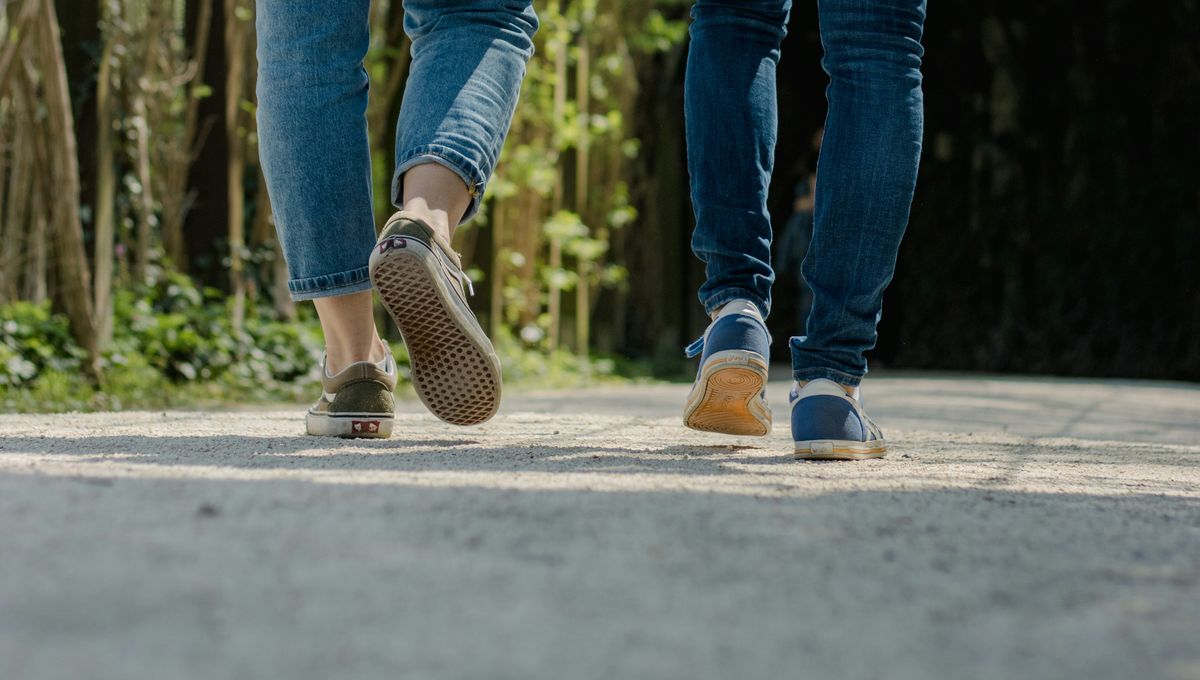
With less and less evidence to recommend the 10,000 steps per day rule, space has opened up for a new walking trend. Lately, it’s “Japanese walking” that has come to the fore, with proponents claiming benefits for aerobic fitness and joint health – so, what’s it all about?
Japanese walking, otherwise known as interval walking training (IWT), is exactly like running intervals – just without the running. It works on a similar principle to high-intensity interval training (HIIT), which has soared in popularity in recent years, promising all the health benefits in a fraction of the time of a traditional workout.
IWT takes all of this and just slows it down. Given its more popular name, there are no prizes for guessing that the idea originated in Japan, as detailed in a 2009 study.
“[I]n 2003 we started to study the effects of IWT on physical fitness for middle-aged and older people, using repeat fast walking above 70 percent peak aerobic capacity for walking for 3 min with intervening slow walking below 40 percent [peak aerobic capacity] at the target of five sets per day, more than four days [per week], for five months,” the authors explained.
So: that’s walking almost as fast as you can manage for three minutes, followed by three minutes of much slower walking. Rinse and repeat five times, adding up to about 30 minutes total, and aim to do this on more than four days out of the week.
To put the speed into perspective, Dr Kristian Karstoft of the University of Copenhagen told the Guardian that the fast intervals should be sufficiently energetic “that you are not able to speak in long sentences.”
The slower intervals provide an opportunity for recovery and may have you walking so slowly that it actually feels unnatural – a fitness tracker or accelerometer may come in handy here.
Karstoft is the first author of a 2024 Perspective article outlining the benefits of the IWT approach. In otherwise healthy individuals, trials have found that IWT increases aerobic fitness, improves knee joint extension and flexion, and reduces blood pressure.
Karstoft and others have also run trials of IWT in populations with type 2 diabetes, finding that it can help with blood sugar control when compared to continuous walking training (CWT).
In the Perspective, Karstoft and co-authors do point out that trials in less tightly controlled conditions have produced less impressive results than those where patients were very closely monitored; as with any exercise program, sticking with it is going to lead to better outcomes.
However, because it only requires time and comfy shoes (and maybe some way of tracking your pace), IWT could be easier to fit into someone’s lifestyle than other exercise regimes that might require special equipment or a gym membership. It may also be accessible to people who are unable to do high-intensity exercise. The program can easily be adapted to start out with slower intervals, gradually working up to the faster pace over time.
“In general,” write Karstoft et al, “interval training regimes are considered safe, also in individuals with cardiovascular disease and diabetes who are typically considered high-risk populations. […] IWT is less intense than other interval-based training regimes, meaning that the potential concerns are probably even lower.”
“IWT is a feasible and effective training regimen for older, fragile individuals. It significantly enhances fitness, muscle strength, and health markers. While safe, ensuring consistent long-term adherence remains a challenge for widespread benefits.”
But IWT is not only for those looking for a gateway into exercise for the first time or after a period of being unable to work out. Rachel Boswell writes for Runner’s World that incorporating IWT can be useful even for seasoned runners, as it can help with injury recovery and conditioning.
And as well as all the potential physical benefits, there’s mood-boosting potential too. Getting out for a walk is known to be beneficial for mental well-being, particularly if you’re able to access a green space. If you’re someone who already has a daily walk habit, switching things up with a spot of interval training might be an easy way to maximize the benefits even further.
This is one fitness trend that seems to go beyond the hashtags, with some actual science to back it up. No one workout plan will be right for everyone, but if IWT appeals to you, it could be a great addition to your routine. So, why not lace up those sneakers and give Japanese walking a go?
The content of this article is not intended to be a substitute for professional medical advice, diagnosis, or treatment. Always seek the advice of qualified health providers with questions you may have regarding medical conditions.

Source Link: What Is “Japanese Walking”, And Should You Be Doing It?
