Hold onto your hats folks – this one is a wild ride. As we romp though Earth’s fastest species, we must bear in mind the spheres in which they operate. That’s why we’ve broken down our categories into Earth, Sea, and Sky, with a few honorable mentions along the way. On your marks, get set, go!
The rest of this article is behind a paywall. Please sign in or subscribe to access the full content.
Fastest animal on land
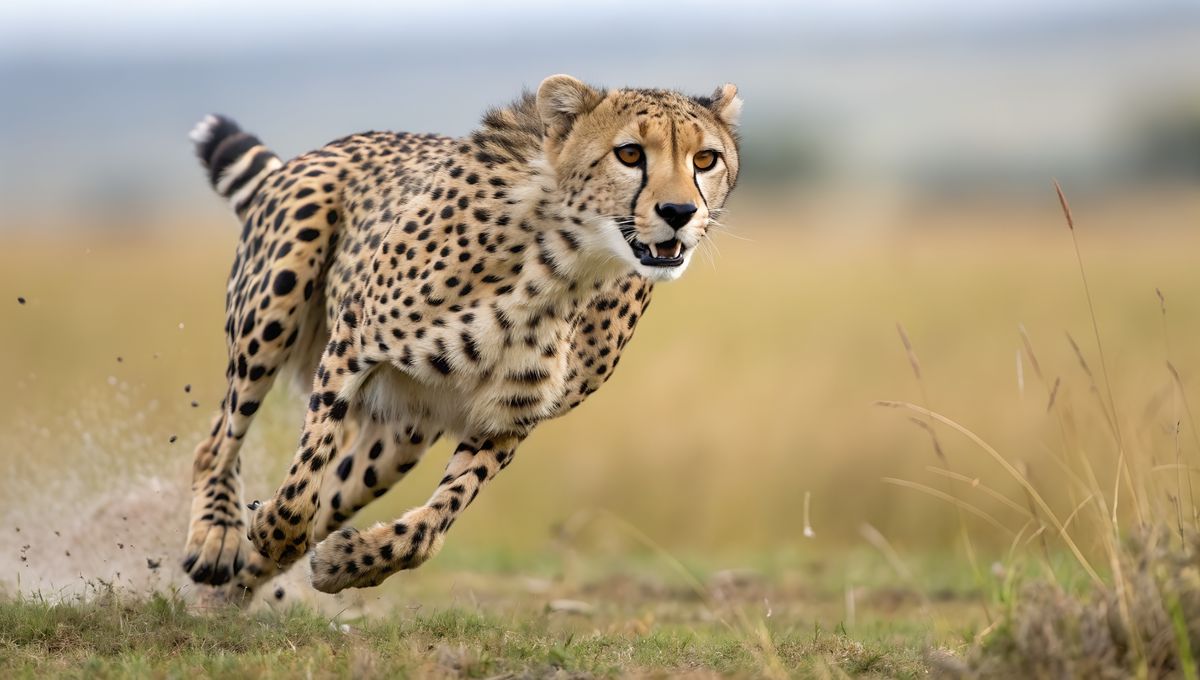
It’s the speediest creature on four legs and it lives in the wide open plains of the African savannah. The cheetah (Acinonyx jubatus) is the world’s fastest land mammal, reaching speeds of 120 kilometers per hour (75 miles per hour). Thanks to their streamlined slender bodies and powerful muscles, they can to accelerate from 0 to 60 in 3 seconds as they chase their prey. Its even said they can increase their speed by 10 kilometers per hour in a single stride.
Unsurprisingly, the prey of these animals can also put on a sprint – the springbok can reach speeds of 88 kilometers per hour (55 miles an hour).
And spare a thought for the insects, especially the Australian tiger beetle. While a top speed of 9 kilometers per hour (5 miles per hour) doesn’t sound that fast, it means this tiny insect is traveling an impressive 125 body lengths every second, allowing it to catch flies in no time at all.
Fastest animal in the sea
There’s a little bit of a debate about the fastest animal in the sea but two names come up time and time again: the black marlin and the sailfish. However, the general consensus seems to be that the black marlin can outpace the sailfish with speeds of 128 kilometers per hour (80 miles per hour), while the sailfish tops out at 109 kilometers per hour (67 miles per hour).
Fastest animal in the sky
Behold the fastest species of them all: the peregrine falcon. When flying horizontally at 88 kilometers (55 miles) per hour the species is still racking up an impressive speed, but the truly impressive stuff comes when these birds dive. Being able to exceed 320 kilometers (200 miles) per hour when diving and catching your dinner is truly one for the record books.
Honorable mentions this time go to the white-throated needletail swift, which can cruise at a comfortable 170 kilometers (105 mile per hour) in horizontal flight, and the golden eagle, which takes second place behind the peregrine falcon with an impressive dive speed of 240 kilometers per hour (150 miles).
The fastest flying insect in the world is the Australian dragonfly, reaching speeds of 58 kilometers per hour (36 miles per hour) making it the speediest insect species. Other notable mentions are the male horsefly, reaching speeds of 145 kilometers per hour (90 miles an hour), the deer botfly, and even some tropical butterflies.
We’ve considered the fastest animals alive now on planet Earth, but have you ever considered what the fastest dinosaur was?

Source Link: What Is The Fastest Animal In The World?
