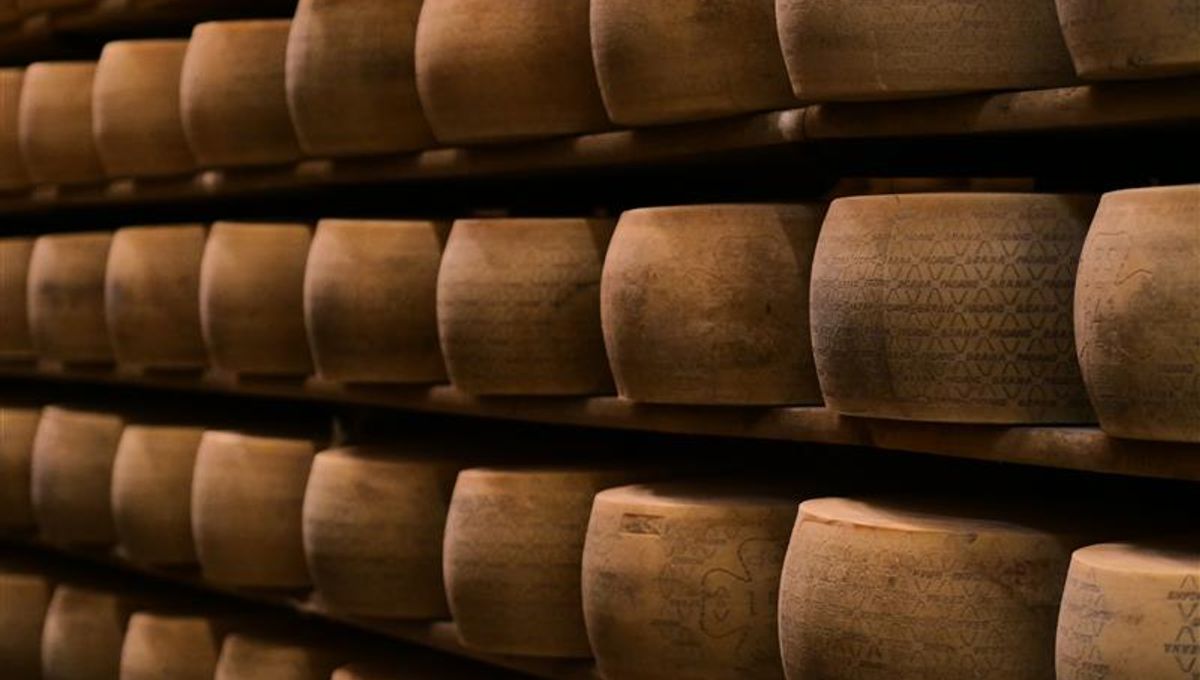
Cheese was just as popular in the ancient world as it is today – and then, just as now, its production required patience and time to mature into something tasty. However, archaeologists have found various cheeses that push the limits of what we would consider “matured”, having been preserved for centuries in various places. So while you may not want to eat these ancient specimens, it still raises an important question: what is the oldest cheese ever found?
The answer, as with so many things, depends on how you define “cheese” and what standard of quantity you think needs to be present. Here are two examples to illustrate this.
Contender 1: Ancient Egyptian Cheese Blob
In August 2018, archaeologists identified a substance that turned out to be one of the oldest cheeses ever discovered while excavating an Ancient Egyptian tomb. The tomb in question belonged to Ptahmes, a high-ranking official in the Egyptian city of Memphis, during the 13th century BCE.
Although Ptahmes’ tomb was first discovered back in 1885, it was soon lost again under the sands of the Egyptian desert south of Cairo in Saqqara, the “City of the Dead”. However, a few years after archaeologists rediscovered it in 2010, they came across a corner storage area that contained broken jars. One of these jars contained a “solidified whitish mass” as well as some sort of canvas material that may have been used to cover the jar.
The researchers analyzed the substance using a technique called liquid chromatography after they processed it by first dissolving it and then purifying its protein constituents. Then, through the use of mass spectroscopy, the team was able to measure its different molecules and determine that it was a dairy product, made from cow milk mixed with that of either a goat or sheep.
In Ancient Egypt, milk would need to be consumed quickly otherwise it would spoil. However, the Egyptians would also turn it into cheese or similar fermented products, like yogurt.
This, then, represented a cheese glob that is over 3,200 years old, which is pretty impressive. However, you would not want to eat it as it contained traces of a potentially deadly bacteria known to kill people and livestock – Brucella melitensis. This bacterium is still alive in the world today and can be caught by humans who consume unpasteurized dairy products.
Contender 2: Croatian Cheesy Bits
The stuff recovered from the Ptahmes’ tomb is a tangible mass of ancient cheese. It is substantive and visible. But archaeologists have found evidence of far older specimens. However, there is a slight issue here – the evidence is only partial in comparison.
In the same year that the archaeologists in Egypt analyzed Ptahmes’ glob, another team found traces of cheese production in what is now Croatia that dated back 7,200 years ago.
The discovery was made by an international team of researchers who examined the chemical fingerprints left by fatty acids on ancient pottery. They then compared their findings with historical evidence concerning agricultural practices at the time, which allowed them to conclude that they were looking at the outcome of an ancient cheese-making process.
Fatty acids found on the inside of clay pots found within two New Stone Age (Neolithic) villages along the Dalmatian Coast. The researchers carefully examined the ratio of the heavier isotopes, carbon-13, to the lighter carbon-12 atoms contained in the traces. The concentrations of the two vary depending on whether you have milk or cheese present. In this instance, they were able to confirm fatty acids from cheese.
So which would you say is the oldest cheese found? Regardless of which one satisfies your definition of “cheese” and the quantities needed to say you have an actual example of it, the fact that we can identify signs of this product in such ancient contexts is still remarkable.
Over the centuries, our fascination with cheese has become “interesting” to the point that even today, we sometimes hoard the stuff in vaults.

Source Link: What Is The World’s Oldest Cheese? It Depends On How You Define It
