• Email Us: [email protected]
  • Contact Us: +1 718 874 1545
  • Skip to main content
  • Skip to primary sidebar

Medical Market Report

  • Home
  • All Reports
  • About Us
  • Contact Us

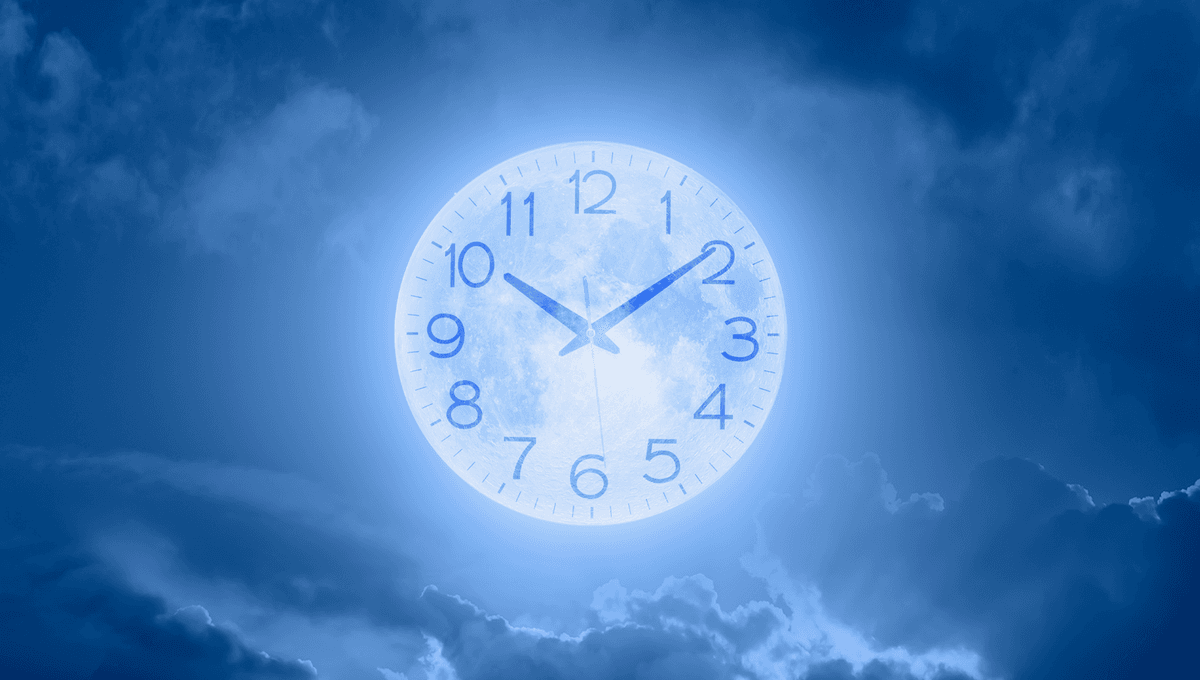
What Time Is It On The Moon?

May 19, 2023 by Deborah Bloomfield

Time shapes our lives and we can’t avoid it. We are influenced – and stressed out – by clocks and alarms, and even if we were to get rid of our tech and go back to nature we’d be at the mercy of the rotation of our planet on its axis and around the Sun. Socially, humanity has agreed on a universal time and a division of time zones, across the surface of our planet. But what happens when we are not on our planet? 

On the international space station, which experiences 16 sunsets a day (making it complicated for Muslim astronauts, especially during Ramadan), the time zone is universal time (UT), which is the same as Greenwich Mean Time (GMT).

Advertisement

By that logic, universal time is also the time on the Moon, but that is not a given. So far, there is no agreement on what time zone will be used when humans land back on it with Artemis III, or further down the line once one or more bases are established on the surface of the Moon. Currently, robotic missions are kept on time corresponding to certain time zones in the country of origin.

Using the Sun like we do here on Earth, even approximately, might not work. From sunrise to sunset on the Moon, there are 14.77 Earth days, so some subdivisions are necessary. A previous suggestion touted online was the idea of a Lunar Standard Time, where seconds, minutes, and hours were the same but 24 hours were called a cycle and 30 cycles were a full lunar day, which is roughly correct.

What Time Zone Did The Apollo Astronauts Use On The Moon?

The Apollo astronauts had a productive time on the Moon so why not copy what they did? Well, there is a little issue with this. The subheading above is a trick question. The astronauts were not using any time zone. Not UTC or the time in Florida from where they launched, or the same time zone as Houston where Mission Control was located. They used Ground Elapsed Time (GET) which is now known as Mission Elapsed Time. Time was counted as minutes, hours, and days from launch.

In those missions and subsequent ones like the Space Shuttle so much depended on activity happening at a certain time after lift-off, so it made more sense to use that instead of using a specific time zone. 

Advertisement

But for a longer-duration mission on the Moon, this doesn’t really make sense anymore, so a solution is needed. The European Space Agency has put out a call for such a discussion. The need for a lunar surface time zone is not immediate for astronauts but the establishment of a communication system around the Moon will make a decision paramount.  

Deborah Bloomfield
Deborah Bloomfield

Related posts:

  1. China to tighten regulation over wealth management units to prevent contagion risks
  2. French company Carmat announces first implant of its artificial heart in a woman
  3. Amazon will allow U.S. Prime members to send gifts using only an email or phone number
  4. TWIS: People Are Less Satisfied In Marriage If Their Partner Has Social Anhedonia, A Supermassive Black Hole Is Shooting Straight At Us, And Much More This Week

Source Link: What Time Is It On The Moon?

Filed Under: News

Primary Sidebar

  • US Just Killed NASA’s Mars Sample Return Mission – So What Happens Now?
  • Art Sleuths May Have Recovered Traces Of Da Vinci’s DNA From One Of His Drawings
  • Countries With The Most Narcissists Identified By 45,000-Person Study, And The Results Might Surprise You
  • World’s Oldest Poison Arrows Were Used By Hunters 60,000 Years Ago
  • The Real Reason You Shouldn’t Eat (Most) Raw Cookie Dough
  • Antarctic Scientists Have Just Moved The South Pole – Literally
  • “What We Have Is A Very Good Candidate”: Has The Ancestor Of Homo Sapiens Finally Been Found In Africa?
  • Europe’s Missing Ceratopsian Dinosaurs Have Been Found And They’re Quite Diverse
  • Why Don’t Snorers Wake Themselves Up?
  • Endangered “Northern Native Cat” Captured On Camera For The First Time In 80 Years At Australian Sanctuary
  • Watch 25 Years Of A Supernova Expanding Into Space Squeezed Into This 40-Second NASA Video
  • “Diet Stacking” Trend Could Be Seriously Bad For Your Health
  • Meet The Psychedelic Earth Tiger, A Funky Addition To “10 Species To Watch” In 2026
  • The Weird Mystery Of The “Einstein Desert” In The Hunt For Rogue Planets
  • NASA Astronaut Charles Duke Left A Touching Photograph And Message On The Moon In 1972
  • How Multilingual Are You? This New Language Calculator Lets You Find Out In A Minute
  • Europa’s Seabed Might Be Too Quiet For Life: “The Energy Just Doesn’t Seem To Be There”
  • Amoebae: The Microscopic Health Threat Lurking In Our Water Supplies. Are We Taking Them Seriously?
  • The Last Dogs In Antarctica Were Kicked Out In April 1994 By An International Treaty
  • Interstellar Comet 3I/ATLAS Snapped By NASA’s Europa Mission: “We’re Still Scratching Our Heads About Some Of The Things We’re Seeing”
  • Business
  • Health
  • News
  • Science
  • Technology
  • +1 718 874 1545
  • +91 78878 22626
  • [email protected]
Office Address
Prudour Pvt. Ltd. 420 Lexington Avenue Suite 300 New York City, NY 10170.

Powered by Prudour Network

Copyrights © 2026 · Medical Market Report. All Rights Reserved.

Go to mobile version