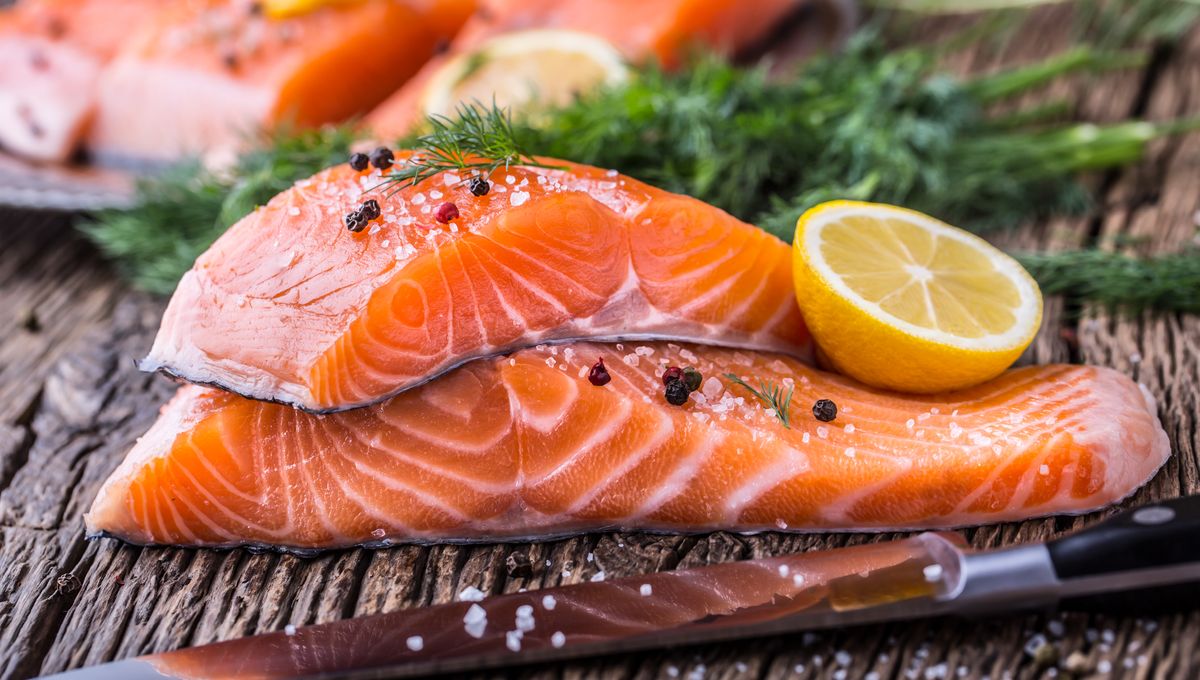
Salmon is a great source of protein, omega-3 fatty acids, and various important nutrients – it also makes a great hat (if you happen to be an orca in the late 80s), but that’s neither here nor there.
When buying it in the grocery store you have two options: wild caught or from the farm. But does it really matter which you choose?
What’s the difference?
The difference between the two lies in how they’re caught or raised. As you might expect, wild salmon are caught in their natural environment, be that oceans, rivers, or lakes. They are generally one of five types of Pacific salmon: chinook (king), coho, sockeye, pink, or chum.
Unlike farmed salmon, they are not bred to be eaten and so have not been fed certain foods or additives. They also tend to be a bit more expensive, are available seasonally, and have a shorter shelf life.
Farmed salmon, meanwhile, are reared in tanks or enclosures and given a high-fat, high-protein diet to make them grow larger. They are typically Atlantic salmon, are available year-round, and account for around 75 percent of all salmon you eat, according to WebMD.
Which is better?
There are several nutritional differences between wild and farmed salmon. In general, wild salmon has fewer calories and a lower fat content. And it’s thought it often contains a higher amount of minerals, including iron and calcium.
On the other hand, farmed salmon has more omega-3 fatty acids, but also more saturated fat.
Nutrients aside, it’s also worth considering exposure to pollutants, something that both types of salmon are at risk of. Both have been found to contain persistent organic pollutants (POPs), chemicals that have been linked to type 2 diabetes and obesity, although farmed salmon may contain several times more of one type of POP, polychlorinated biphenyl (PCB).
There are also concerns that wild salmon may contain more mercury than farmed salmon, although at such low concentrations that it is not believed to be harmful when the fish is eaten in moderation.
It is still largely thought that the health benefits of eating both types of salmon outweigh these small risks. If you do want to reduce exposure to contaminants and pollutants, you can try removing the skin, registered dietitian Julia Zumpano told Cleveland Clinic.
Moreover, antibiotics are sometimes used when farming salmon, which has sparked concerns about furthering antibiotic resistance.
So, which should you choose? While there are some minor nutritional and environmental differences between the two, both are still a nutritious choice, so don’t get too bogged down in the wild vs farmed debate. The American Heart Association recommends most adults eat two servings of fatty fish, such as salmon, per week. Either wild or farmed will do.
Now the only question left is: What about 3D-printed vegan salmon? We’ll let you make your own mind up about that.
All “explainer” articles are confirmed by fact checkers to be correct at time of publishing. Text, images, and links may be edited, removed, or added to at a later date to keep information current.
The content of this article is not intended to be a substitute for professional medical advice, diagnosis, or treatment. Always seek the advice of qualified health providers with questions you may have regarding medical conditions.

Source Link: What's The Difference Between Farmed Vs Wild Caught Salmon?
