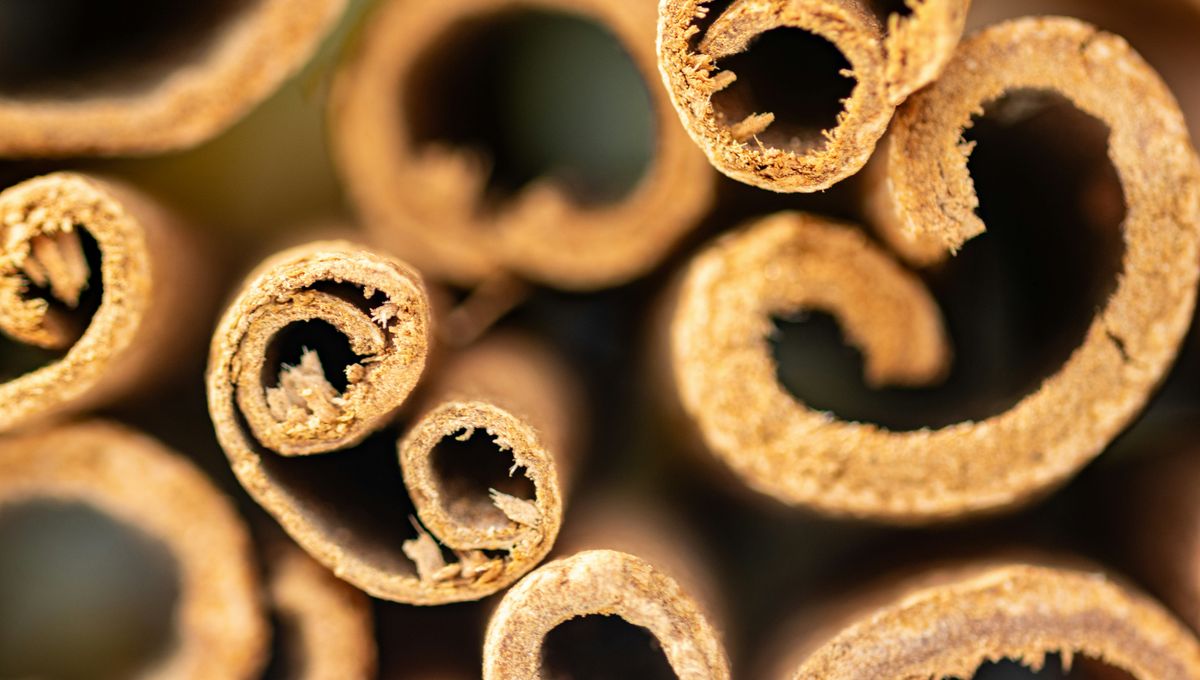
From Egyptian mummies to pumpkin-spiced lattes, cinnamon is a warm and sweet spice that’s had a hold on humans for many, many centuries. It’s derived from the fragrant, dried bark of a tropical tree – though not all cinnamon is created equal, so it’s worth watching out for the “fake” stuff.
Where does Ceylon cinnamon come from?
True cinnamon spice comes from a species of tree called Cinnamomum verum or Cinnamomum zeylanicum. Native to the island of Sri Lanka in South Asia, it’s an evergreen tree from the laurel family. It’s still sometimes referred to as Ceylon cinnamon, since this was the name of Sri Lanka during British colonial rule and until 1972.
The species has since been introduced to other parts of South Asia and Southeast Asia, as well as parts of South America, where the climate is equally balmy and suitable for the tree to thrive.
How is cinnamon made?
To produce the spice, growers cut back two- to five-year-old trees to encourage them to sprout like a bush. New shoots are then harvested and stripped of their outer bark. The inner bark is polished, stretched, layered, and hand-rolled into quills, which are finally trimmed and dried.
Once sufficiently dry and crisp, cinnamon quills are carefully graded based on their thickness and quality. The most prized quills, known as Alba, are extremely thin and take far longer to produce than lower grades, which are often turned into ground cinnamon.
Revered for its subtle, delicate aroma, true cinnamon has long commanded a high price. It first reached Europe from Asia along the Silk Road, brought by Venetian and Genoese traders, and could sell for more than 100 times its original cost by the time it reached buyers in Western Europe. The high demand for spices like cinnamon was one of the forces that fueled the Age of Exploration in the 15th and 16th centuries.
Today, good-quality cinnamon quills can still reportedly cost around $27 per pound.
“Fake cinnamon”
Like any product with a high value, savvy traders have found cheaper alternatives. Cassia cinnamon, aka Chinese cinnamon or fake cinnamon, is a spice also made from the bark of a tree from the same family, called C. cassia. Additionally, there are similar species like C. burmanni (Indonesian cinnamon or Padang cassia) and C. loureiroi (Saigon cinnamon).
All of these alternatives have a very similar aroma to the real-deal C. verum, although fine-palated chefs will tell you they all have a slightly different flavor profile. Most notably, the smell isn’t as subtle or mild as true cinnamon, but bolder and brasher, like a punchy injection up the nostril.
Unless stated otherwise, the cinnamon in your spice rack is most likely from one of these “alternative” species. Even then, labeling laws are lax in certain parts of the world, and it’s not uncommon to find “true cinnamon” that’s been cut with “fake cinnamon” or substituted entirely.
Is cinnamon good for you?
Cinnamaldehyde is the key compound responsible for its soothing aroma. Some researchers have argued that the chemical has “great medicinal value,” targeting a wide array of diseases from inflammation, to bacterial infections, to cancer and cardiovascular disease. However, the current body of evidence is inconclusive and further studies are necessary to substantiate any medicinal claims.
That said, cinnamon has been used as a medicine in a variety of cultures throughout history. It was used as an embalming agent (and food flavoring) by the ancient Egyptians, while the Romans primarily used it as a medicine. It also featured prominently in traditional Chinese and Ayurvedic medicine, where it was believed to aid digestion, improve circulation, and help ward off infections.
While modern science has yet to fully validate these age-old applications, its use over millennia hints that this spice has something special about it.

Source Link: Where On Earth Does Cinnamon Come From?
