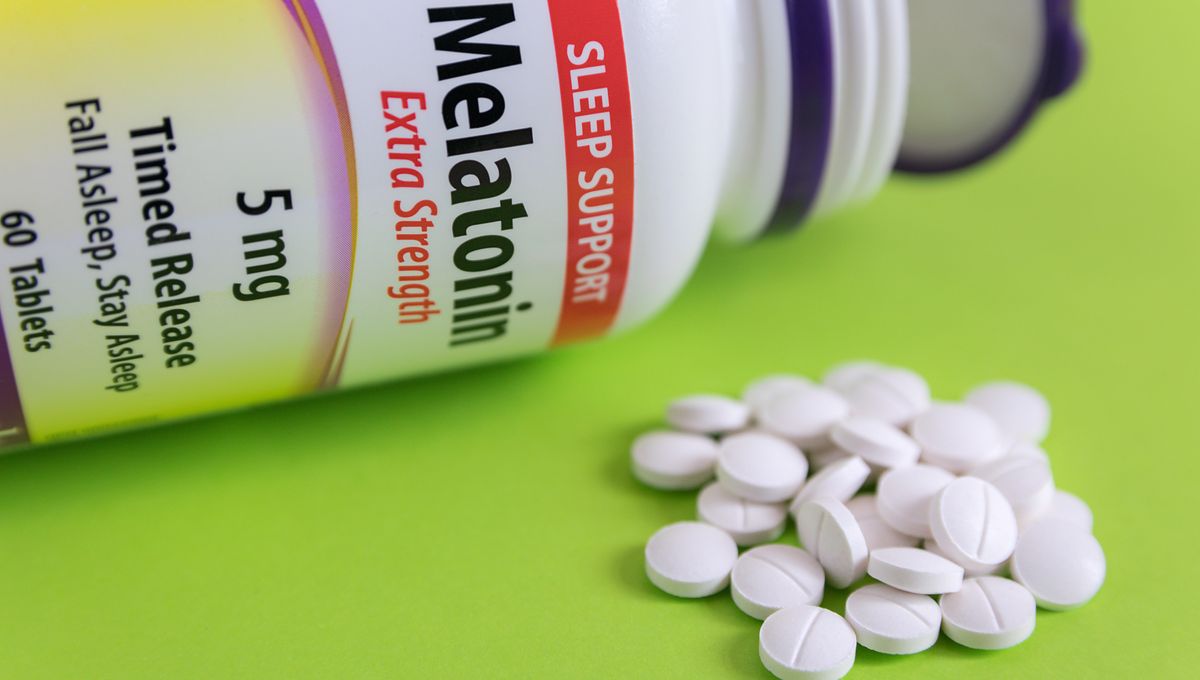
A study of parents in the US has revealed that nearly one in five school-aged children and preteens of those surveyed are taking over-the-counter melatonin supplements to help with sleep.
Previous research found that, from 2017 to 2018, only 1.3 percent of parents in the US reported their child taking melatonin supplements. However, in more recent years, researchers started to catch wind of a change in use. “All of a sudden, in 2022, we started noticing a lot of parents telling us that their healthy child was regularly taking melatonin,” said Lauren Hartstein, lead author of a new study investigating melatonin use among children, in a statement.
In the first half of 2023, Harstein and colleagues surveyed 1,000 US parents about their children’s melatonin use, and the results were quite the jump up from five years ago. Of those surveyed, 18.5 percent of children aged 5 to 9 had been given melatonin in the last 30 days and had, on average, been taking it for 18 months. Rates were slightly higher in those aged 10 to 13, at 19.4 percent, and the average length of time taking the supplements stood at 21 months.
The researchers found that melatonin supplementation wasn’t just happening in school-aged children either. Use also extended to pre-school aged children (1 to 4 years old) – 5.6 percent had taken melatonin within the last month and of that amount, had taken it for an average of a year.
Whilst the researchers caution that this was only a relatively small survey, and so doesn’t necessarily reflect nationwide usage, there are still some concerns.
Melatonin is a hormone that’s produced by the body to regulate our wake-sleep cycle. “It doesn’t make you sleep, but as melatonin levels rise in the evening it puts you into a state of quiet wakefulness that helps promote sleep,” explained Johns Hopkins sleep expert Luis F. Buenaver.
In a country where 38.4 percent of 6 to 12-year-olds experience short sleep duration, it makes sense that parents might turn to melatonin as a solution. “If this many kids are taking melatonin, that suggests there are a lot of underlying sleep issues out there that need to be addressed,” Hartstein said.
The concern, however, is that melatonin is not well-regulated in the US. Whilst it’s considered a drug and is only available by prescription in many countries, in the US, the Food and Drug Administration (FDA) classes it as a dietary supplement and it’s available over the counter – it’s not subject to the same level of regulation as a classified drug would be.
Due to the lack of regulation, there’s no guarantee that the dosage of melatonin stated on a product can be taken at face value. Earlier this year, a study found that 22 out of 25 melatonin gummies analyzed contained a different amount of melatonin than that declared on the label.
“Parents may not actually know what they are giving to their children when administering these supplements,” said Hartstein. Combine that with relatively little data on the safety and efficacy of dietary melatonin supplement usage in children, and researchers are concerned about the uptick in use found in the survey.
“We hope this paper raises awareness for parents and clinicians, and sounds the alarm for the scientific community,” Hartstein concluded. “We are not saying that melatonin is necessarily harmful to children. But much more research needs to be done before we can state with confidence that it is safe for kids to be taking long-term.”
The study is published in JAMA Pediatrics.

Source Link: Why Are So Many Kids Taking Melatonin?
