• Email Us: [email protected]
  • Contact Us: +1 718 874 1545
  • Skip to main content
  • Skip to primary sidebar

Medical Market Report

  • Home
  • All Reports
  • About Us
  • Contact Us

Why Are The Continents All Bunched Up On One Side Of The Planet?

October 10, 2025 by Deborah Bloomfield

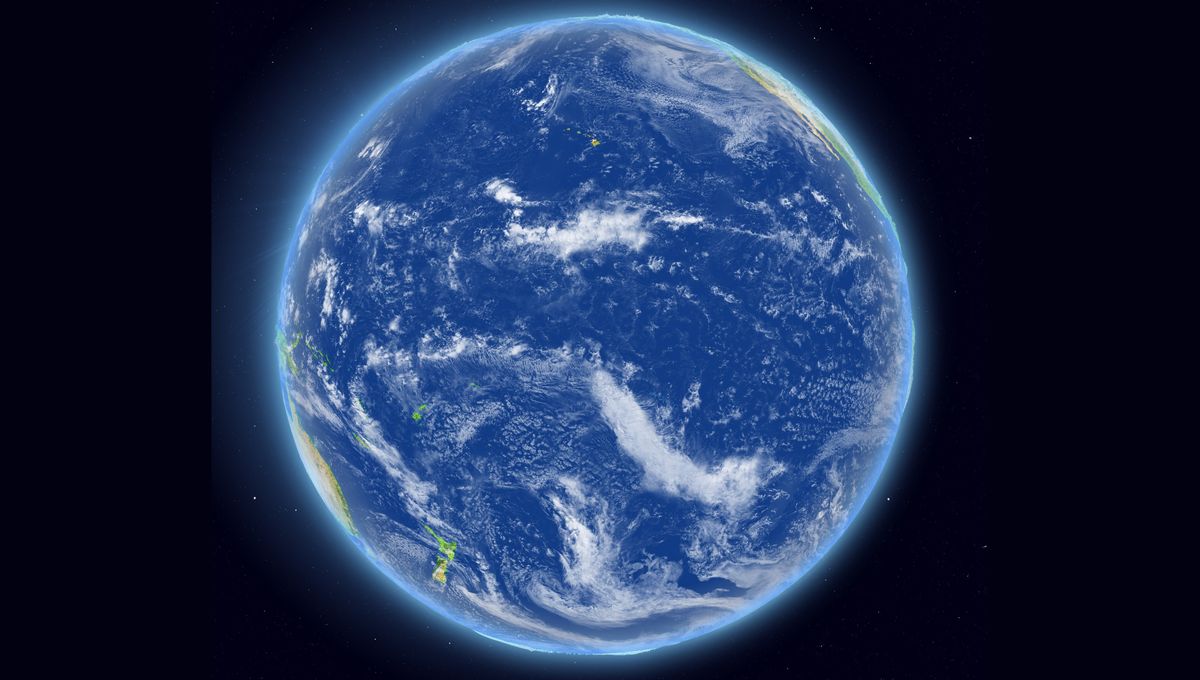
When we look at maps of the world, landmasses seem to be well distributed. Sure, there is more water than landmasses, but they are all spread out. Well, not really. If you grab a globe and turn it towards the Pacific Ocean, you can angle it in a way that the only thing you can see is water. On the opposite side, you can see plenty of land, if you focus on Africa, Europe, and Asia. So the question is, why are all the continents bunching up?

The rest of this article is behind a paywall. Please sign in or subscribe to access the full content.

We can blame it all on Pangea, and mostly on the supercontinent cycle. If we need to be nitpickers, the continents are actually still spreading out. The Atlantic Ocean is getting bigger and pushing the Americas away from Europe and Africa. Still, they have not spread to a more equal distribution around the globe, and they might never get to that point.

Every 300 to 500 million years, most of the continents end up being in a supercontinent, a vast region made of multiple tectonic plates above sea level. You need to have at least 75 percent of all landmasses in your supercontinent for it to qualify. Despite Europe, Asia, and Africa being attached to each other, they only cover 57 percent of Earth’s total area.


Pangea is the last supercontinent to have existed, and it lasted from 336 million years ago to 175 million years ago. We are still dealing with the breakup of Pangea. And most famously, we can see how well the coasts of South America and Africa fit together.

Before Pangea, there was Gondwana (not always recognized as a supercontinent) and many, many more whose names are not quite as popular with the public. The moral is that the forces of continental drift shift the continents across the surface of the Earth. Over hundreds of millions of years, continents are pulled together, forming supercontinents, and then the supercontinent breaks apart just as easily as it came together.

So over the next several tens of millions of years, things will get less bunched up, with Eurasia moving east and the Americas moving west. Afterwards, things might get cozy again, with a future supercontinent beginning to form.

Until then, it is possible to see Earth as a big blue marble, with few landmasses – you just need to be in orbit over the South Pacific, an ocean so big it has its own antipodes. There, the pale blue dot is actually a deep blue sphere.

Deborah Bloomfield
Deborah Bloomfield

Related posts:

  1. UK’s slow growth and rising inflation gives BoE headache – PMIs
  2. One Identity has acquired OneLogin, a rival to Okta and Ping in sign-on and identity access management
  3. Iron Sulfides In Hot Springs May Have Been The Catalysts Needed To Spark Life
  4. “Hidden” Changes To US Health Data Swapping “Gender” For “Sex” Spark Fears For Public Trust

Source Link: Why Are The Continents All Bunched Up On One Side Of The Planet?

Filed Under: News

Primary Sidebar

  • This Month’s New Moon Will Be The Farthest From Earth For The Next 18 Years
  • Playing Music To Baby Mice Shapes Their Brain Development In A Sex-Specific Way
  • Ice XXI: Scientists Discover A New Form Of Ice Born At Room Temperature Under Intense Pressure
  • Citizen Scientists Are Helping With Rescue Efforts In Hurricane Melissa’s Aftermath – Here’s How You Can Too
  • What Is The Radio Blackout Scale And When Is It Needed?
  • “It’s Alive!”: The Real (And Horrifying) Science That Inspired Mary Shelley’s Frankenstein
  • First-Ever View Of The Sun’s Polar Magnetic Field Reveals Major Surprise
  • A Killer Whale Birth Has Been Captured On Camera In The Wild For The First Time
  • If You Shine A Light In Your Garden And See Lots Of Dots Reflected Back, We’ve Got Bad News
  • The “Sailor’s Eyeball” Blob Is One Of The Largest Single-Celled Organisms Ever Discovered
  • Icefish Live In Sub-Zero Antarctic Waters, So Why Don’t They Freeze?
  • We Finally Know What Happened To The Stone Of Destiny
  • Meet The Fishing Cat: The World’s Most Aquatic Feline Has Evolved To Master The Wetlands
  • Why Is There A Mysterious White Pyramid In Arizona?
  • Humpback Hitchhickers: Watch POV Footage Of Suckerfish Clinging To Whales As They Migrate Across Oceans
  • Oldowan Tools Saw Early Humans Through 300,000 Years Of Fire, Drought, And Shifting Climates, New Site Reveals
  • There Are Just Two Places In The World With No Speed Limits For Cars
  • Three Astronauts Are Stranded In Space Again, After Their Ride Home Was Struck By Space Junk
  • Snail Fossils Over 1 Million Years Old Show Prehistoric Snails Gave Birth to Live Young
  • “Beautiful And Interesting”: Listen To One Of The World’s Largest Living Organisms As It Eerily Rumbles
  • Business
  • Health
  • News
  • Science
  • Technology
  • +1 718 874 1545
  • +91 78878 22626
  • [email protected]
Office Address
Prudour Pvt. Ltd. 420 Lexington Avenue Suite 300 New York City, NY 10170.

Powered by Prudour Network

Copyrights © 2025 · Medical Market Report. All Rights Reserved.

Go to mobile version