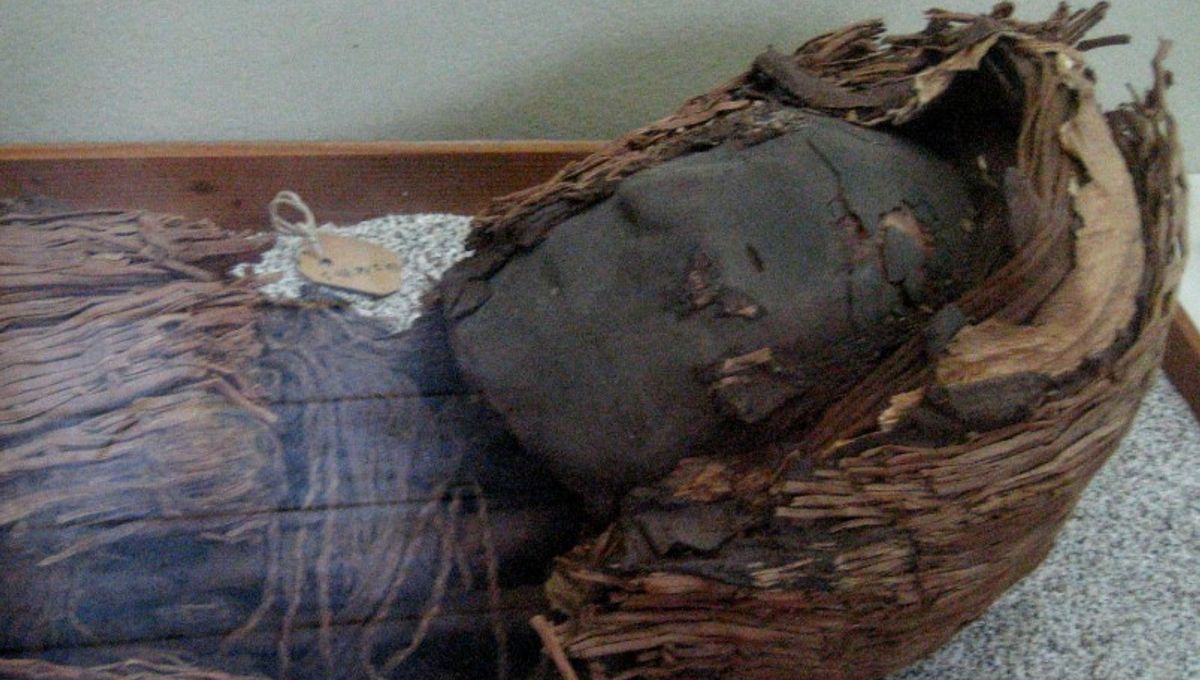
The Chinchorro culture that inhabited Chile’s Atacama Desert from about 7,500 years ago is famous for its mummies, which predate those from Ancient Egypt by several millennia. Scanning the heads of these wrinkled corpses, researchers have now revealed that the average Chinchorro individual possessed a brain that was about 12 percent smaller than that of the typical modern Chilean, hinting at childhood malnutrition and poor standards of living.
The rest of this article is behind a paywall. Please sign in or subscribe to access the full content.
That the Chinchorro didn’t eat as well as present-day humans is perhaps not surprising, considering they chose one of the harshest environments on the planet for their home. Surviving until around 3,500 years ago, this ancient group of hunter-gatherers had precious little access to plants or animals, and had to rely on the ocean to provide all of their dietary needs.
To learn more about the health of these prehistoric desert-dwellers, the study authors conducted CT scans of 68 mummified Chinchorro heads, and compared these against nine ancient agriculturalists from the same region as well as 83 modern Chileans. Overall, they found that the intracranial volume (ICV) – which gives an indication of brain size – was, on average, 1,321.26 cubic centimeters for the mummies, 1,336.57 cubic centimeters in pre-Hispanic agriculturalists, and 1,481.22 cubic centimeters in the present-day population.
Thus, while brain size didn’t appear to change much following the transition from hunter-gatherer to sedentary lifestyles, the onset of the modern age appears to have triggered a massive increase in ICV. Comparing the earliest mummies to the modern cohort, the researchers noted a cerebral expansion of 12.05 percent.
Based on this difference in head size, the study authors calculate that the average modern Chilean man is 8.4 centimeters (3.3 inches) taller than the typical Chinchorro, while present-day women are 4.6 centimeters (1.8 inches) taller than their prehistoric counterparts.
Seeking to explain these differences in both ICV and stature, the authors write that “early-life malnutrition has been consistently associated with reduced brain volume and cognitive impairments, highlighting the critical importance of adequate energy and nutrient intake during neurodevelopmental windows.” They therefore speculate that the Chinchorro may have lacked access to key food resources, potentially stunting their growth.
What’s interesting, though, is that the switch to farming didn’t seem to make much difference, and it’s only in the last 150 years or so that the average Chilean has begun to increase in stature. For instance, the researchers note that women in the country increased from a height of 156.5 centimeters (five feet, 1.6 inches) in the 1860s to 161.5 centimeters (five feet, 3.5 inches) in the 1990s.
“While transitions in prehistoric subsistence strategies did not produce significant changes in either height or ICV, the 20th century marked an inflection point,” write the study authors. “The notable increase in stature observed during this period… coincides with improvements in nutrition, particularly increased intake of dairy and animal proteins, as well as broader gains in public health, sanitation, and education,” they conclude.
The study has been published in the journal Scientific Reports.

Source Link: Why Did Prehistoric Mummies From The Atacama Desert Have Such Small Brains?
