• Email Us: [email protected]
  • Contact Us: +1 718 874 1545
  • Skip to main content
  • Skip to primary sidebar

Medical Market Report

  • Home
  • All Reports
  • About Us
  • Contact Us

Why Do Airplanes Have Rounded Windows?

December 1, 2023 by Deborah Bloomfield

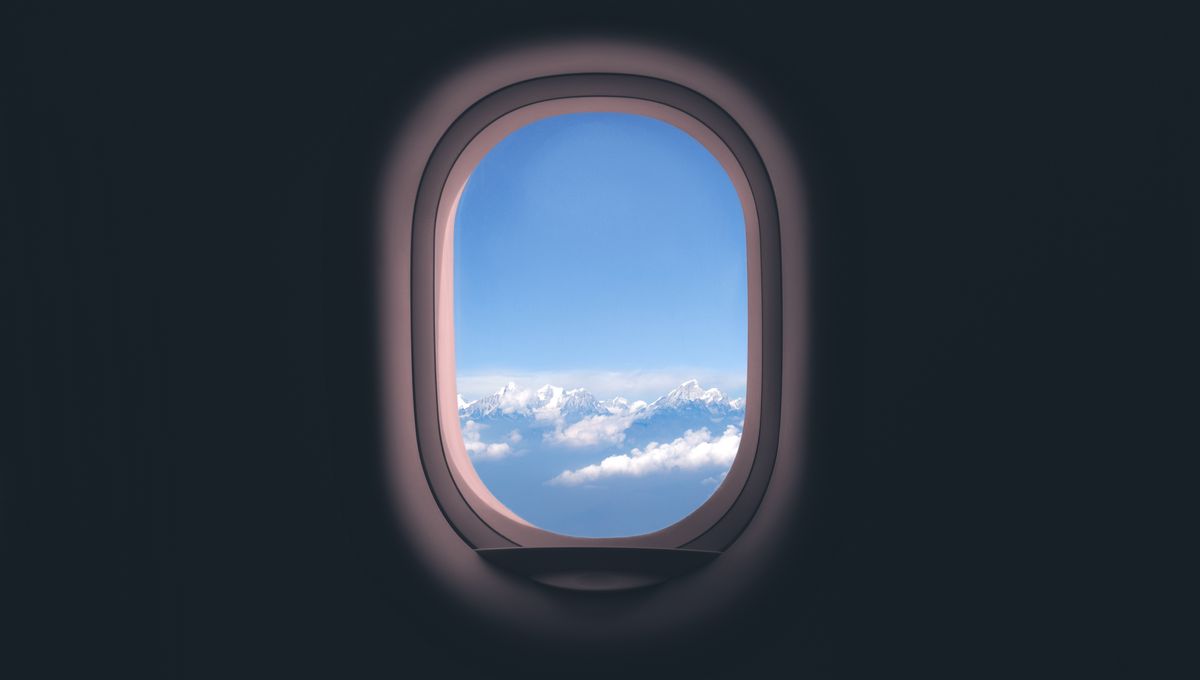
Turns out there’s more purpose to the design of an airplane window than allowing for aesthetically pleasing birds-eye-view photos or staring out of them pretending you’re in a music video. There’s a reason why they have that little hole and why we have to keep their shades up during takeoff. But what about their most characteristic feature: Why are airplane windows rounded?

If you ask a small child to draw an airplane, they’ll more than likely draw the passenger windows as little ovals, but planes haven’t always looked that way. The de Havilland Comet, an early commercial jet design, had square windows. But within just five years of their introduction, three Comets had a series of tragic crashes.

Advertisement

After the third crash in 1954, investigations determined that all three crashes had been caused by cracked window frames, as a result of their square design. It was revealed that square windows deal very badly with the stress caused by the increasing cabin pressure that comes with high-altitude flying.

However, high altitude is a necessary element of commercial flight – up high in the sky, there’s less drag, which in turn means less fuel used. That’s ideal for airlines because it saves them money and reduces the impact of flight on the environment (although scientists are looking into alternatives to traditional fuel). There’s also less turbulence at higher altitudes, which makes for a more comfortable flight.

So what was the solution? Swap those squares out for ovals. This helps to evenly distribute the pressure exerted on the window and thus reduce the likelihood of cracking.

“The narrowest part of the oval will be designed to ensure the curve does not generate unsafe stresses in the surrounding material,” explained Dai Whittingham, chief executive of the UK Flight Safety Committee, speaking to MailOnline Travel. “Recently we have started to see some designers opting for more rectangular shapes, but these will always have curved corners.”

Advertisement

Besides the element of increased safety, there are still some more superficial benefits. “Designers prefer oval windows because they can get a larger viewing area which suits the biggest range of passenger sitting heights,” said Whittingham.


Check out this video by the YouTube channel Real Engineering, which explains the physics behind this engineering quirk that has puzzled air travelers ever since.

An earlier version of this article was published in January 2016.

Deborah Bloomfield
Deborah Bloomfield

Related posts:

  1. China Evergrande shares slide 6% in early trade
  2. French watchdog chief calls for ban on ‘payment for order flow’ in EU stock market
  3. Robots Are Performing Hindu Rituals – Some Devotees Fear They’ll Replace Worshippers
  4. Possible Hints Of Life Found On Distant Planet – How Excited Should We Be?

Source Link: Why Do Airplanes Have Rounded Windows?

Filed Under: News

Primary Sidebar

  • World’s Oldest Poison Arrows Were Used By Hunters 60,000 Years Ago
  • The Real Reason You Shouldn’t Eat (Most) Raw Cookie Dough
  • Antarctic Scientists Have Just Moved The South Pole – Literally
  • “What We Have Is A Very Good Candidate”: Has The Ancestor Of Homo Sapiens Finally Been Found In Africa?
  • Europe’s Missing Ceratopsian Dinosaurs Have Been Found And They’re Quite Diverse
  • Why Don’t Snorers Wake Themselves Up?
  • Endangered “Northern Native Cat” Captured On Camera For The First Time In 80 Years At Australian Sanctuary
  • Watch 25 Years Of A Supernova Expanding Into Space Squeezed Into This 40-Second NASA Video
  • “Diet Stacking” Trend Could Be Seriously Bad For Your Health
  • Meet The Psychedelic Earth Tiger, A Funky Addition To “10 Species To Watch” In 2026
  • The Weird Mystery Of The “Einstein Desert” In The Hunt For Rogue Planets
  • NASA Astronaut Charles Duke Left A Touching Photograph And Message On The Moon In 1972
  • How Multilingual Are You? This New Language Calculator Lets You Find Out In A Minute
  • Europa’s Seabed Might Be Too Quiet For Life: “The Energy Just Doesn’t Seem To Be There”
  • Amoebae: The Microscopic Health Threat Lurking In Our Water Supplies. Are We Taking Them Seriously?
  • The Last Dogs In Antarctica Were Kicked Out In April 1994 By An International Treaty
  • Interstellar Comet 3I/ATLAS Snapped By NASA’s Europa Mission: “We’re Still Scratching Our Heads About Some Of The Things We’re Seeing”
  • New Record For Longest-Ever Observation Of One Of The Most Active Solar Regions In 20 Years
  • Large Igneous Provinces: The Volcanic Eruptions That Make Yellowstone Look Like A Hiccup
  • Why Tokyo Is No Longer The World’s Most Populous City, According To The UN
  • Business
  • Health
  • News
  • Science
  • Technology
  • +1 718 874 1545
  • +91 78878 22626
  • [email protected]
Office Address
Prudour Pvt. Ltd. 420 Lexington Avenue Suite 300 New York City, NY 10170.

Powered by Prudour Network

Copyrights © 2026 · Medical Market Report. All Rights Reserved.

Go to mobile version