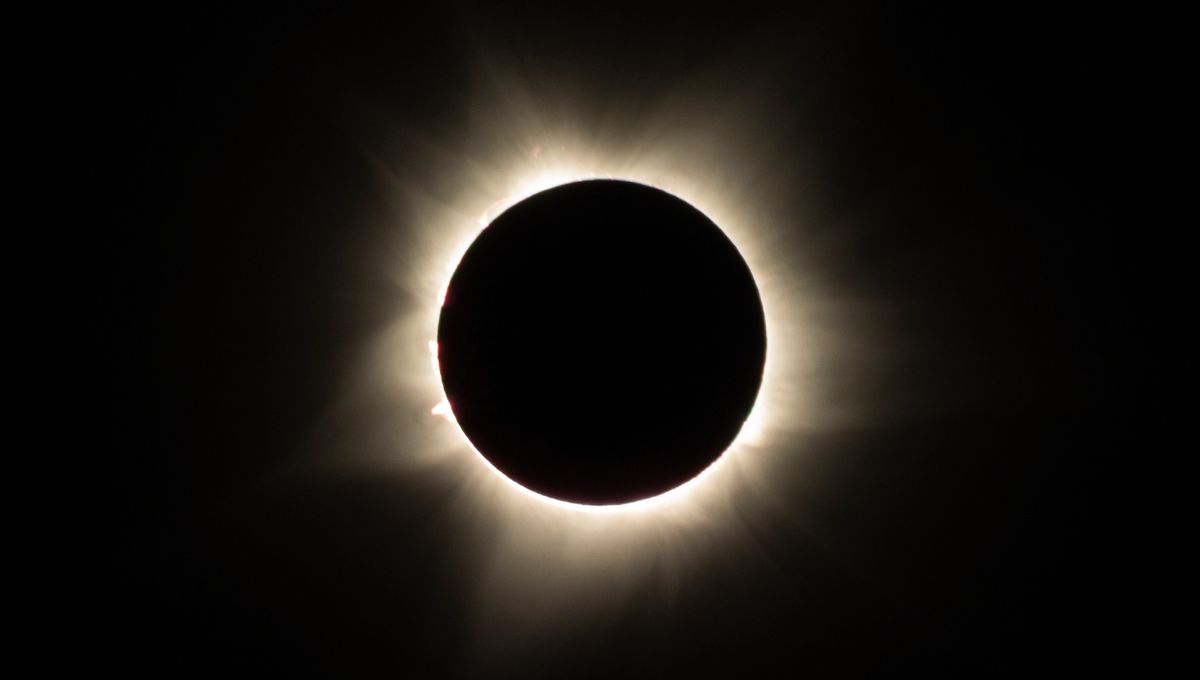
While the excitement for next month’s total solar eclipse is building for us humans, April 8 might see our animal pals acting a little bit weirder than usual.
What happened during the solar eclipse in 2017?
Though there had been anecdotal evidence of strange animal antics during historical solar eclipses, the last total solar eclipse seen in the US in August 2017 saw researchers set to providing a proper scientific record – and they witnessed all sorts of odd behavior.
Bees, for example, took a very abrupt break from their daily routines. Utilizing citizen scientists in the community and in schools to set up acoustic monitoring systems in three states, researchers found that all but a single bee suddenly stopped buzzing at the time of totality.
Bees often fly more slowly as the night begins to settle in, so the behavior seen during the eclipse suggests that their activity relies on environmental cues like light. This kind of behavioral adherence to the day-night cycle is something seen across many animal species.
Scientists also recorded animals in zoos getting up to some strange shenanigans; Riverbanks Zoo in South Carolina conducted behavioral observations on 17 different species during the total solar eclipse. The point of totality appeared to trick some animals into thinking it was bedtime – gorillas and elephants started to head towards their indoor nighttime enclosures.
That behavior was expected, but the zoo’s Galapagos tortoises did something rather novel. Not exactly known for being the fastest of creatures, just before totality, the tortoises quickly huddled together – two of them even started mating.
At the point of complete darkness, they scattered and then after totality, gazed up at the sky before returning to their normal lazy lifestyle. Though the researchers weren’t entirely sure why they showed this particular behavior, they suggested it could be an anxiety response.
Calling all citizen scientists
Some of the unanswered questions from the last total solar eclipse might be resolved this time around, with multiple zoos across the path of totality planning to carry out observations.
Citizen science is set to take a major role too, with the launch of the Solar Eclipse Safari. The project asks members of the public in the path of the eclipse to gather behavior data on an animal, from those in nature to our pets. Full details on how to participate are on the project’s website, but in essence, it’ll require you to record animal behavior before and during the eclipse.
When it comes to watching pets, however, it’s important to remember that our own behavior might change during an eclipse. Animals might think we’re acting weirdly – we’d be a bit taken aback if a crowd of humans suddenly appeared with funny glasses and oohed and aahed at the sky.
It’s why vets think the vast majority of any behavioral changes seen in our pets will probably be down to how we act. “They’re going to react more to our reactions, our excitement and our anxiety than anything actually from the actual eclipse,” Dr Rena Carlson, president of the American Veterinary Medical Association, told USA Today News.
That means you probably don’t need to buy your pet eclipse glasses as they’ll likely be looking elsewhere – but we won’t judge you if you want to get some purely for the ‘gram.

Source Link: Why Do Animals Act Strangely During A Solar Eclipse?
