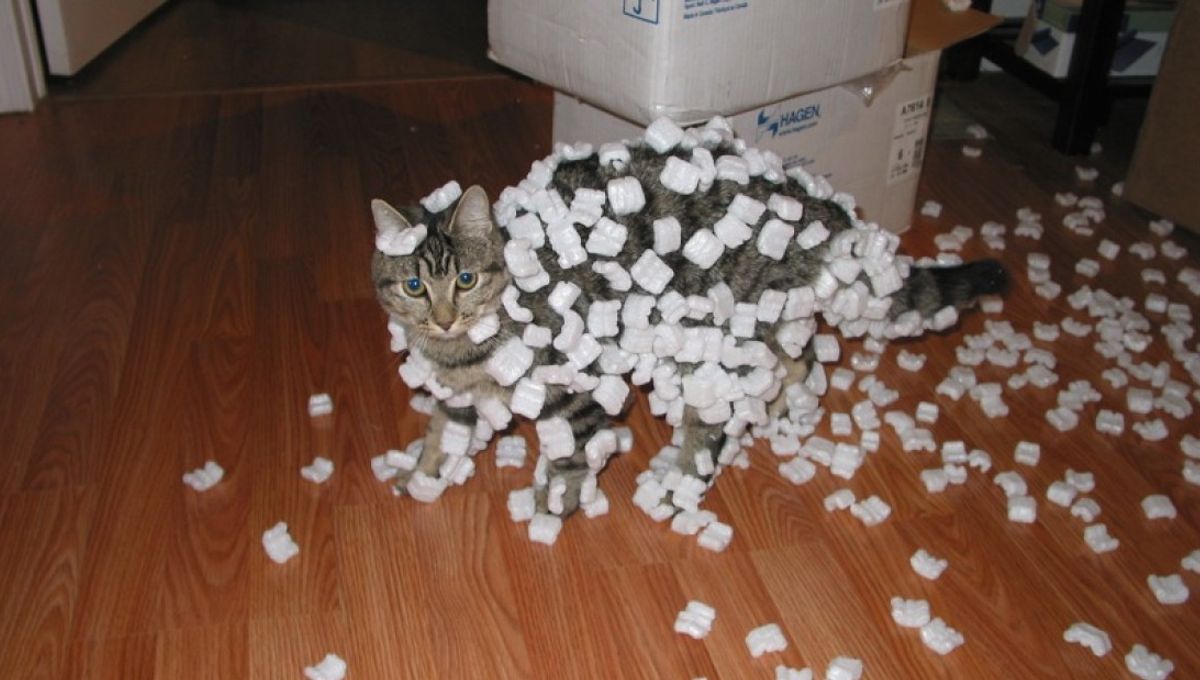
Parts of the world are experiencing the extremes of cold at this time of year, and with low temperatures comes a shocking phenomenon: cat zapping. If you’ve been trying to pet your cat only to wind up both getting a miniature shock, fear not. You aren’t alone.
The rest of this article is behind a paywall. Please sign in or subscribe to access the full content.
Cats are famously tied to static electricity. Don’t believe me? Just check out the leading image for “static cling” on Wikipedia (oh Cooper, what a pickle you’ve found yourself in). Turns out, the static potential of cats in winter comes down to two key things: your petting approach, and humidity.
Static electricity and the triboelectric effect
A 2024 study set out to answer a key question in our understanding of static electricity – what puts the “tribo” in triboelectricity? Triboelectrification is the process through which static electricity is generated by rubbing two things together.
It’s a well-documented phenomenon, as anyone who’s ever had a balloon rubbed on their hair only for it to stick can attest to (such as dear Nosey the cat). As for why that is? It’s something we’ve only just got to grips with.
“For the first time, we are able to explain a mystery that nobody could before: why rubbing matters,” said Laurence Marks of Northwestern University in a statement, who led the 2024 study. “People have tried, but they could not explain experimental results without making assumptions that were not justified or justifiable.”
“We now can, and the answer is surprisingly simple. Just having different deformations – and therefore different charges – at the front and back of something sliding leads to current.”
Cats and static electricity – the shocking truth
Petting a cat involves sliding your hand across their fur. As your hand moves, both your hand and the cat’s fur experience different amounts of stress because of the way surfaces resist motion. This difference causes electric charges to build up unevenly along your hand and the cat’s fur.
As those charges build and flow, they can suddenly discharge in the form of that static zap you feel when touching your cat. So it’s not touching the cat that creates static electricity, but the sliding motion involved in petting that produces uneven charges.
Why you’re more likely to zap your cat in winter
If you’ve noticed more zaps between you and your cat during cold weather, it’s largely due to low humidity. Cold air holds less moisture, and indoor heating dries the air even further.
Moist air normally helps static charges slowly leak away, but when the air is dry, charges linger and build up more easily. That leaves both you and your cat primed for a static zap the next time you touch.
Ergo, it’s not your fault! But good luck explaining that to them.

Source Link: Why Do I Keep Zapping My Cat? The Strange Science Of Cats And Static Electricity
