• Email Us: [email protected]
  • Contact Us: +1 718 874 1545
  • Skip to main content
  • Skip to primary sidebar

Medical Market Report

  • Home
  • All Reports
  • About Us
  • Contact Us

Why Do Lion Cubs Have Spots?

August 8, 2025 by Deborah Bloomfield

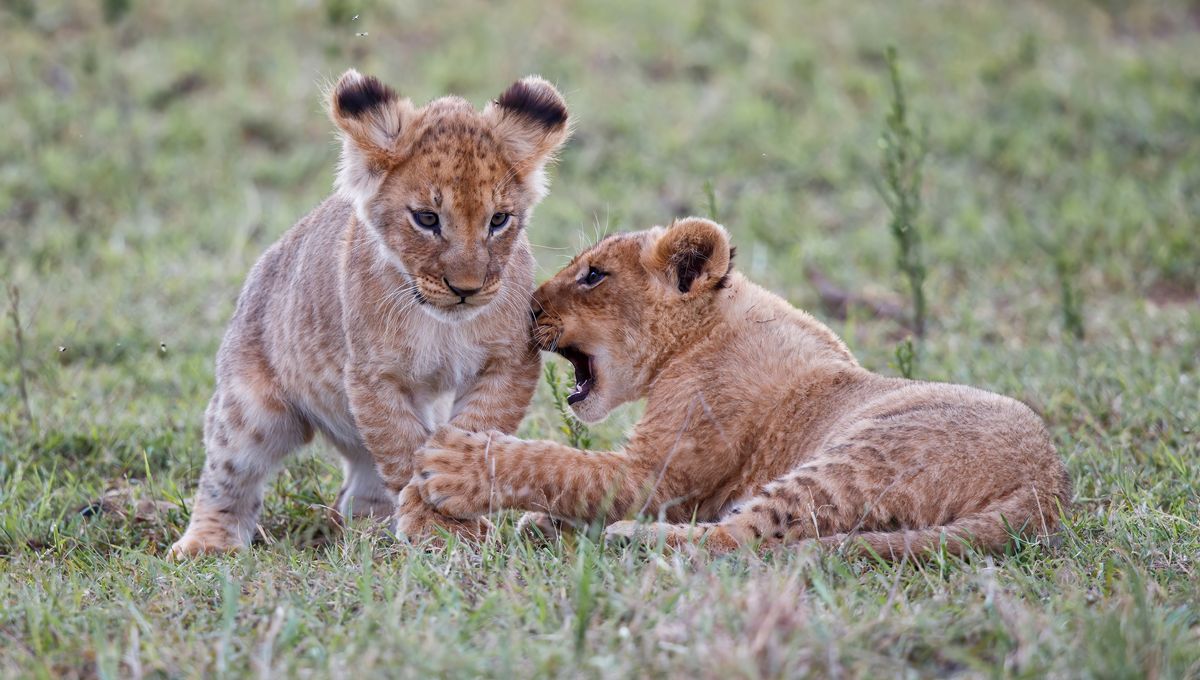
Have you seen the Barbary lion cubs born at a Czech zoo recently? Besides their size and enviable energy levels, there’s something that clearly sets them apart from their parents: they’ve got spots.

It’s not a feature unique to this population of lions in particular – spots can be seen on all young lion cubs, despite what baby Simba’s plain-coated appearance in the original version of The Lion King might lead us to believe (granted, they did fix that with the 2019 remake).

While an adult lion might be seen with a few faint spots on their legs or belly, for the most part, a cub’s spots gradually fade away as they mature. But why do they even have them in the first place?

“It’s all to do with camouflage,” explains The Big Cat Sanctuary. “Imagine a lion cub playing ‘hide and seek’ in the tall grass of the African plains. These spots act like the ultimate disguise, helping them blend in seamlessly with their surroundings.”


But while it might provide an advantage during play, the cubs’ spotty coats are primarily a feature that increases the chances of their survival. 

“When the cubs are young, [their] mum will often go off to hunt, leaving them hidden in bushes or long grass. The spots break up the solid coat pattern, giving the illusion of dappled shadows, providing the ultimate disguise from opportunistic predators,” says The Big Cat Sanctuary.

Once they’re older and more able to defend themselves, there’s no longer any need for the added camouflage. A big ol’ roar should be enough to send any animal daft enough to try and sneak up on a lion scarpering in the other direction.

Lions aren’t the only ones with spots that disappear, either. It’s a trait that also pops up in cougars (Puma concolor) – which, despite being known as “mountain lions”, aren’t actually closely related to lions. In this case, spots help cougar cubs stay hidden amongst the grassy and brush habitats of their wide-spanning range. Like lions, their spotty coats fade with maturity, typically at around six months old.

Elsewhere in the Felidae family, spotted coats aren’t always so predictable. Take cheetahs – they’re always spotty, right? Well, the king cheetah proves otherwise. Rather than the classic roughly rounded black spots you might typically expect of these big cats, king cheetahs instead sport a blotchy coat pattern, consisting of elongated and merged spots, and thick stripes along their spines.

So different was their appearance to regular cheetahs that some people initially thought they were a hybrid, or even an entirely different species. 

Deborah Bloomfield
Deborah Bloomfield

Related posts:

  1. Britain’s trucker shortage jams post-pandemic recovery
  2. Watch Butterflies In The Amazon Drinking Turtle Tears
  3. Why Does The Fibonacci Sequence Appear So Frequently In Nature?
  4. Something “Remarkable” Is Happening To Religious Life In The US

Source Link: Why Do Lion Cubs Have Spots?

Filed Under: News

Primary Sidebar

  • US Just Killed NASA’s Mars Sample Return Mission – So What Happens Now?
  • Art Sleuths May Have Recovered Traces Of Da Vinci’s DNA From One Of His Drawings
  • Countries With The Most Narcissists Identified By 45,000-Person Study, And The Results Might Surprise You
  • World’s Oldest Poison Arrows Were Used By Hunters 60,000 Years Ago
  • The Real Reason You Shouldn’t Eat (Most) Raw Cookie Dough
  • Antarctic Scientists Have Just Moved The South Pole – Literally
  • “What We Have Is A Very Good Candidate”: Has The Ancestor Of Homo Sapiens Finally Been Found In Africa?
  • Europe’s Missing Ceratopsian Dinosaurs Have Been Found And They’re Quite Diverse
  • Why Don’t Snorers Wake Themselves Up?
  • Endangered “Northern Native Cat” Captured On Camera For The First Time In 80 Years At Australian Sanctuary
  • Watch 25 Years Of A Supernova Expanding Into Space Squeezed Into This 40-Second NASA Video
  • “Diet Stacking” Trend Could Be Seriously Bad For Your Health
  • Meet The Psychedelic Earth Tiger, A Funky Addition To “10 Species To Watch” In 2026
  • The Weird Mystery Of The “Einstein Desert” In The Hunt For Rogue Planets
  • NASA Astronaut Charles Duke Left A Touching Photograph And Message On The Moon In 1972
  • How Multilingual Are You? This New Language Calculator Lets You Find Out In A Minute
  • Europa’s Seabed Might Be Too Quiet For Life: “The Energy Just Doesn’t Seem To Be There”
  • Amoebae: The Microscopic Health Threat Lurking In Our Water Supplies. Are We Taking Them Seriously?
  • The Last Dogs In Antarctica Were Kicked Out In April 1994 By An International Treaty
  • Interstellar Comet 3I/ATLAS Snapped By NASA’s Europa Mission: “We’re Still Scratching Our Heads About Some Of The Things We’re Seeing”
  • Business
  • Health
  • News
  • Science
  • Technology
  • +1 718 874 1545
  • +91 78878 22626
  • [email protected]
Office Address
Prudour Pvt. Ltd. 420 Lexington Avenue Suite 300 New York City, NY 10170.

Powered by Prudour Network

Copyrights © 2026 · Medical Market Report. All Rights Reserved.

Go to mobile version