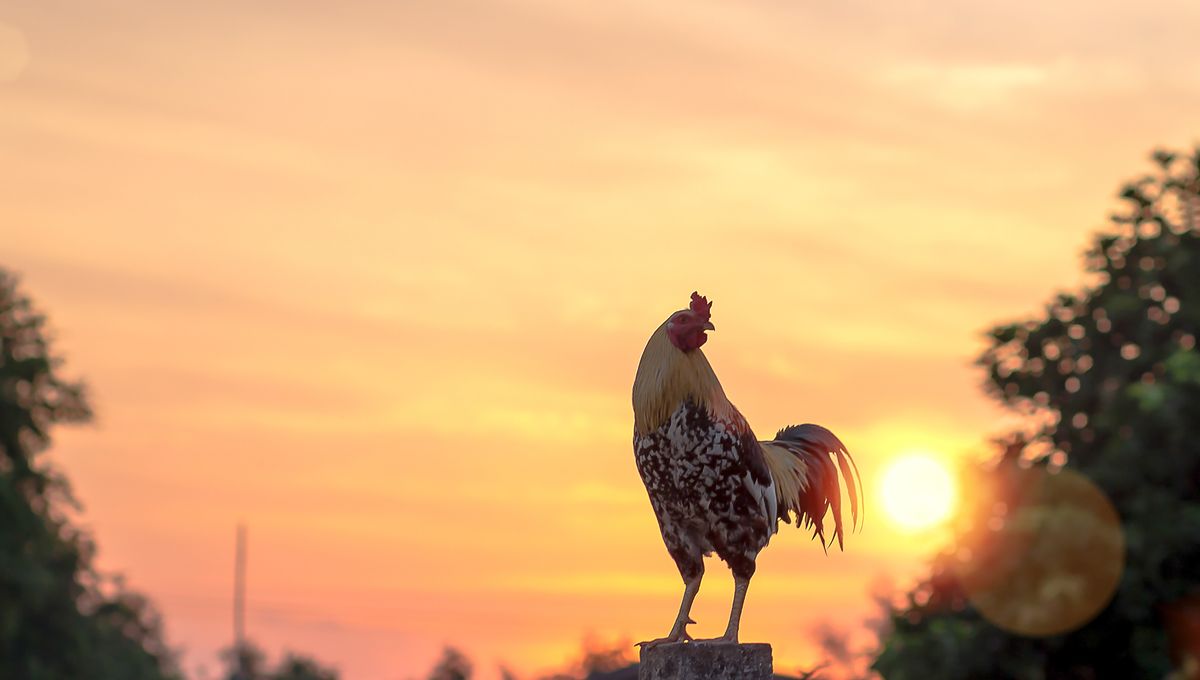
“Cock-a-doodle-doo” at sunrise is heard around the world as nature’s alarm clock, but roosters don’t just do this morning ritual out of duty or tradition. As shown by several scientific studies, roosters crow at dawn to assert their dominance and signal their social status to others.
Chickens are social animals with a surprisingly strict hierarchy – that’s why it’s called a “pecking order”. Much of their behavior, from who gets to eat first and who gets to mate, to how territory is claimed, is governed by their hard-earned place in the social structure. Understanding their rank is essential for maintaining harmony within the flock.
For male roosters, dominance is established by aggression and certain cues, such as the size of their head’s comb and crowing ability, all of which are influenced by levels of testosterone. It turns out, the timing of rooster calls offers valuable insight into the flock’s social ladder too.
Why do roosters crow in the morning?
A 2015 study by the National Institute for Basic Biology in Japan found that the highest-ranking rooster has priority to squawk the first “cock-a-doodle-doo” of the day.
The researchers closely observed a group containing four males and noticed a systematic rule in the order of crowing each morning: the highest-ranking rooster always crows first, followed by the second, third, and fourth-ranking roosters. If a lower-ranking rooster dared to crow out of order then they can expect to be put in their place with an aggressive routine of pecking and chasing.
This, the scientists concluded, suggests that rooster crows are tightly linked to social signifying, hierarchy, and dominance. Another study, published in 1995 by researchers in the US, reached similar findings, concluding that “crowing by roosters could thus potentially function as a signal of status.”
The morning pre-drawn crow isn’t necessarily guided by the light of the sunrise either. A previous study in 2013 by the same Japanese scientists suggested that the crowing is primarily guided by the rooster’s internal biological clock, ie their circadian rhythm, rather than external stimulus, like the sunrise. While sunlight does influence the circadian rhythms of animals, including humans, roosters still show the same hierarchical structure of crowing even in pitch darkness.
Something very interesting happens if the top-ranking rooster is removed from the group too. In the absence of the top rooster, the second-in-charge rooster will crow first and “behaves as if he is the top-ranking rooster,” explain the authors of the 2015 study.
This suggests that the highest ranking rooster gets to “decide” when the crowing starts, based on their own individual circadian rhythm. The others simply have to follow his lead – or suffer the consequences.
“We demonstrated that the highest-ranking rooster has priority to announce the break of dawn, based on his own circadian clock and that subordinate roosters compromise their clocks for social reason and wait for the top-ranking roosters’ first crow every morning,” they added.
In short, there’s a lot more behind that early-morning crow than meets the ear. From hormones to hierarchy, roosters use their voice to stake their claim and keep the social order in check. So, next time you hear a “cock-a-doodle-doo” at dawn, make sure you know your place or you might be in store for the pecking of a lifetime.

Source Link: Why Do Roosters Crow At Dawn?
