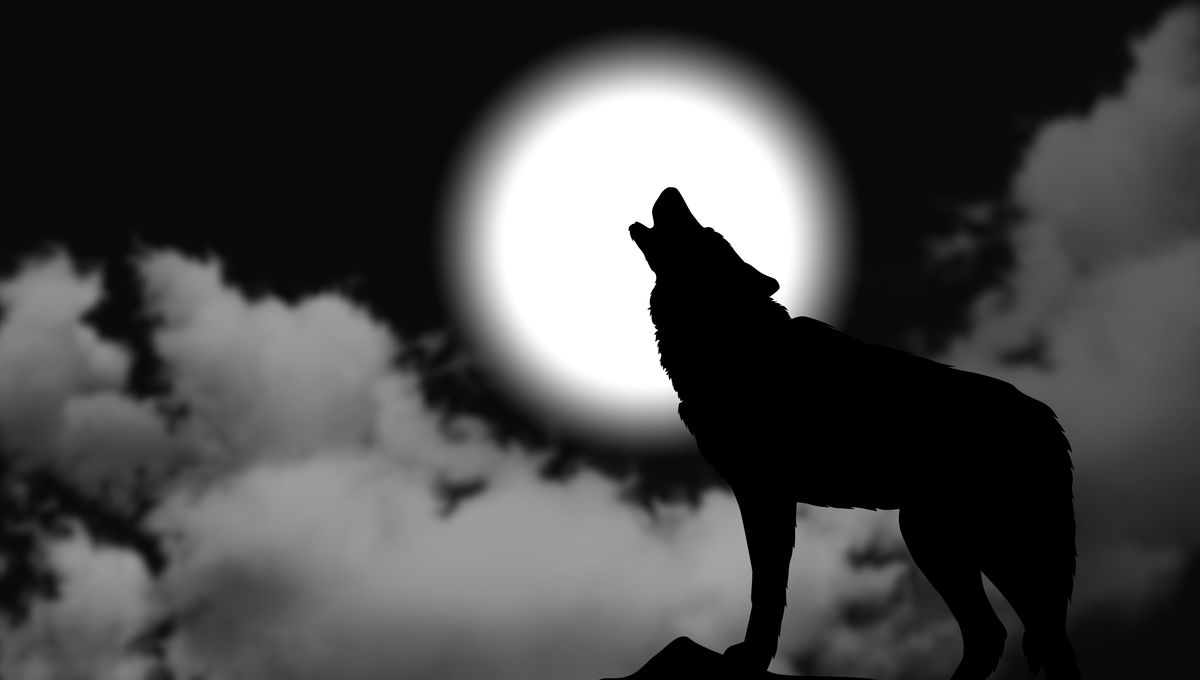
There are few ideas that are as spine-tinglingly iconic as wolves howling at the Moon. It’s a trope that has appeared in innumerable films, TV shows, books, art, and so on. Wolves and the Moon are inseparable in our minds, but this association is odd given that wolves don’t actually howl at the Moon. So where did this belief come from?
If this information is a surprise to you, you’re likely not alone. The idea has deep, though vague, cultural roots that appear to reach back into the distant past. Wolves in Western cultures have frequently been paired with the Moon in one way or another.
For instance, Greek and Roman mythology linked wolves and other canines to lunar symbolism. Hecate, the Greek goddess of the Moon was known for having packs of dogs by her side. In Norse mythology, the wolves Sköll and Hati were associated with the Sun and Moon, respectively, both chasing their chosen celestial objects across the sky to usher in day and night.
According to some sources, the Seneca believe that wolves were responsible for singing the Moon into existence. However, the connection between these animals and the Moon is less pronounced in other Native American tribes. Instead, many Native American myths connect different animals with various celestial bodies, so it is something that should be understood within a broader cultural context.
It seems that centuries of storytelling and fear surrounding wolves have helped fuse them with the Moon, at least in our collective imaginations. At the same time, the Moon’s phases have been linked to various other myths concerning the behavior of animals and people, especially the idea that it inspires madness (“lunacy”) in humans and makes animals more aggressive.
This is where modern cinema comes into play. If wolves and the Moon had a fuzzy connection throughout history, then the rise of popular gothic horror movies in the 20th century solidified it. Films like The Wolf Man (1941), An American Werewolf in London (1981) and so many others have linked wolfish behavior to the lunar phases.
So much for the legends, but what about real wolves? Wolves can be heard howling at night to communicate with their pack, establish territory, and locate one another. Scientists have not found any evidence, however, that wolves howl any more or less when the Moon is full or in any other phase.
What we do know is that because of its pitch and the suspension of notes, the sound of a howl can be heard as far as 16 kilometers (10 miles) away on open tundra.
Wolf packs often claim large territories that can be as large as 3,000 square kilometers (1,158 square miles). When hunting, the animals can separate from one another, so the ability for their howls to travel great distances is a valuable way to communicate location.
Contrary to the common belief that wolves are simply savage animals, there is another form of howl that actually communicates affection between them and specific members of their packs, with wolves tending to howl more to those they have stronger connections with.
Similarly, wolves will howl more frequently before and during the breeding season when they are seeking a mate. The nature of a wolf’s howl can also provide listeners with a sense of the animal’s overall size and health, with larger wolves producing deeper sounds.
So while there may not be any meaningful real-world connection between wolves and the Moon, the wolf howl is still an important aspect of these social animal’s lives. Arguably, that makes it even more interesting than any made-up stories we can conjure up.

Source Link: Why Do Wolves Howl At The Moon – Or Do They?
