There’s a flower that blooms in the forests of Indonesia that’s infamous for the smell it produces. It’s a rare event that it releases its stench, but when it does, a bouquet of “rotting fish, very smelly socks[…] like a food bin that’s overflowing” is released into the air – so says Glasshouse Horticulturist at Kew Gardens, London, Pauline Maciejewska-Daruk. Why am I telling you the notes of this peculiar bloom? Because it’s known as the corpse flower.
Yes, when we humans die, we emit one last swan song in the form of a distinctive smell of death. You’ve probably heard that phrase “smell of death” before, and with good reason. There does seem to be a common roster of smells that are unleashed as our bodies break down.
So, what is it?
Cadaverine and putrescine
Suffice to say, scientists don’t hold back when it comes to naming the things they discover. However, vying for the top spots as grimmest names for anything ever are cadaverine and putrescine.
Both compounds are produced as a result of amino acids decaying in the body of a dead animal, through decarboxylation of ornithine and arginine for putrescine, and decarboxylation of lysine for cadaverine. They’re found in the corpses of many animals, however, so what defines that human death smell?
What does death smell like?
When corpses decompose, human or otherwise, a wide spectrum of volatile organic compounds are released into the environment (if you want to know why, here’s what happens when you die). Among those most familiar with the smell are people who conduct biohazard cleaning, such as Trauma Services, who report the smell of death can vary from rotten fish to eggs and rancid garlic depending on a corpse’s stage of decomposition.
A variety of death-related compounds have been identified in animals, but it wasn’t until 2015 that we got a better idea of specific scent markers for human decomposition. To investigate, a study left out a smorgasbord of organic remains to investigate the compounds that were released over the course of six months.
They included six humans and 26 animals: rabbits, mice, moles, frogs, chicks, robins, a woodpecker, a warbler, a sparrow, a song thrush, a sturgeon, a turtle, and of course, a pig (pigs are often used as human analogues because we have a lot in common).
The study identified 452 compounds, and a specific combination of eight compounds that distinguished the human and pig remains from other animal remains. Furthermore, the researchers managed to separate the pig remains from human remains based on five esters – compounds found in fat and oils (for the morbidly curious, they are: 3-methylbutyl pentanoate, 3-methylbutyl 3-methylbutyrate, 3-methylbutyl 2-methylbutyrate, butyl pentanoate, and propyl hexanoate.
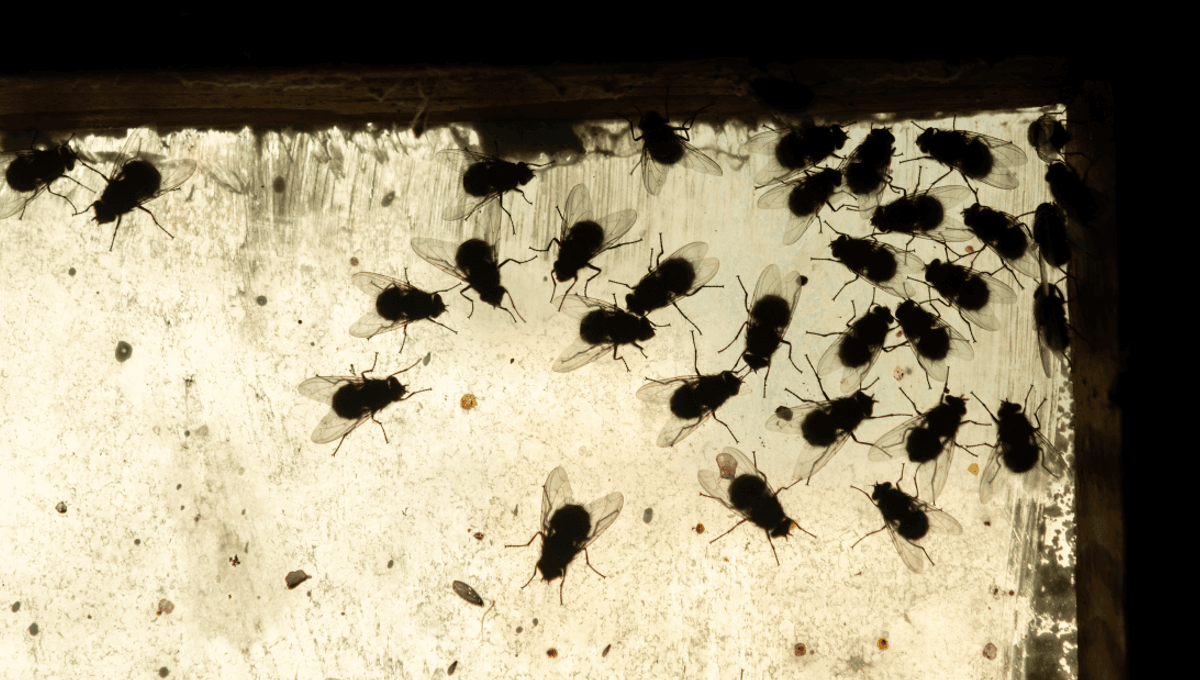
It’s a potent perfume, one that flies can detect and even dig down as far as 2 meters (6.6 feet) to wriggle into a coffin and lay their eggs in a corpse. Weird, right? But weirder yet is the fact that scavengers and flies-with-egg aren’t the only ones who can identify the smell of death.
Can humans smell death?
Not only can humans detect that distinct smell of death, but research has also shown that it can have a strange influence on our behavior. This was explored in another 2015 study that set out to investigate if it could constitute a threat signal that brings about defensive and escape-related behaviors in humans, with a special focus on the chemical putrescine.
It found that exposure to putrescine resulted in heightened vigilance among participants, even when they weren’t aware they were smelling it. Participants exposed to putrescine walked faster in escape experiments and exhibited more hostility and defensive behaviors. It seems, then, that the smell of death could act as a kind of warning system.
“As a whole, the findings indicate that even brief exposure to putrescine mobilizes threat management responses designed to cope with environmental threats,” concluded the authors. “These are the first results to show that a specific chemical compound (putrescine) can be processed as a threat signal.”
“An important direction for future research will be to understand the precise nature of the threat produced by putrescine (e.g., microbial, predatory). Our view is that putrescine is relevant to both of these domains, though the immediate context should determine which type of threat is more primary.”
The smell of death. It might not be pleasant, but it has its uses.

Source Link: Why Does Death Have Such A Distinctive Smell?
