Flying is something of a Marmite as locomotion goes – you either love it, or hate it. I myself fall into the latter category, reserving flying only for those journeys where there is no reasonable alternative (such as the new world’s longest flight of *shivers* 29 hours).
I don’t hate the entire journey, just take-off. Grinding and whirring and lifting and dropping – yes, dropping. We’ve all felt that strange sinking sensation that seems to kick in around 30 seconds after take-off, but if the plane is still climbing, why does it feel like that?
Enter flyman_simon, an airline captain and fear of flying coach sharing what he’s learned across his 25 years of flying. In social media posts he’s tackled everything from turbulence to bumpy landings and flying in treacherous weather.
In a recent video, he explained that weird feeling when a plane takes off is actually a perfectly normal sign that the flight is progressing as planned.
“That ‘dropping’ feeling after take-off is just a sensation, not an actual drop,” he wrote in the Instagram post. “After lift-off we reduce thrust and ease the climb so the aeroplane can accelerate.”
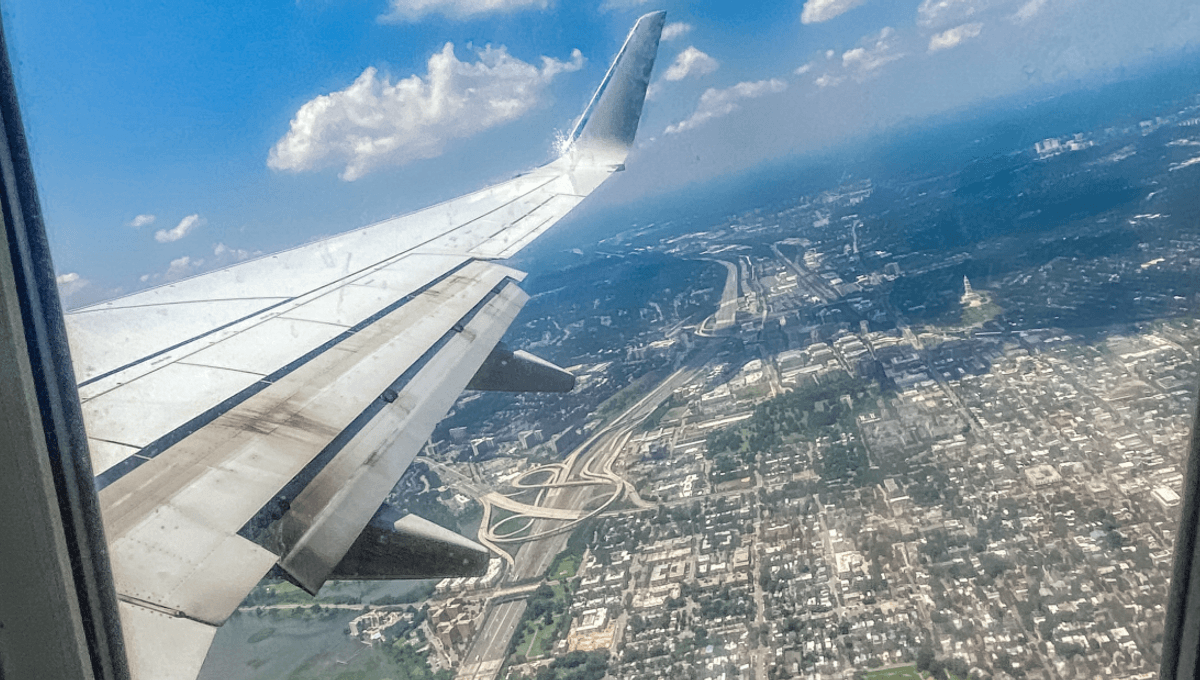
“The nose lowers slightly, the engines get quieter, and we start to clean up the wings – flaps and slats retract – to become more efficient. Your inner ear notices the nose lowering a drop on engine tone and can misread it as a dip, even though we are still climbing and accelerating.”
The human ear is very good at noticing changes in our balance and acceleration, but sometimes those messages can get a little mixed up. Problems with the inner ear can cause a condition known as vertigo where we feel like our surroundings are moving or spinning. During take off the initial steep climb transition to a shallow climb, and this can be interpreted by our ears as a drop when in fact we’re still going upwards.
Another place this change in acceleration can be felt is in our stomachs (or if you need to pee, bladders). During the high-power take off with the steepest climb, you and the plane are both rising together. When the plane reduces its upward acceleration, there’ll be a brief moment your body continues upward inertia, which can give that weightless tummy drop sensation you often get on rollercoasters or after driving over a bump.
It might not feel very nice, but this take-off transition is an important step as it increases efficiency, which comes with two key benefits. Firstly, it preserves the engines as it reduces the period of time in which they’re working their hardest. Secondly, it improves the lives of people living close to the airport by making the take-off less noisy. The good news is it doesn’t last long.
“Soon after this sensation you will feel the speed build and the steady climb continue,” he said. “So when it feels like a drop, remind yourself: we are climbing, the aircraft is getting sleeker and quieter, and you are on your way.”
Well thank goodness for that, eh?

Source Link: Why Does It Feel Like You’re Dropping Around 30 Seconds After A Plane Takes Off?
