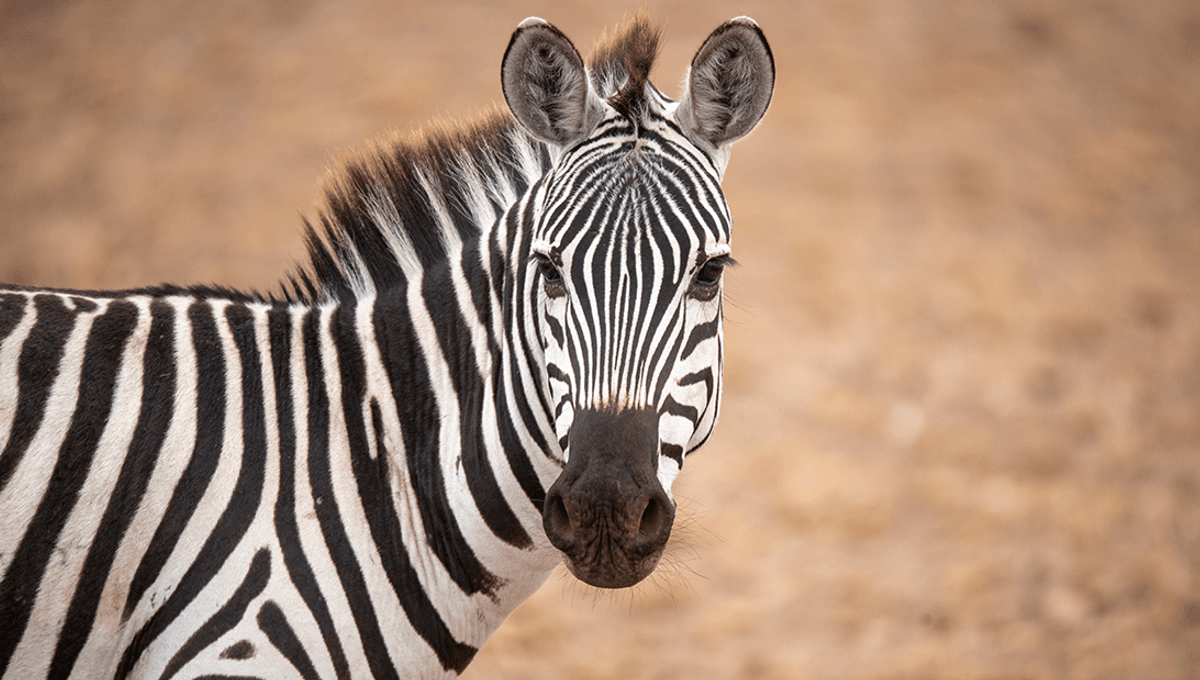
Every now and then on the Internet, people will ask the question, “If we ride around on horses, why aren’t we galloping around on zebras too?” It’s a silly thought, but it’s actually pretty interesting to go into. First off, how and when did humans domesticate horses?
We have not always been such good friends with the horse, and in prehistoric times would hunt them down for meat rather than view them as transportation. But at some point in our history, humans began to domesticate the animal, beginning a world-changing era of migration across the Eurasian continent.
For a long time the most-favored model for domestication by archaeozoologists was known as the “Kurgan hypothesis”. In the Kazakhstan region, home to the ancient Botai culture, researchers have found a large number of horse bones dating from around 4000 BCE. Alongside the bones, archaeologists found other signs – such as potential holes for fence posts, and ceramics containing horse fats that may have been from collected milk – which suggested that domestication took place in that region.
Of particular importance was evidence that the horses’ teeth appeared to show signs of wear and tear, which was potentially a strong indication that they had been bridled. In more recent years, that hypothesis has faced some challenges, with horses elsewhere that are not believed to have been domesticated showing very similar signs of wear and tear. Genetic analysis has pushed back the timeline, though horses do appear to have been domesticated in that region.
“A detailed genomic study of early Eurasian horses, published in June 2024 in the journal Nature, shows that Yamnaya horses were not ancestors of the first domestic horses, known as the DOM2 lineage. And Yamnaya horses showed no genetic evidence of close control over reproduction, such as changes linked with inbreeding,” William Taylor, Assistant Professor and Curator of Archaeology at the University of Colorado Boulder, and author of Hoof Beats: How Horses Shaped Human History explained in a piece for The Conversation.
“For now, all lines of evidence seem to converge on the idea that horse domestication probably did take place in the Black Sea steppes, but much later than the Kurgan hypothesis requires. Instead, human control of horses took off just prior to the explosive spread of horses and chariots across Eurasia during the early second millennium BCE.”
So we domesticated horses, but why not zebras? Well, it’s not through lack of trying. When the Dutch colonized parts of South Africa, they attempted to tame the animals, but with little success. The cantankerous animals resist being domesticated, and would regularly break free of their harnesses. Nevertheless, it is possible to domesticate a few individual animals. Enough to ride around, anyway.
Looking at a zebra, while your brain goes “stripy horse”, the two species diverged from a common ancestor 4–4.5 million years ago. The environments the diverged species found themselves in had a big impact on their suitability for taming and transportation.
“Unlike the Equids of Eurasia,” Carol Hall, reader in Equitation Science at Nottingham Trent University explains in a piece for The Conversation, “the zebra population of Africa was relatively secure and particularly well adapted to its environment. All equids are herbivorous prey species with a well developed ‘flight or fight’ response. But to survive in an environment where there is an abundance of large predators including lions, cheetahs and hyenas, the zebra evolved into a particularly alert, responsive animal that flees in the face of danger but also possesses a powerful response if captured.”
These responses do not make the animals a good candidate for domestication. They are shaped by their need to escape from, for example, lion attacks, and have developed a kick that can repel a lion and even break their jaw. They have also developed a healthy fear of humans, and will generally avoid us where possible.
Animals that can be domesticated generally need to be quick to mature, have a calm disposition, and have a friendly nature towards humans. Zebras, with their natural aggression and strong evasion reflexes, lack the characteristics for being tamed.
“There have been rare instances of individuals taming zebras for personal use. For example, Walter Rothschild famously drove a carriage pulled by zebras in Edwardian London, and Bill Turner has been known to ride a particularly strong-backed zebra in Dorset,” Prime Stables explains. “However, these are exceptions and do not indicate that zebras can be broadly domesticated or used in the same way as horses.”
It should also be noted that even if we could domesticate zebras, they are much smaller than modern horse breeds, much closer to the size of modern day ponies, and making them unsuitable for riding or transporting heavy goods.

Source Link: Why Don't We Ride Zebras?
