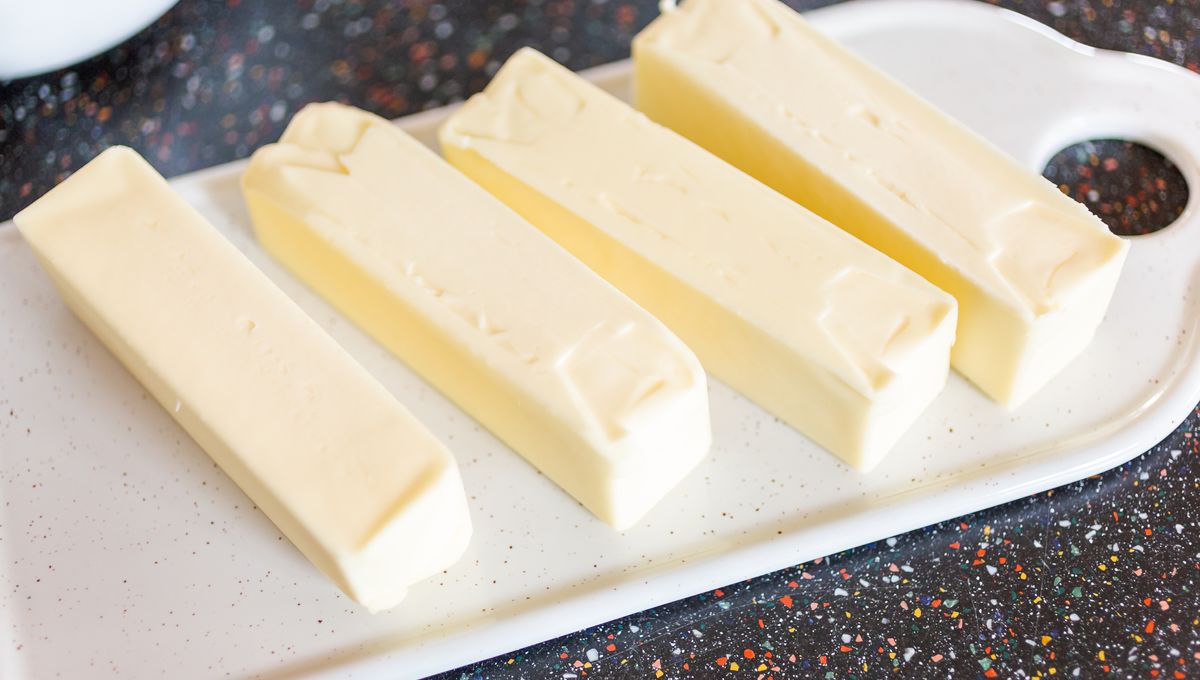
There’s another dietary fad in town, coming soon to a social media platform near you – unless, that is, the algorithm gods have already gifted you with videos of people chowing down on sticks of straight butter. To the uninitiated, this one’s difficult to comprehend. If you’re anything like us, biting into a hunk of raw butter is about as unappetizing as it gets. But proponents claim it has all sorts of health benefits, so we thought it was time to take a closer look at this trend.
A short history of modern butter consumption
Let’s get one thing straight: no one is here to demonize butter. For those who choose to include animal-based products in their diet, and who don’t have to avoid dairy, it’s one of life’s greatest pleasures. Melted into hot toast or crumpets (yes, the IFLScience team are mostly based in the UK!), blended into cakes and pastries, or even ladled over a sizzling steak, there are few meals that can’t be enhanced by butter.
But just because it can work wonders as an ingredient, that’s not to say it’s a good idea to scoff sticks of the stuff. Too much of a good thing, and all that.
There was a time when butter was considered a scourge of the Western diet. From around the mid-20th century, saturated fat was public enemy number one for the health-conscious consumer, and lots of people switched to alternatives like margarine. These products, however, are high in trans fats – partially hydrogenated oils – and emerging research showed that they can have an alarming effect on cardiovascular and metabolic health.
Countries began to make moves to ban artificial trans fats, and studies were coming out that suggested butter may not have been so bad in the first place. Consumers started to turn away from low-fat dairy alternatives – which are often higher in other ingredients like sugar – in favor of old-school butter, whole milk, and full-fat yogurts.
Butter, as one New York Times columnist put it, was back. But are some people now taking this too far, exchanging one fad for another? What drives people from seeing butter as solely a way to enhance other foods, to a nutritious snack all of its own?
Why are people eating raw butter?
It’s a bit of a leap to go from swapping shortening for butter in your baking to straight-up eating a stick of butter dipped in marinara sauce, but that’s exactly what TikTokker buttergirll did in this post.
This is just one of many videos of the creator sampling butter with various condiments that have helped contribute to her 1.4-million-strong following on the platform. And buttergirll is far from alone, with videos of people tucking into a stick of buttery yellow goodness racking up views across all the big social platforms.
Not everyone is making bold claims about the supposed health benefits of this habit – some (hard as it may be to believe) just enjoy the taste. But there are those who believe eating raw butter is a route towards peak wellness.
For example, _butter_dawg_ claims in one explanatory video, in which he admits to eating up a stick of butter per day, that he simply feels better when eating a high-fat diet.
Fats are an essential part of a healthy diet. For one thing, some vitamins like A, D, and E can only be properly absorbed with the help of fat.
But while there’s no longer such a big push from health authorities towards a low-fat diet, there is still a distinction to be made between saturated, monounsaturated, and polyunsaturated fats. It’s recommended that saturated fats, like butter, be consumed only in moderation, and swapped for unsaturated fats where possible – this is one of the principles behind the science-backed Mediterranean diet, for instance.
Proponents of the keto diet are often big fans of butter too. For a number of years now, keto has been a stalwart of the wellness sphere, with many claiming that a low-carb way of eating has helped them to lose weight and stay in shape, but as is so often the case the actual science behind it is mixed.
Another low-carb plan that has been increasing in popularity is the carnivore diet, which is arguably even stricter on carbs and limits followers to only animal-based products. Butter is another favorite with this crowd, although people seem to have strong opinions about exactly what type of butter is best, with grass-fed often seeming to come out on top for its reportedly superior nutritional content.
A further claim made about butter is that it can promote digestive health. Butter is rich in a short-chain fatty acid called butyrate, which some studies have linked to improvements in conditions like irritable bowel syndrome (IBS), as well as an anti-inflammatory effect that may have benefits for those with Crohn’s disease.
However, these types of studies only look at butyrate in isolation – they’re not feeding people large amounts of butter and seeing how it improves their condition. Many IBS patients, for example, report that high-fat foods are a trigger for their symptoms, so these individuals are unlikely to relish the idea of chomping on a stick of grass-fed finest. There’s certainly no cut-and-dried scientific evidence that eating raw butter can promote healthier digestion.
How much butter can we eat?
As with many food-related fads, there’s no one-size-fits-all when it comes to butter consumption. Everyone has different caloric requirements according to their lifestyle; different preferences when it comes to eating animal products; and different food sensitivities or triggers that they may need to take into account.
Butter can certainly form part of a healthy diet. We know far more now about the benefits of consuming full-fat dairy products versus low-fat alternatives, but there’s a big difference between spreading butter on your morning toast and slipping a stick of Kerrygold in your bag for when those mid-afternoon cravings hit.
Saturated fats are no longer the dietary demon they once were, but that doesn’t mean it’s open season. Enjoy butter in moderation, by all means – but experts still agree that your cardiovascular system will thank you if you keep these products to more of a supporting role in your daily diet.
The content of this article is not intended to be a substitute for professional medical advice, diagnosis, or treatment. Always seek the advice of qualified health providers with questions you may have regarding medical conditions.

Source Link: Why, Oh Why, Are People On The Internet Munching On Sticks Of Butter?
