• Email Us: [email protected]
  • Contact Us: +1 718 874 1545
  • Skip to main content
  • Skip to primary sidebar

Medical Market Report

  • Home
  • All Reports
  • About Us
  • Contact Us

Why Skipping Leaf Raking Can Benefit Your Lawn This Fall

October 5, 2024 by Deborah Bloomfield

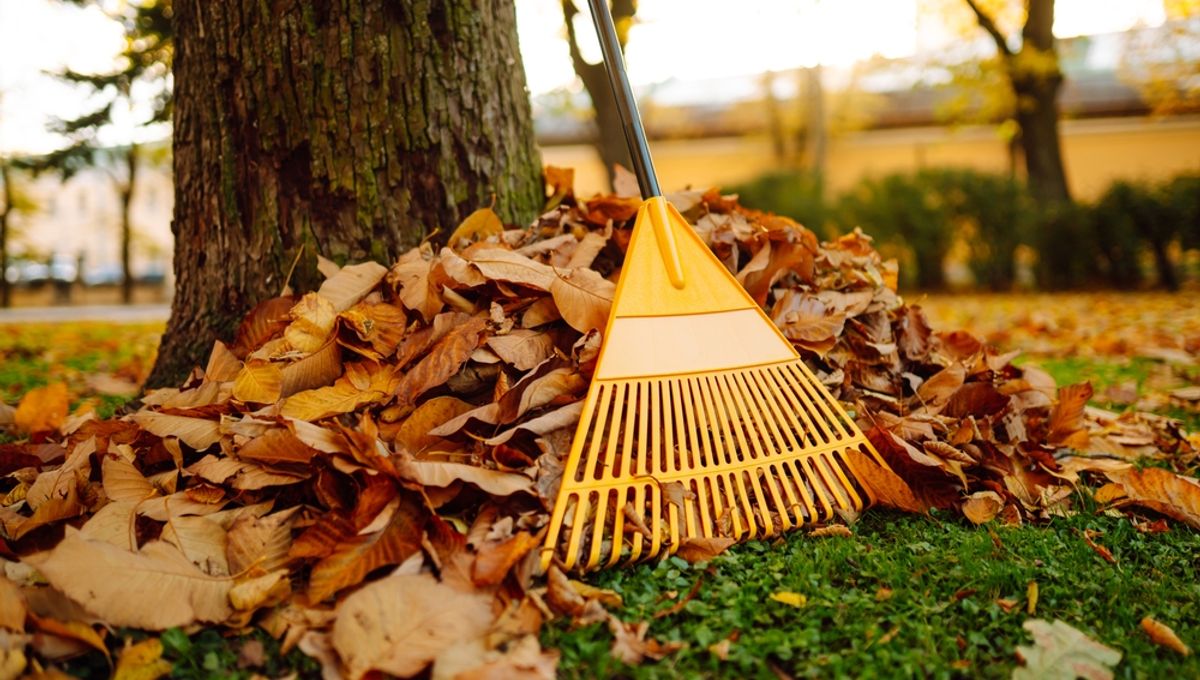
As the nights get longer and the leaves turn brown, lawn owners everywhere reach for their rakes. This year, experts say that the fall ritual of raking leaves might make you miss an opportunity to give your lawn a health boost.

Advertisement

Instead, letting a thin layer of leaves sit and then decompose on your lawn will give the underlying soil a rich reward of organic nutrients. 

Susan Barton, a professor of landscape horticulture at the University of Delaware told The New York Times that this practice would improve soil health. “A forest has the richest soil there is, and that happens because leaves are falling off the trees and decomposing right there and organic materials are going back into the soil,” she said. “We should be doing that in all of our landscapes, but we’re not.”

A recent analysis of the chemicals released by leaf litter found that nutrients like nitrogen and phosphorus could provide a “significant positive effect” on soil microorganisms, which make a huge contribution to the overall health of your lawn. 

As well as helping soil-bound critters, leaving leaves may benefit bigger animals too. “The fallen leaf layer is actually [a] really important wildlife habitat. All sorts of creatures rely on that for their survival as a place where they can find food and cover, and in many cases even complete their life cycle,” David Mizejewski, a naturalist at the National Wildlife Federation told The Washington Post. Moths, bees, chipmunks, and birds may all benefit from a leafy hiding spot, he said. 

This doesn’t mean you should leave every leaf. A thick layer of leaves could smother your grass, so letting 20-50% of leaves lie is a nice balance, says Diana Alfuth of the University of Wisconsin. She writes that small amounts of leaves can be left, whereas big piles of leaves should be mulched with a lawnmower to help release their nutrients.  

Advertisement

By following Alfuth’s instructions, you’ll still be left with small piles of leaves. Rather than taking them to the dump, where they will break down in anaerobic conditions that promote the release of greenhouse gases, the experts say the best practice is to reuse them as compost after chopping them up with a mower. That way, you’ll have a protective mulch layer for hard winter frosts or valuable nutrients for a new season of growth in spring. 

H/T Mentalfloss 

Deborah Bloomfield
Deborah Bloomfield

Related posts:

  1. Cricket-Manchester test likely to be postponed after India COVID-19 case
  2. EU to attend U.S. trade meeting put in doubt by French anger
  3. Soccer-West Ham win again, Leicester and Napoli falter
  4. Was Jesus A Hallucinogenic Mushroom? One Scholar Certainly Thought So

Source Link: Why Skipping Leaf Raking Can Benefit Your Lawn This Fall

Filed Under: News

Primary Sidebar

  • Sun’s Ancient Encounter With Two Hot Stars Left A Legacy In The Solar System’s Neighborhood
  • Defiant Stars And Unusual Objects Survive Against The Milky Way’s Supermassive Black Hole
  • A Wobbling Brown Dwarf Might Be A Sign Of The First Discovered “Exomoon” – A Moon Outside The Solar System
  • “Happy Molecule” Precursor Discovered In Extraterrestrial Material For The First Time
  • Why Do Seals Slap Their Belly?
  • Interstellar Comet 3I/ATLAS Appears To Be Experiencing “Cryovolcanism”, And Is Eerily Similar To Objects In The Outer Solar System
  • Catch The Last Supermoon Of The Year This Week
  • Why Does It Feel Like You’re Dropping Around 30 Seconds After A Plane Takes Off?
  • We Finally Understand Why We “Feel” It When We See Someone Get Hurt
  • The First Map Of America: Juan De La Cosa’s Strange Map Was Missing Until 1832
  • What’s The Difference Between Buffalo And Bison?
  • 18,000-Year-Old Stalagmite Sheds Light On Why Civilization Started In The Fertile Crescent
  • Enormous Anaconda Fossils Reveal They Got Big 12 Million Years Ago – And Stayed Big
  • Meet The Malaysian Earthtiger Tarantula: Secretive And Stripy With A Leg Span For Days
  • Meet The Thresher Shark, A Goofy Predator That Whips Up Cavitation Bubbles To Stun Prey
  • 18 Asteroids Passed Earth Closer Than The Moon In November – All Of Them Were Discovered That Month
  • 7th Person Cured Of HIV After Stem Cell Donation Offers Hope Of Expanded Treatment Options
  • Humans Weren’t Capable Of “Mass Hunting” Until 50,000 Years Ago – What Changed?
  • ESA Steps Up Earth Monitoring, As NASA And NOAA Missions Face Uncertain Futures
  • Yellowstone’s Wolves And The Controversy Racking Ecologists Right Now
  • Business
  • Health
  • News
  • Science
  • Technology
  • +1 718 874 1545
  • +91 78878 22626
  • [email protected]
Office Address
Prudour Pvt. Ltd. 420 Lexington Avenue Suite 300 New York City, NY 10170.

Powered by Prudour Network

Copyrights © 2025 · Medical Market Report. All Rights Reserved.

Go to mobile version