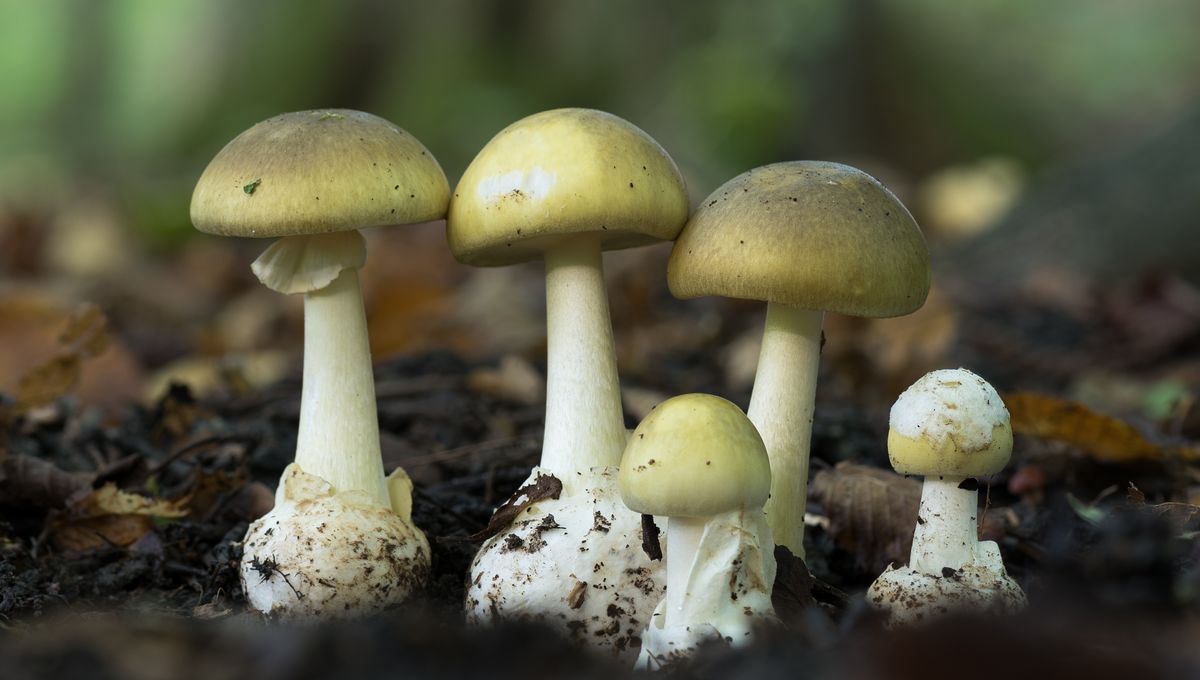
Toxic mushrooms are one of the leading causes of food poisoning deaths worldwide, and an incredible 90 percent of these fatal fungal foragings are the work of one species: the aptly named death cap mushroom.
ADVERTISEMENT GO AD FREE
Also known by its taxonomic label Amanita phalloides – which actually means penis-shaped – this deadly member should never be part of anyone’s lunchbox, as ingesting even small amounts can cause irreparable kidney and liver damage. So lethal is the mushroom that it’s reported to have been used as a murder weapon for thousands of years, with the Roman Emperor Claudius said to have been assassinated by his wife Agrippina by slipping a death cap into his favorite mushroom dish.
Later, the War of Austrian Succession which gripped Europe in the 1740s began after the death of the Holy Roman Emperor Charles VI, who is also speculated to have accidentally consumed death cap mushrooms. Cases like this just go to show how catastrophic misidentifying mushrooms can be, although it has to be said that starting a continental conflict because of a simple mycological error does seem particularly unfortunate.
Still, the fates of Claudius and Charles highlight how easily the death cap can be confused with other harmless species of edible mushrooms. Ranging in color from green to brown to white, the mushroom’s cap can’t reliably be identified based on its hue, and non-experienced foragers may have trouble differentiating the species from sought-after varieties such as Caesar’s mushroom (Amanita caesarea).
Appearing during the late summer and autumn, death caps are native to Europe but have inadvertently been spread across the world by humans. As the mushroom’s hyphae grow on the roots of various broadleaf trees, they have hitched a ride to the Americas and Oceania on imported non-native trees, and are now well established in these regions.
In one high-profile case from Australia, a woman was recently charged with murder after her wild mushroom beef wellington hospitalized four people, eventually killing three of them while the fourth survived after receiving a liver transplant. It’s thought that the deadly meal was laced with death caps, although the suspect insists that the poisonings were accidental.
The lethality of the phalloid is down to a toxin called α-amanitin, which triggers apoptosis – or cell death – in the liver and kidneys. Eating any quantity of death cap can therefore produce an array of nasty symptoms, often beginning with vomiting, diarrhea, and stomach pain, before the vital organs begin to fail.
ADVERTISEMENT GO AD FREE
At this point, accidental consumers are likely to fall into a coma and probably die, although rapid treatment – often involving dialysis and organ transplants – can save a person’s life if administered within a few hours of ingesting the mushroom. Unfortunately, there is currently no antidote for α-amanitin, and efforts to develop one have been hindered by the fact that we don’t fully understand the mechanisms by which this poison works.
Yet hope may be on the horizon, as researchers recently identified a key protein called STT3B that appears to play a key role in the lethality of α-amanitin. This discovery has caused some excitement over the possibility of developing an effective treatment for death cap poison in the coming years, although for now, your best chance of staying safe is to simply avoid this dangerous mushroom like the plague.
The content of this article is not intended to be a substitute for professional medical advice, diagnosis, or treatment. Always seek the advice of qualified health providers with questions you may have regarding medical conditions.

Source Link: Why The World’s Deadliest Mushroom Is Worthy Of Its Terrifying Name
