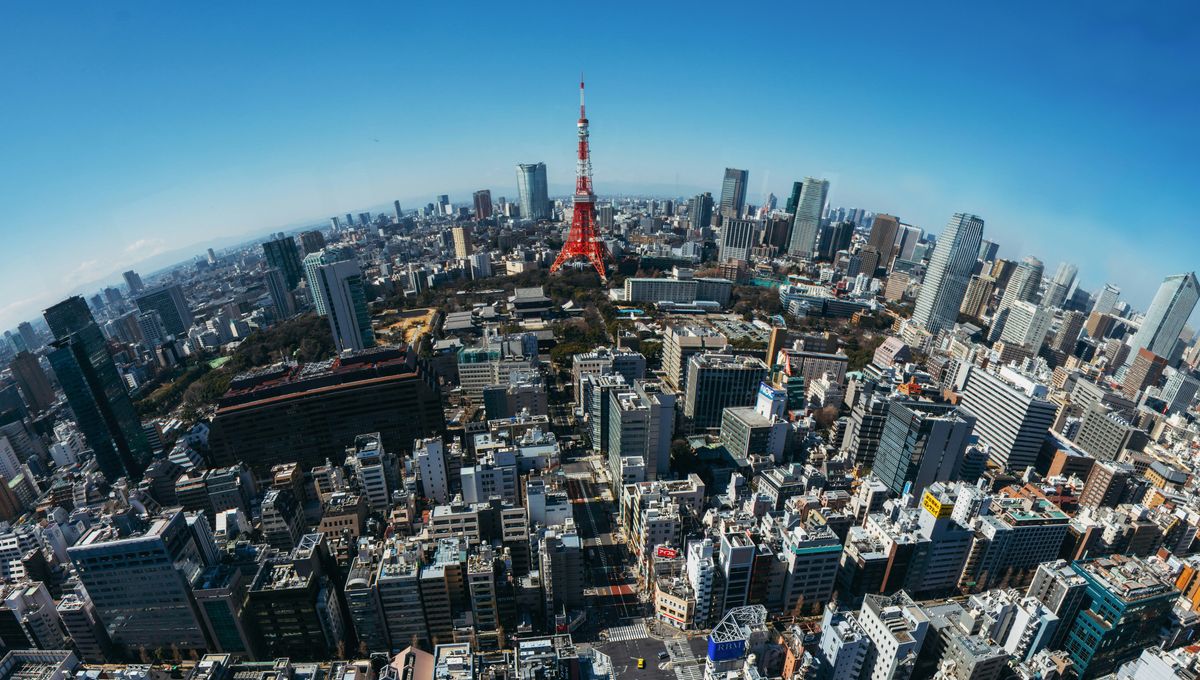
Tokyo has been toppled as the world’s most populous city, with the Indonesian capital of Jakarta now ruling the roost, followed by the Bangladeshi capital of Dhaka. The reshuffling is partly due to changes in how urban areas are defined, but it also reflects a broader, more profound shift in our world.
In November 2025, the United Nations released its World Urbanization Prospects 2025 report, which explained that Jakarta is now the world’s most populous city, with nearly 42 million residents, followed by Dhaka with almost 40 million and Tokyo with 33 million.
For many years, Tokyo was commonly considered to be the world’s most populous city, owing to its sprawling size and densely packed population. There’s no denying it’s a mammoth megacity, but its population does depend on how you define a city and its boundaries.
The greater Tokyo metropolitan area is a far-reaching conurbation that includes nearby prefectures like Kanagawa, Saitama, and Chiba. It also encompasses Yokohama, the second-largest city in Japan by population. By comparison, the size and population of “Tokyo proper” is relatively small, with approximately 14 million people.
In the latest UN report, officials have devised a new methodology that claims to be more consistent in how it defines urban areas by removing “country-specific city definitions”. Using the new approach, Jakarta counts about 30 million more people than the previous criteria would have, zipping it to the top place.
However, the shift also reflects real-world trends, not just statistical meddling. Japan’s population has been shrinking for many years due to an aging population, low birth rate, and low immigration rate. In 2025 it witnessed its 16th consecutive year of population decline.
While the urban population of Tokyo is still creeping upward, this trajectory is plateauing and it’s highly likely that a demographic drop is coming in the next few decades.
“Over the past quarter century, the population of Tokyo has grown more slowly than the populations of Jakarta and Dhaka, and consequently, Tokyo’s rank among the world’s largest cities fell from first in 2000 to third by 2025,” the report says.
This is exceptionally odd for the 21st century. Tokyo and Seoul are the only cities in the top 10 that are expected to experience a population decline by the mid-century. As other cities continue to boom, especially elsewhere in Asia, this trend is set to move the Japanese capital even further down the rankings.
“Looking to the future, Tokyo’s population is expected to shrink from 33.4 million in 2025 to 30.7 million in 2050, when it will have descended to seventh in rank among the world’s most populous cities,” added the report.
“Dhaka and Shanghai are expected to grow the fastest among 2025’s ten most populous cities, with projected growth rates close to 5 per cent per year between 2025 and 2050. By mid-century, Dhaka is expected to overtake Jakarta as the world’s largest city, while Shanghai is expected to ascend in rank from fifth to third,” it continues.
By 2050, the top 10 most populous megacities in the world are expected to look something like this:
- Dhaka (52.1 million)
- Jakarta (51.8 million)
- Shanghai (34.9 million)
- New Delhi (33.9 million)
- Karachi (32.6 million)
- Al-Qahirah / Cairo (32.4 million)
- Tokyo (30.7 million)
- Guangzhou (29.2 million)
- Manila (27.1 million)
- Kolkata (23.8 million)
A summary of the full report can be found here.

Source Link: Why Tokyo Is No Longer The World's Most Populous City, According To The UN
