The doomed occupants of Pompeii may have been sweating even before Mount Vesuvius began spewing deadly volcanic debris on August 24, 79 CE. Dressed in heavy woollen garments, these cursed souls were poorly decked out for a summer apocalypse, suggesting that the famous disaster may actually have occurred on a different date to that reported by Pliny the Younger.
The rest of this article is behind a paywall. Please sign in or subscribe to access the full content.
Having witnessed the eruption from across the Bay of Naples, Pliny represents our only first-hand commentator on the cataclysm. Describing the event in a letter to the Roman politician Tacitus a few decades later, the famed author wrote that the first explosions occurred at around lunchtime on August 24.
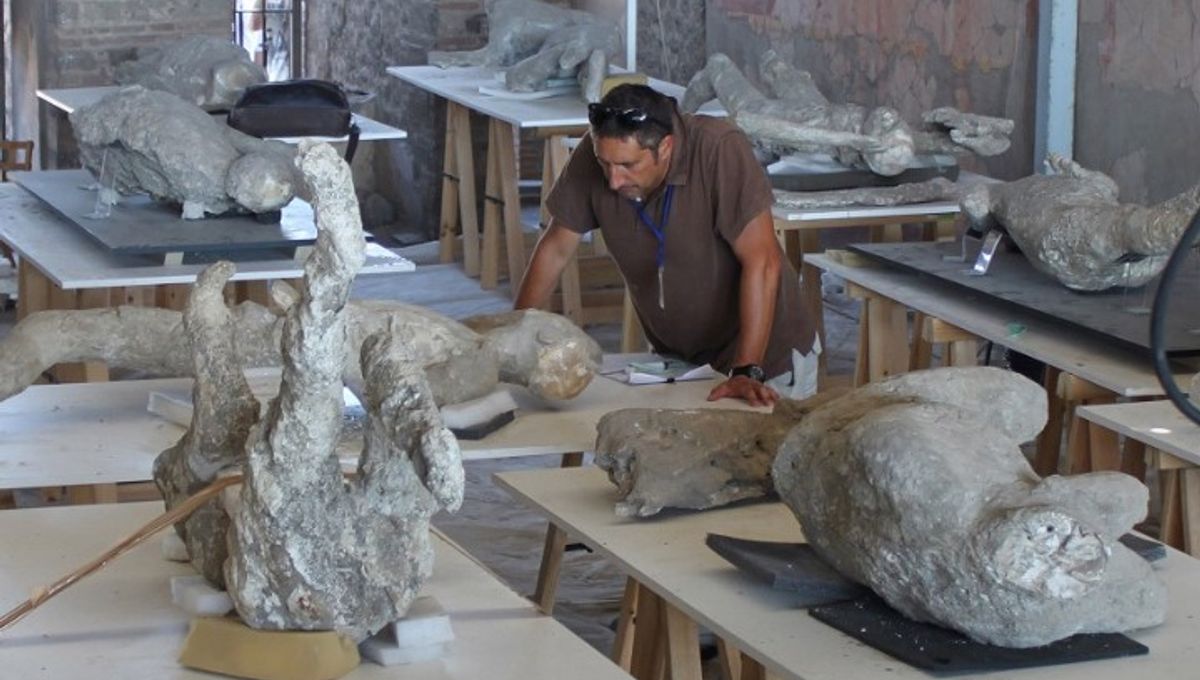
For the next two millennia, the victims of Vesuvius remained encased in ash, leaving behind body-shaped impressions that were later used as molds for plaster casts to reconstruct the likenesses of those who perished in the catastrophe. Examining 14 of these casts, a team of researchers has now gained unprecedented insights into the fashion of the day.
“From our study of the casts, we can reveal how these people were dressed on a specific day in history,” explained archaeologist Llorenç Alapont in a statement. “We also see the type of cloth that they were dressed in, and the lattice of threads, which in this case is thick. Most of the victims wore two items: a tunic and a cloak, both made of wool,” Alapont adds.
Given that wool was by far the most common clothing textile in Roman times, it’s perhaps unsurprising that the residents of Pompeii were dressed in this material. However, Alapont says that the wool worn by these particular individuals was “heavy”, and therefore unsuitable for a hot August day.
“We don’t know if this clothing in particular was worn as protection from the gases and heat generated by the volcanic eruption,” Alapont says. At the same time, the researchers suggest that the ubiquity of these thick garments may indicate that the event occurred on a chilly day.
Interestingly, the research – which has yet to be peer-reviewed or published – finds that the same type of clothing was worn by those who died inside buildings as those who perished in the streets of Pompeii. Exactly how to interpret this discovery is currently unclear, and the authors don’t directly challenge the accepted historical date of the eruption.
However, these findings will undoubtedly fuel pre-existing suspicions that the event didn’t occur in August, but took place in either autumn or winter. For instance, charcoal graffiti discovered at Pompeii mentions the date October 17. Given the transient nature of the charcoal, it’s unlikely that the scrawl was made more than a week or so before the eruption, which is why some scholars suggest that Pompeii may actually have met its end on October 24, 79 CE.
Other finds at Pompeii – including chestnuts, fermented wine and the remains of hearths – are also indicative of autumnal activities in the lead-up to the eruption.
At present, however, there are no historical sources to back up these claims, which means that until we find concrete evidence to the contrary, we’ll just have to assume that ancient Pompeiians wore thick wool in the summer.

Source Link: Why Were Pompeii Victims All Wearing Thick Woolly Cloaks In August?
