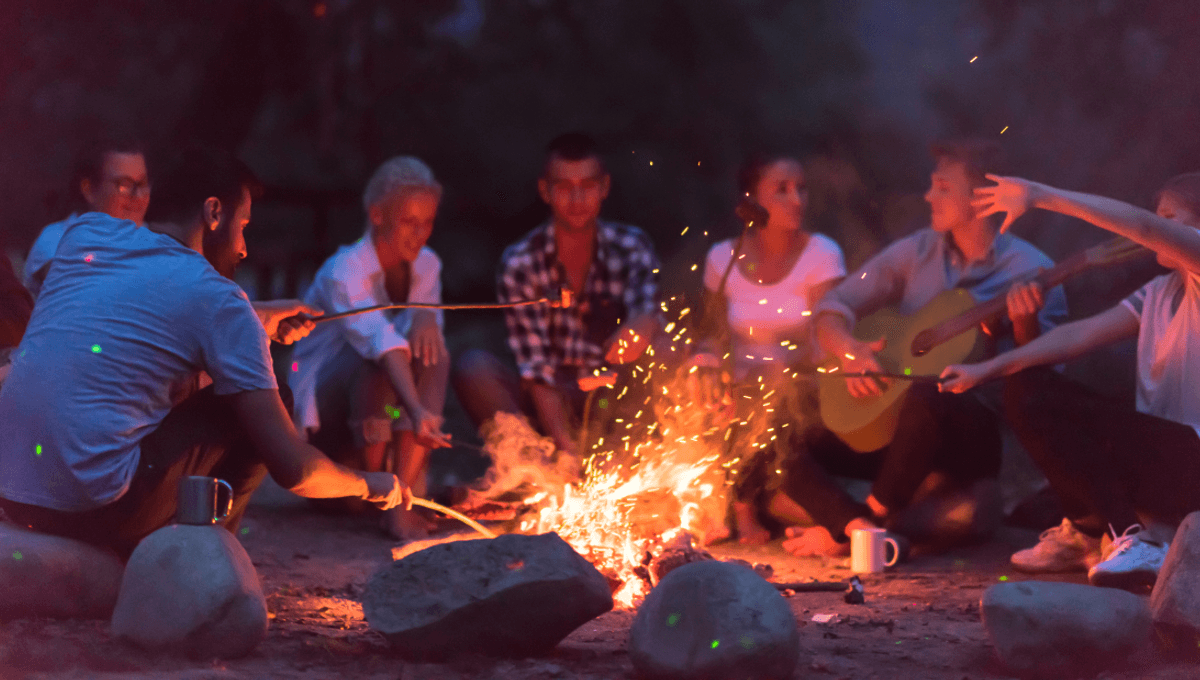
Exploding rocks could ruin your campfire if you don’t choose wisely when getting set up. Placing firewood in a ring of rocks can be a good way to lessen the risk of starting a wildfire, as well as acting as a barrier for wind that might blow out the early embers, but you need to be very choosy with your selection. Crucially, don’t ever use river rocks.
There are several reasons why you should never use river rocks for a campfire, with one of the most obvious being that they are often more porous and can contain water. When this water gets hot it creates steam and the rapid expansion can cause the rock to explode.
Thermal shock in river rocks can also make them explode when heated in a fire. This is particularly true of rocks with a high percentage of minerals like quartz, which are prone to shattering when they experience the extremes of temperature simultaneously.
Hot fire meeting a cool river rock can make it shatter, sending sharp pieces flying in all directions. Flying rock shards are particularly dangerous for our eyes, which are unfortunately in prime position to catch projectiles when we sit around a campfire.
These risks apply to river rocks, but also sandstone, shale, limestone, pumice, and natural rocks. Any rocks that appear to be porous put your campfire at risk of a rocky explosion.
The safest rocks to use for a campfire are tough, non-porous varieties like granite and slate. Positioning is also key, and you want to avoid making rocks the bed of the campfire as even tough rocks can explode under enough heat.
Pollution is another consideration when dealing with porous rocks, as you don’t know if the liquid or gases trapped inside are something you want to burn. Pollutants can get into the air if heated enough, so at best you could end up with a foul-smelling fire and at worst you could stir up something harmful in the air we breathe.
That said, under the right circumstances a campfire can be a life-sustaining and enjoyable way to keep warm in the wilderness (and start new cultures). There are some key tips to follow for having the most pleasant and least explode-y campfire:
- Check your local authority’s regulations, and that you’re allowed to have a campfire in that area. Not checking this is a solid way to get a pan of water poured all over your parade.
- Clear the campfire area of flammable things like dry grass and leaves that could catch and spread the fire out of the desired area.
- Use a fire pit if available, otherwise you can make a fire ring using rocks but – as ever – watch out for those sneaky porous grenades.
- Have water nearby in case anything goes awry.
- Don’t leave the fire unattended.
For more advice on keeping campfires safe, visit the National Park Service’s website.

Source Link: Why You Should Never Use River Rocks In A Campfire
