• Email Us: [email protected]
  • Contact Us: +1 718 874 1545
  • Skip to main content
  • Skip to primary sidebar

Medical Market Report

  • Home
  • All Reports
  • About Us
  • Contact Us

World’s Largest Deposit Of Natural Hydrogen Gas Discovered In Albanian Mine

March 2, 2024 by Deborah Bloomfield

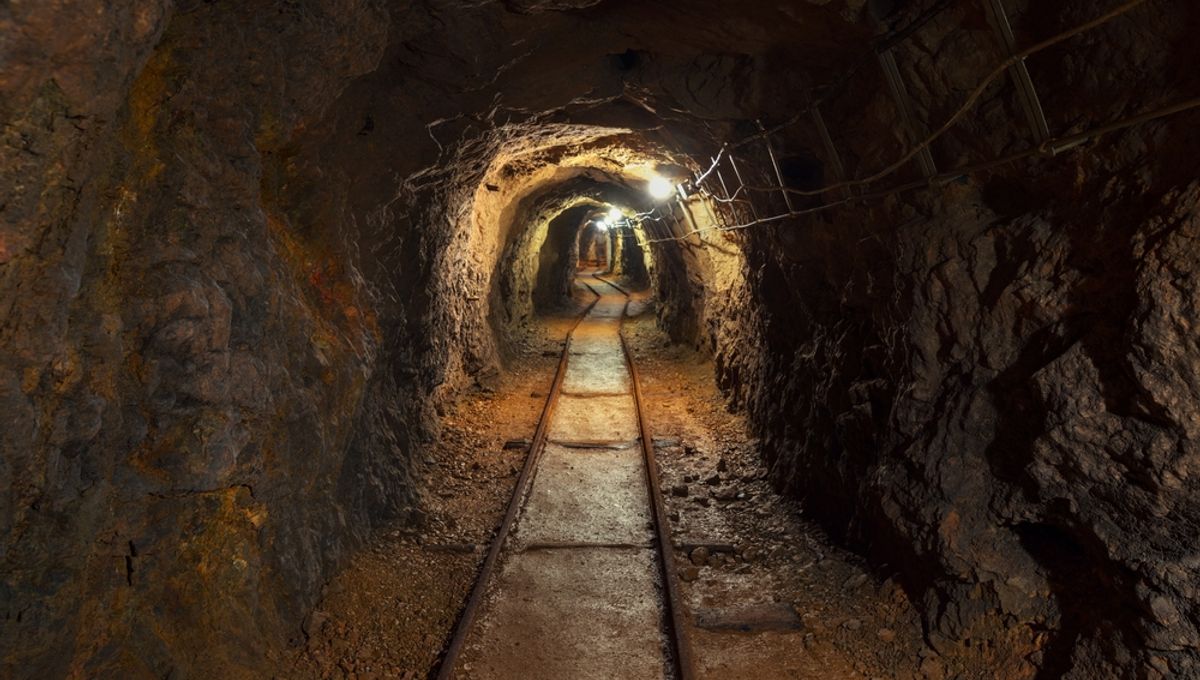
The largest natural flow of hydrogen gas ever discovered has been detected seeping through a pool of water deep within a chromium mine in Albania. Reporting the find in a new study, researchers say the deposit could pave the way for new, cleaner ways of capturing hydrogen for use as a clean fuel.

Hydrogen gas has long been sought after as an alternative to fossil fuels as it can be burnt without releasing any greenhouse gases. However, until now, natural hydrogen flows have been hard to come by, and the resource was typically manufactured from natural gas via a process that consumes energy and emits carbon dioxide.

Advertisement

Furthermore, despite the fact that hydrogen is known to play a key role in supporting life deep within the Earth’s crust, scientists had generally assumed that the gas’s high reactivity prevented it from accumulating in large underground deposits.

All that began to change when a flammable gas was first detected in the Bulqizë mine in Albania in 1992. Large explosions in 2011, 2017, and 2023 fuelled suspicions that the odorless gas was indeed hydrogen, and researchers have now determined that the mine may sit atop a fault that contains between 5,000 and 50,000 tonnes (5,511 to 55,115 tons) of the precious resource.

Analyzing the gas as it bubbled through a pool in the mine, the study authors determined that it was indeed 84 percent hydrogen, along with smaller amounts of methane and nitrogen. Calculating the flow of gas, they concluded that the pool emits around 11 tonnes (12.1 tons) of hydrogen per year, which is equivalent to 34 kilograms (75 pounds) a day.

Combining this with other flows in a borehole and a shaft within the same mine, the researchers calculated that the total amount of hydrogen gas passing through the mine amounts to some 200 tonnes (220 tons) per year.

Advertisement

“Our study unveils a high emission rate of almost pure geologic H2, suggesting the potential for a new extractable primary energy source,” they write.

Intriguingly, the Bulqizë mine is located within a stretch of iron-rich rock known as ophiolite, which is known to generate hydrogen as it reacts with water and has been associated with other hydrogen flows elsewhere around the world. The study authors therefore speculate that further significant natural hydrogen deposits may be lurking beneath other ophiolite outcrops in other locations.

“We reveal that ophiolites, which are mantle rocks from the oceanic crust obducted onto continents, not only constitute effective source rocks, but also have the potential to host high-quality, H2-rich gas reservoirs,” they conclude.

The study is published in the journal Science.

Deborah Bloomfield
Deborah Bloomfield

Related posts:

  1. Putin says Russia to offer tax breaks to spur business on Kuril islands
  2. Column: With or without you – ‘ExChina’ in vogue?
  3. Wall Street pivots to value as Treasury yields rise
  4. Mexico, U.S. to work on reducing drug use, trafficking of U.S.-made weapons – statement

Source Link: World's Largest Deposit Of Natural Hydrogen Gas Discovered In Albanian Mine

Filed Under: News

Primary Sidebar

  • US Just Killed NASA’s Mars Sample Return Mission – So What Happens Now?
  • Art Sleuths May Have Recovered Traces Of Da Vinci’s DNA From One Of His Drawings
  • Countries With The Most Narcissists Identified By 45,000-Person Study, And The Results Might Surprise You
  • World’s Oldest Poison Arrows Were Used By Hunters 60,000 Years Ago
  • The Real Reason You Shouldn’t Eat (Most) Raw Cookie Dough
  • Antarctic Scientists Have Just Moved The South Pole – Literally
  • “What We Have Is A Very Good Candidate”: Has The Ancestor Of Homo Sapiens Finally Been Found In Africa?
  • Europe’s Missing Ceratopsian Dinosaurs Have Been Found And They’re Quite Diverse
  • Why Don’t Snorers Wake Themselves Up?
  • Endangered “Northern Native Cat” Captured On Camera For The First Time In 80 Years At Australian Sanctuary
  • Watch 25 Years Of A Supernova Expanding Into Space Squeezed Into This 40-Second NASA Video
  • “Diet Stacking” Trend Could Be Seriously Bad For Your Health
  • Meet The Psychedelic Earth Tiger, A Funky Addition To “10 Species To Watch” In 2026
  • The Weird Mystery Of The “Einstein Desert” In The Hunt For Rogue Planets
  • NASA Astronaut Charles Duke Left A Touching Photograph And Message On The Moon In 1972
  • How Multilingual Are You? This New Language Calculator Lets You Find Out In A Minute
  • Europa’s Seabed Might Be Too Quiet For Life: “The Energy Just Doesn’t Seem To Be There”
  • Amoebae: The Microscopic Health Threat Lurking In Our Water Supplies. Are We Taking Them Seriously?
  • The Last Dogs In Antarctica Were Kicked Out In April 1994 By An International Treaty
  • Interstellar Comet 3I/ATLAS Snapped By NASA’s Europa Mission: “We’re Still Scratching Our Heads About Some Of The Things We’re Seeing”
  • Business
  • Health
  • News
  • Science
  • Technology
  • +1 718 874 1545
  • +91 78878 22626
  • [email protected]
Office Address
Prudour Pvt. Ltd. 420 Lexington Avenue Suite 300 New York City, NY 10170.

Powered by Prudour Network

Copyrights © 2026 · Medical Market Report. All Rights Reserved.

Go to mobile version