• Email Us: [email protected]
  • Contact Us: +1 718 874 1545
  • Skip to main content
  • Skip to primary sidebar

Medical Market Report

  • Home
  • All Reports
  • About Us
  • Contact Us

World’s Longest Jellyfish Can Reach A Whopping 36 Meters, Even Bigger Than A Blue Whale

January 2, 2026 by Deborah Bloomfield

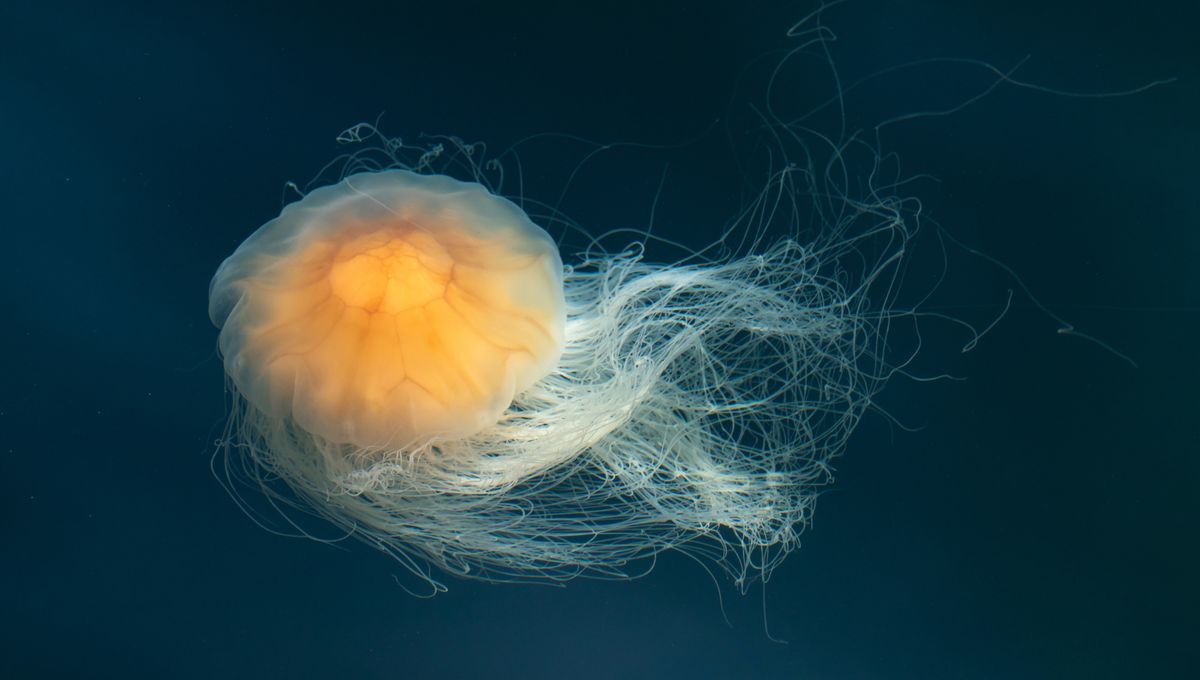
The blue whale might be the largest known animal ever to have lived on the planet, but it turns out it has a rival, at least when it comes to length. It’s tentacle-y, it’s deliciously peachy and red, it’s… the lion’s mane jellyfish (Cyanea capillata).

The rest of this article is behind a paywall. Please sign in or subscribe to access the full content.

One of the largest jellyfish in the ocean (if not the largest, although there’s some debate over that – more on that in a bit), the tentacles of these officially giant jellies can reach more than 30.5 meters (100 feet) long. Blue whales can grow up to the same length, but on average reach around 27 meters (89 feet).

In fact, the largest lion’s man jelly specimen ever recorded had tentacles measuring a lengthy 36.5 meters (120 feet), nearly 10 meters (33 feet) beyond the blue whale’s average. If, for some bizarre but presumably scientific reason, you were to lay it side by side with the world’s tallest animal, a giraffe, it’d be 6.5 times as long.


But the lion’s mane jelly isn’t just a certified Long Boi; according to Guinness World Records, it’s also the heaviest jellyfish on the planet. Its estimated weight – estimated because it’s not particularly common to collect and weigh giant jellies, nor would it be simple to get an accurate weight anyway – is 1 metric ton.

Definitely not as heavy as a 200-ton blue whale, but certainly nothing to be sniffed at, at around the same weight as an adult male American bison. 

As for whether it’s the largest of the jellyfish, that depends on how “largest” is defined. Some believe Nomura’s jellyfish (Nemopilema nomurai) to be the title holder, its bell (the main, umbrella-shaped bit of a jelly’s body) reaching up to 2 meters (6.6 feet) in diameter compared to around 1 meter (3.3 feet) for the lion’s mane. Either way, they’re both still classified as giant jellies.

Fancy trying to catch a glimpse of the lengthy lion’s mane? You’ll have to head to chillier climes, as they’re typically found out in the open waters of the colder regions of the Atlantic (like the North Sea), Pacific, and Arctic Ocean. The UK, for example, is a great place to see them, as they can be found around the whole coast come the summer months (yes, summer – it doesn’t get very hot here).

If size alone doesn’t give it away, you’ll be looking for a jelly with a bell that’s anywhere from peach or light brown through to a deep red, the darker colors typically indicating that it’s an older specimen.

And while the lion’s mane sting is rarely fatal, it can be super painful and cause a number of unpleasant symptoms like nausea, sweating, cramps, and headaches – so maybe best just stick to spotting one from a boat.

Deborah Bloomfield
Deborah Bloomfield

Related posts:

  1. Golf-Garcia’s wife calls on US Ryder Cup fans to cheer not jeer
  2. In A Single-Molecule Layer, Water Can Act Like Neither Solid Nor Liquid
  3. Powerful “Atmospheric River” Storms Are Slowing Arctic Sea Ice Recovery
  4. The Only Bugs In Antarctica Are Already Eating Microplastics

Source Link: World’s Longest Jellyfish Can Reach A Whopping 36 Meters, Even Bigger Than A Blue Whale

Filed Under: News

Primary Sidebar

  • 9,500-Year-Old Headless Skeleton Is New World’s Oldest Known Cremated Adult
  • World’s Longest Jellyfish Can Reach A Whopping 36 Meters, Even Bigger Than A Blue Whale
  • In 1994, December 31 Was Wiped From Existence In Kiribati
  • A Giant Volcano Off The Coast Of Oregon Failed To Erupt On Time. Its New Schedule: 2026
  • Here Are 5 Ways In Which Cancer Treatment Advanced In 2025
  • The First Marine Mammal Driven To Extinction By Humans Disappeared Only 27 Years After Being Discovered
  • The Planet’s Oldest Bee Species Has Become The World’s First Insect To Be Granted Legal Rights
  • Facial Disfiguration: Why Has The Face Been The Target Of Punishment Across Time?
  • The World’s Largest Living Reptile Can “Surf” Over 10 Kilometers To Get Between Islands
  • In 1962, A Geologist Went Into A Cave. 2 Months Later, He’d Accidentally Invented A New Field Of Biology.
  • The Ancient Remains Of A 3-Ton Shark Indicate A New Point Of Origin For Gigantic Lamniform Sharks
  • The Biggest Landslide In Recorded History Happened Quite Recently And Pretty Close To Home
  • Meet The Amami Rabbit, A Goth Bunny That’s Also A Living Fossil
  • The Largest Native Terrestrial Animal In Antarctica Is Both Smaller And Tougher Than You’d Expect
  • The Freaky Reason Why You Should Never Store Tomatoes And Potatoes Together
  • Hominin Vs. Hominid: What’s The Difference?
  • Experimental Alzheimer’s Drug Could Have The Power To Halt Disease Before Symptoms Even Start
  • Al Naslaa: What Made This Enormous Boulder In Saudi Arabia Split In Two? Nobody’s Quite Sure
  • The Amazon Is Entering A “Hypertropical” Climate For The First Time In 10 Million Years
  • What Scientists Saw When They Peered Inside 190-Million-Year-Old Eggs And Recreated Some Of The World’s Oldest Dinosaur Embryos
  • Business
  • Health
  • News
  • Science
  • Technology
  • +1 718 874 1545
  • +91 78878 22626
  • [email protected]
Office Address
Prudour Pvt. Ltd. 420 Lexington Avenue Suite 300 New York City, NY 10170.

Powered by Prudour Network

Copyrights © 2026 · Medical Market Report. All Rights Reserved.

Go to mobile version