• Email Us: [email protected]
  • Contact Us: +1 718 874 1545
  • Skip to main content
  • Skip to primary sidebar

Medical Market Report

  • Home
  • All Reports
  • About Us
  • Contact Us

Yes You Can Plug A Volcano With Concrete, If You Want To Make Things Far, Far Worse

February 28, 2023 by Deborah Bloomfield

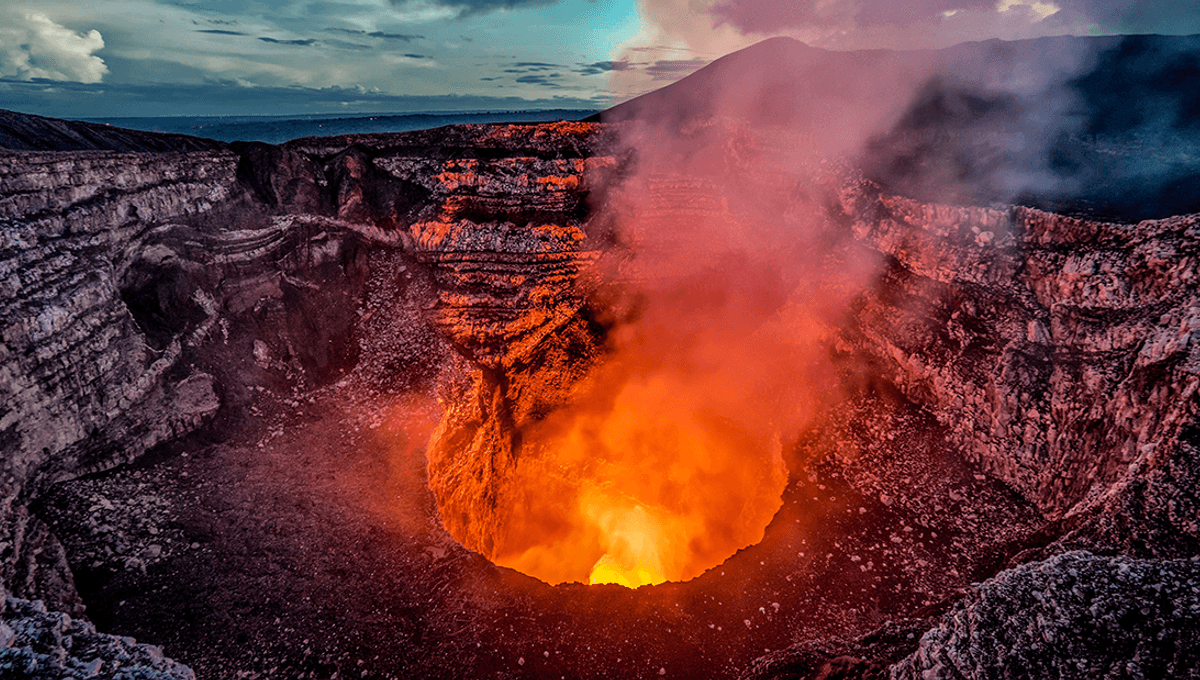
We’re not quite sure why, but there seems to be a resurgence in people attempting to play amateur volcanologist and asking, “Why can’t we just pour concrete into a volcano to stop it from erupting?”

The suggestion has popped up on Twitter, Facebook and Reddit lately as a way of preventing deaths.

Advertisement

First off, if you’re going to suggest a madcap, moonshot way of stopping volcanoes, you could have chosen a worse material. Concrete has a melting point of about 1,500 degrees Celsius (2,700 degrees Fahrenheit), while lava reaches a piddly 871 degrees Celsius (1,600 degrees Fahrenheit). Pour enough concrete into a vent and you would theoretically be able to block it. 

But that doesn’t mean it’s a good idea. In fact, it’s probably a terrible idea, given how volcanoes work.

Eruptions happen when there is a buildup in pressure beneath the Earth’s surface. When the magma is thin and runny, gases can escape from it easily, and it will generally flow from the volcano gently. While magma coming towards you isn’t ideal, it is at least slow and unlikely to kill you.

What are more dangerous are explosive volcanic eruptions.

Advertisement

“If magma is thick and sticky, gases cannot escape easily,” the United States Geological Survey (USGS) explains on their website, giving the example of Mount St Helens. “Pressure builds up until the gases escape violently and explode.”

“Explosive volcanic eruptions can be dangerous and deadly. They can blast out clouds of hot tephra from the side or top of a volcano,” the USGS adds. “These fiery clouds race down mountainsides destroying almost everything in their path.”

In short, it’s not something you’d want to encourage, but by adding concrete you probably would.


If you block a vent, say by pouring an expensive and ultimately unwise amount of concrete into it, you are depriving the volcano of a way of naturally venting gas and relieving that pressure, potentially turning a nice slow-flowing volcano into an explosive one, or making an already potentially-explosive volcano burst with even more pressure when it does so.

Advertisement

Volcanoes like Mount St Helens explode with huge amounts of pressure, making the added concrete a danger to health as it is easily scattered around. “The dust from concrete,” YouTube channel What If notes, “would lead to fatal lung diseases and cancer.”

A better use of concrete, employed during one eruption of Etna, is to divert the lava away from populated areas using concrete blocks. While the USGS aren’t sure the blocks would have worked with a bigger explosion, you can be safe in the knowledge that at least you haven’t made the situation significantly worse.

Deborah Bloomfield
Deborah Bloomfield

Related posts:

  1. Evacuated Afghans, hoping to resettle in U.S., face extended limbo in third countries
  2. Tallest teen, fastest hair skipping among 2022 Guinness World Records
  3. Access to website dedicated to Tiananmen victims appears restricted in Hong Kong
  4. TWIS: The First Images Of The Sun’s Chromosphere, Stone Age Surgical Amputation, And Much More This Week

Source Link: Yes You Can Plug A Volcano With Concrete, If You Want To Make Things Far, Far Worse

Filed Under: News

Primary Sidebar

  • The Man Who Fell From Space: These Are The Last Words Of Cosmonaut Vladimir Komarov
  • How Long Can A Bird Can Fly Without Landing?
  • Earliest Evidence Of Making Fire Has Been Discovered, X-Rays Of 3I/ATLAS Reveal Signature Unseen In Other Interstellar Objects, And Much More This Week
  • Could This Weirdly Moving Comet Have Been The Real “Star Of Bethlehem”?
  • How Monogamous Are Humans Vs. Other Mammals? Somewhere Between Beavers And Meerkats, Apparently
  • A 4,900-Year-Old Tree Called Prometheus Was Once The World’s Oldest. Then, A Scientist Cut It Down
  • Descartes Thought The Pineal Gland Was “The Seat Of The Soul” – And Some People Still Do
  • Want To Know What The Last 2 Minutes Before Being Swallowed By A Volcanic Eruption Look Like? Now You Can
  • The Three Norths Are Moving On: A Once-In-A-Lifetime Alignment Shifts This Weekend
  • Spectacular Photo Captures Two Rare Atmospheric Phenomena At The Same Time
  • How America’s Aerospace Defense Came To Track Santa Claus For 70 Years
  • 3200 Phaethon: Parent Body Of Geminids Meteor Shower Is One Of The Strangest Objects We Know Of
  • Does Sleeping On A Problem Actually Help? Yes – It’s Science-Approved
  • Scientists Find A “Unique Group” Of Polar Bears Evolving To Survive The Modern World
  • Politics May Have Just Killed Our Chances To See A Tom Cruise Movie Actually Shot In Space
  • Why Is The Head On Beer Often White, When Beer Itself Isn’t?
  • Fabric Painted With Dye Made From Bacteria Could Protect Astronauts From Radiation On Moon
  • There Used To Be 27 Letters In The English Alphabet, Until One Mysteriously Vanished
  • Why You Need To Stop Chucking That “Liquid Gold” Down Your Kitchen Sink
  • Youngest Mammoth Fossils Ever Found Turn Out To Be Whales… 400 Kilometers From The Coast
  • Business
  • Health
  • News
  • Science
  • Technology
  • +1 718 874 1545
  • +91 78878 22626
  • [email protected]
Office Address
Prudour Pvt. Ltd. 420 Lexington Avenue Suite 300 New York City, NY 10170.

Powered by Prudour Network

Copyrights © 2025 · Medical Market Report. All Rights Reserved.

Go to mobile version