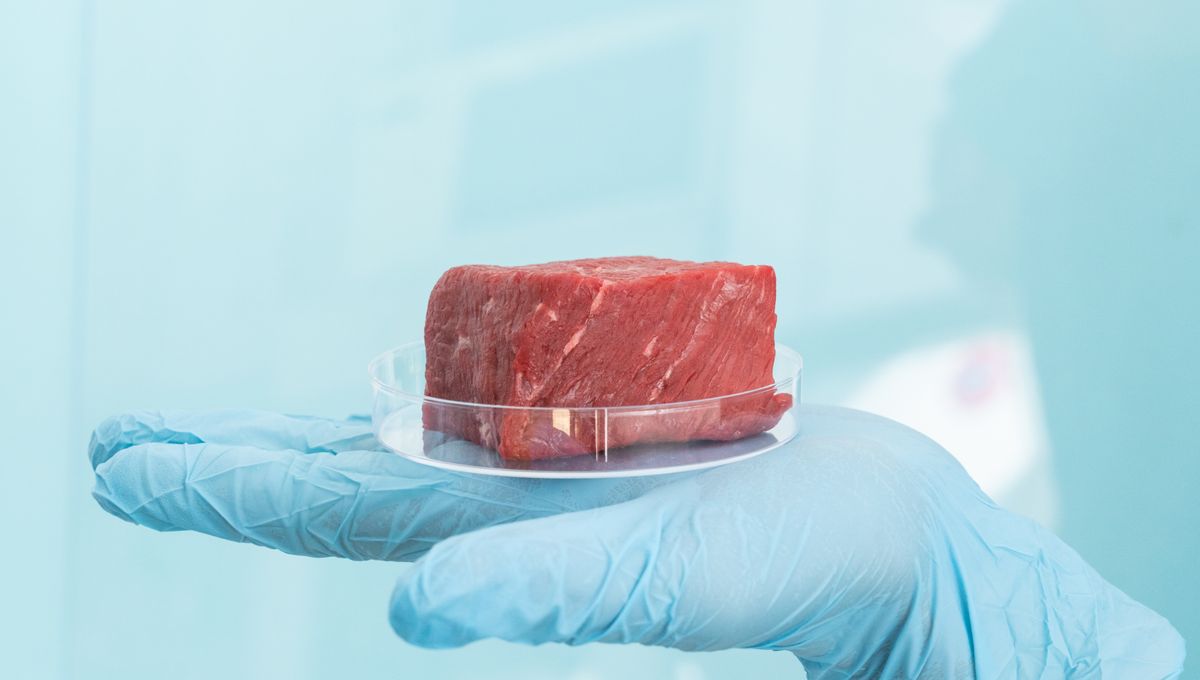
Move over, instant noodles. The dinner of the future might be a cell-cultured chicken cutlet, grown from scratch in a meat-making machine that sits on your kitchen counter. At least, that’s the dream of the Shojinmeat Project, an art collective-meet-science experiment based in Tokyo.
The project is the brainchild of Yuki Hanyu, a scientist with a background in chemistry and nanotechnology, who’s been obsessed with the idea of cell-cultured meat since he was a kid.
“I’ve always been interested in ‘dream science’. I’d already been thinking about cultured meat when I was around 8 years old, through reading science fiction manga. I thought ‘in the future, I want to build spaceships or make cultured meat’ – those kinds of wild ideas!,” Hanyu told New Harvest in 2017.
Hanyu is also the CEO of IntegriCulture, a spin-off company developing consumer-friendly devices that could one day allow anyone to grow meat at home.
The name, Shojinmeat, is a nod to shojin ryori, the traditional Japanese Buddhist cuisine that skips meat, fish, and other animal products, along with pungent ingredients like garlic and onion, in line with principles of nonviolence and the interconnectedness of all things. Shojinmeat builds on this idea, bringing the essence of meat to the table without harming any animals or the environment, blending mindful tradition with high-tech wizardry.
Lab-grown meat is, technically, real meat (depending on how you define “real”) grown from animal cells in a controlled environment. It starts with a small sample of animal stem cells that multiply in a bioreactor, eventually forming tissue that closely resembles natural muscle and fat.
This process typically takes place with an industrial-sized tank and plenty of other fancy equipment, but IntegriCulture has been developing a compact, home-friendly version that only requires a few chemicals, some glassware, and a small bioreactor no bigger than an air fryer.
“We have been successful in establishing an entirely DIY version of animal cell cultural protocols,” Hanyu recently told BBC Science Focus. “When the right cells are placed in the right culture media, under the right conditions for a sustained period of time, cells proliferate.”
In fact, Hanyu believes you should be able to buy most of these items at supermarkets or online for a total of ¥60,000 (around $400). The Shojinmeat website even lists the items and offers a free step-by-step guide for ambitious DIY meat makers.
The method is said to work best with chicken, although Shojinmeat has created lab-grown meat from 30 different types of cells from a variety of animals using larger-scale methods, according to BBC Science Focus.
The question is: will people take to it? A poll in 2024 found that 33 percent of people in the US were not willing to even try cultivated chicken, highlighting that many consumers have a strong distrust of the unknown when it comes to what they put in their bellies.
Beyond questions of taste or the “ick” factor, there are environmental concerns around lab-grown meat. Some studies suggest that large-scale production of cultivated meat could generate between four and 25 times more greenhouse gas emissions than the global beef industry.
But if machine-made meat doesn’t tickle your taste buds, there are plenty of other foods of the future to try, from insect tagliatelle to pan-fried pythons.

Source Link: You Can Make Lab-Grown Meat In Your Own Kitchen – And This Company Wants To Show You How
