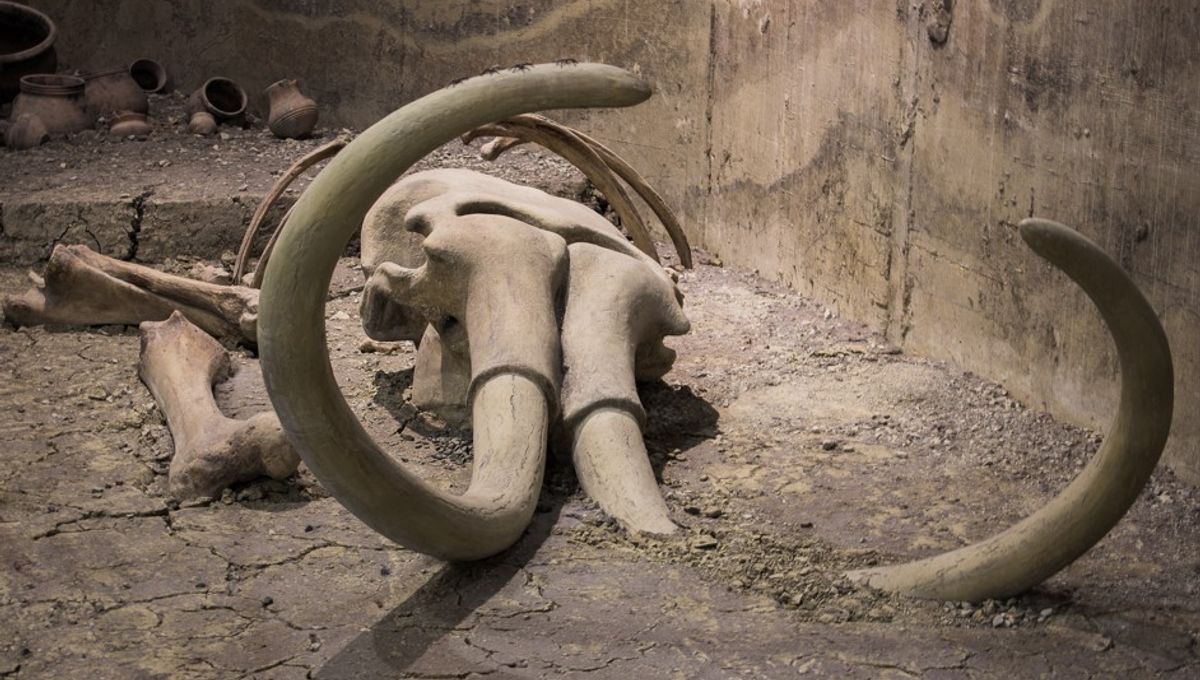
A pair of woolly mammoth vertebrae in Alaska have been dated to around 2,000 years old, making them by far the most recent evidence for the existence of this extinct beast ever recorded. However, upon further analysis, researchers discovered that the fossils are not in fact of proboscidean origin, and instead belong to a couple of whales that somehow ended up hundreds of miles from the ocean.
The rest of this article is behind a paywall. Please sign in or subscribe to access the full content.
The specimens were discovered by the German explorer and naturalist Otto Geist in the early 1950s close to the inland city of Fairbanks, and were donated to the University of Alaska Museum of the North, where they were cataloged as mammoth vertebral epiphyseal plates. In 2022, radiocarbon dating revealed that the bones were between 1,900 and 2,700 years old – a startling result given that the archaeological record suggests that mammoths became extinct in the region around 13,000 years ago.
“Mammoth fossils dating to the Late Holocene from interior Alaska would have been an astounding finding: the youngest mammoth fossil ever recorded,” write the authors of a new study about the specimens. “If accurate, these results would be several thousand years younger than the latest [genetic] evidence for mammoth in eastern Beringia,” they continue.
Understandably skeptical about this remarkable data point, the researchers decided to check the two specimens’ mammoth credentials. They therefore began with an isotopic analysis of the bones, which revealed that certain nitrogen isotope levels were significantly higher than one would expect to see in a land animal, reflecting a diet more typical of large marine mammals.
Subsequent DNA analysis corroborated this suspicion, confirming that the bones in fact belonged to a common minke whale and a Northern Pacific Right whale. After seven decades of mistaken identity, the specimens were finally stripped of their mammoth status.
Yet the mystery is not fully resolved. After all, Fairbanks sits more than 400 kilometers (250 miles) from the nearest coastline, raising questions as to how two whales ended up there thousands of years ago.
According to the researchers, the ancient cetaceans couldn’t have reached the site by swimming up a river, since they were found by a small creek that could never have accommodated such large intruders. It’s also highly unlikely that the bones were dragged to the site by bears or other scavengers that may have found the whales’ carcasses washed up on the shore.
One possibility, therefore, is that ancient hunter-gatherers transported the whale bones, either because of their symbolic value or as raw materials for producing tools. Archaeological evidence suggests that prehistoric coastal communities in Alaska used whale bones for these purposes, although it’s worth noting that inland evidence for this behavior is lacking.
Ultimately, the researchers say we may never understand how the whale remains reached their final destination, although the most plausible explanation may be that they were never present at the site and were in fact mislabeled by the museum. Looking through the collection history, the study authors found that Geist supplied the specimens to the museum alongside a separate cache of bones that he collected from a coastal location in Norton Bay.
Perhaps, then, the whale bones were actually part of this Norton Bay collection, but somehow got mixed up with Geist’s inland hoard, leading to 70 years of confusion and chaos. In all likelihood, though, we’ll never know for sure.
The study has been published in the Journal of Quaternary Science.

Source Link: Youngest Mammoth Fossils Ever Found Turn Out To Be Whales… 400 Kilometers From The Coast
