Imagine not letting your butt rest on a solid surface for an entire week. That means no chilling in an armchair while watching TV, no sinking into an ergonomic office chair and no sitting on the toilet seat while you poop.
To find out what that’s like, YouTuber pigmie recently attempted to go seven whole days without taking a seat. Unsurprisingly, this made everyday tasks like driving and working significantly more complicated, although the stunt was not attempted for the sheer sake of it but was motivated by health concerns.
Introducing the experiment, the host explains that “the average American sits for around 9.5 hours every single day”, despite the fact that “prolonged sitting and lack of physical activity has been correlated with obesity and a cluster of obesity-related conditions.”
Chronic sitting is also linked to “back pain, spinal dysfunction, joint degeneration, poor posture in the back, neck and shoulders, as well as vascular problems in the legs,” he says, adding that “the list goes on.” Studies have linked excessively sedimentary lifestyles to reductions in brain volume and an increased risk of dying early, which is why people with desk jobs are encouraged to get up and move around as often as possible.
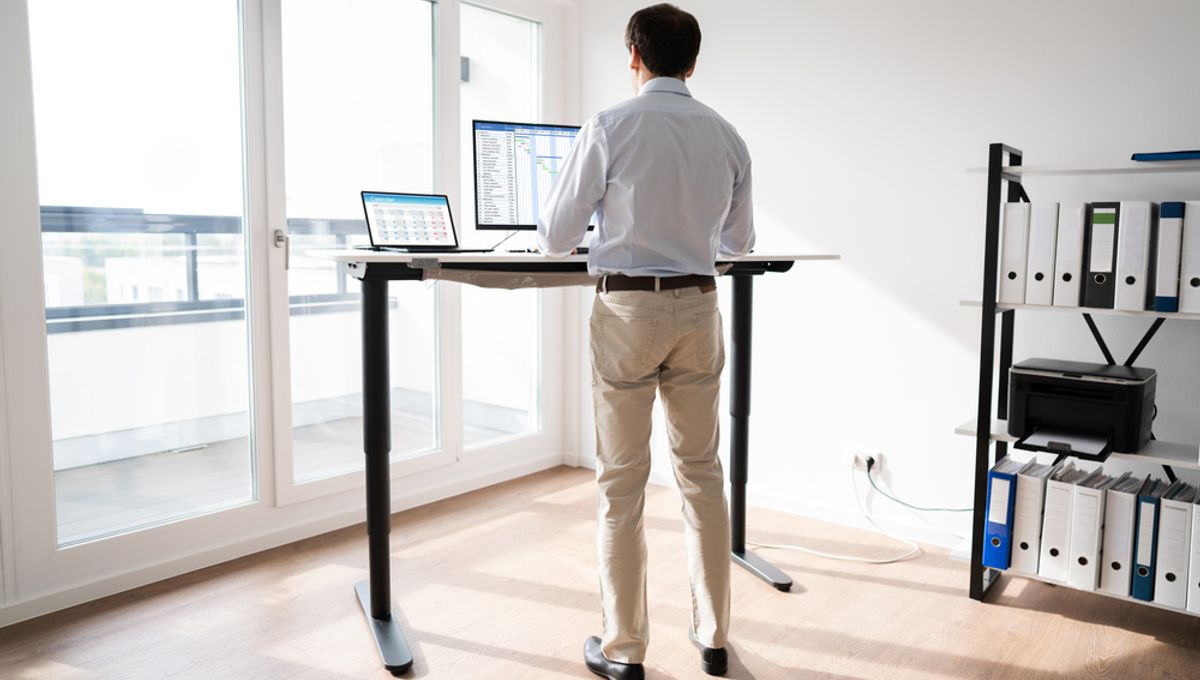
After buying himself a standing desk and getting to work in a standing position, pigmie’s first observation was that remaining upright appears to exert an immediate influence over the bowels. “I felt like things were comfortably moving in the right direction,” he says, before perfecting the art of defecating without touching the loo.
As the week wore on, however, joint pain, poor posture and extreme fatigue began to take their toll, causing pigmie to abandon the experiment after just five days of standing. Via a series of before-and-after comparisons, the host was able to analyze the impact of his seat-less study on his posture, finding that he had developed a significant upper body slouch – or kyphosis, as this unsightly rounding of the shoulders is called.
On the flip-side, however, he also observed an improvement in the shape of his lower spine, which became more curved. Pigmie also says that working standing up made him about 30 percent more productive, although this advantage did come with a “diminishing return” as fatigue sets in throughout the day.
He also gained around 0.45 kilograms (one pound) in weight, probably because he found himself eating more than usual in order to take his mind off the pain and tiredness in his legs and feet. Looking back on the experiment, however, pigmie once again finds that the most salient effect of not sitting was related to the flow of poop.
“I felt like my digestion was so much better with more standing up in the day,” he says. “It just seemed like things got moving faster and smoother.”

Source Link: YouTuber Experiments With Not Sitting For A Week. Here’s What Happened
