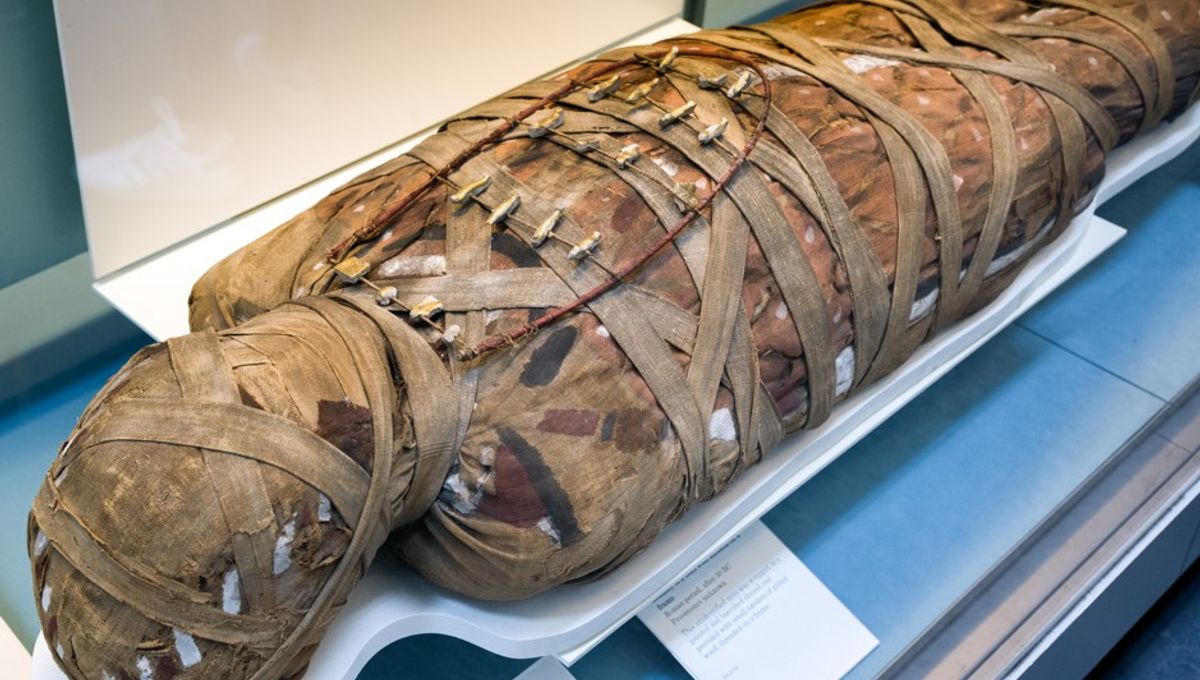
The inhabitants of ancient Egypt were infested with parasites, many of which caused anemia and other debilitating conditions. According to a new meta-analysis of prior research on Egyptian mummies, around two-thirds suffered from worms of various kinds, while 22 percent had malaria and 40 percent had headlice.
In the famous Valley of the Kings, for instance, four out of 16 mummies tested for Plasmodium falciparum – the microbe responsible for a deadly form of malaria – were positive. One of these was Tutankhamun, who was found to be infected by two different strains though probably died from falling from his chariot rather than as a result of malaria.
According to study author Piers D. Mitchell from the University of Cambridge, 49 of the 221 Egyptian mummies analyzed for malaria tested positive. “As such, we would expect malaria to have had a major impact upon child deaths and debilitating anemia in all ancient populations along the Nile.”
Indeed, 92 percent of malaria-infected mummies display porous bones and other signs of anemia, which is characterized by a reduced number of red blood cells or depleted hemoglobin levels. “Such a disease burden must have had major consequences upon the physical stamina and productivity of a large proportion of the workforce,” writes Mitchell.
Other parasites detected in ancient Egyptian mummies include the mind-altering pathogen toxoplasmosis, which has been linked to schizophrenia and, bizarrely, an increased likelihood of dying in a car crash. “As toxoplasmosis can be caught by humans when they are in close contact with cats, it is possible that the disease occurred due to the role of cats as cult animals which were often mummified and used as religious offerings in ancient Egypt,” explains the author.
Mitchell also estimates that around 10 percent of mummies are positive for visceral leishmaniasis, which has also been linked to anemia and is fatal in around 95 percent of untreated cases. Stomach worms such as fish tapeworm have also been detected in two mummies and were probably caught by eating undercooked fish from the Nile.
Another type of worm known as trichinosis was identified in the chest muscles of the mummy of an individual called Nakht, who has been identified as a weaver from the royal funerary chapel at Thebes. Typically contracted by eating undercooked pork, this nasty little nematode encysts inside muscle tissue and can cause death if it enters the heart.
Poor old Nakht was also found to be riddled with worms that infect both the blood vessels and the urinary tract. Like 65 percent of other mummies, he suffered from schistosomiasis, an acute parasitic illness caused by worms known as blood flukes.
Another mummy housed at the Manchester Museum even had worms in its brain, while 40 percent of 218 mummies analyzed for headlice turned out to be positive.
Explaining this high prevalence of microscopic nasties, Mitchell suspects that “the River Nile acted as a conduit for tropical water-born parasites that would not normally be found in arid regions.” Malaria-carrying mosquitoes and other harmful pathogens could therefore have flourished in ancient Egypt despite low levels of rainfall.
However, as well as bringing death, the Nile may also have helped to fertilize agricultural fields by depositing sediment during annual floods. As a result, farmers didn’t have to fertilize their crops with human poop, which may explain why ancient Egyptian mummies show very low rates of whipworm and roundworm, both of which were common throughout the Middle East and Mediterranean.
The study is published as a chapter in the book series Advances in Parasitology.

Source Link: Ancient Egyptian Mummies Are Riddled With Malaria, Worms, And Lice
