• Email Us: [email protected]
  • Contact Us: +1 718 874 1545
  • Skip to main content
  • Skip to primary sidebar

Medical Market Report

  • Home
  • All Reports
  • About Us
  • Contact Us

Ancient Egyptians Drank A Gnarly Brew Of Hallucinogenic Drugs And Human Blood

June 5, 2023 by Deborah Bloomfield

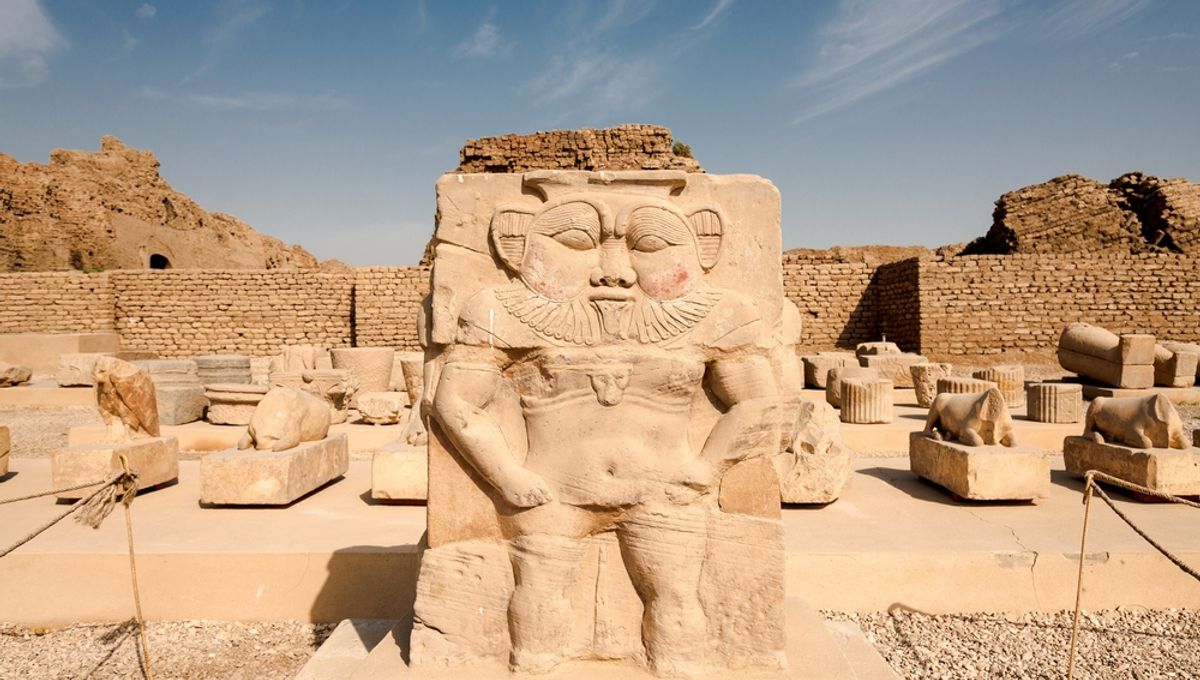
The art of cocktail making has come a long way since the ancient Egyptians tried their hand at mixing drinks, as evidenced by a new analysis of the contents of a 2,000-year-old vase. Thought to have been imbibed by members of a cult who worshiped a strange cat-like god, the concoction was found to contain several hallucinogenic plants, as well as booze, honey and a variety of human bodily fluids.

Describing their discovery in an as yet un-peer reviewed study, the researchers explain that the hardcore drink was probably consumed “for ritual practices” associated with a deity called Bes. Described as “part dwarfish, part feline”, Bes’s followers believed he could provide “protection from danger, while simultaneously averting harm, and being able with his power to prevent evil.”

Advertisement

Like all cults, Bes-heads were required to drink some gnarly stuff. Rather than the classic poisoned Kool-Aid, though, the members of this sect guzzled a mysterious liquid from “ceramic vessels decorated with the effigy or the head of Bes,” known as “Bes-vases.”

“As the Bes figure was revered as a protective genius, it might be assumed that the liquid drunk from these mugs was considered beneficent,” write the researchers. To finally determine the nature of said liquid, they analyzed the organic residues on a Bes-vase from the second century BCE, which was housed at the Tampa Museum of Art.

Results indicated that the drink contained a psychoactive plant called Peganum harmala, more commonly known as Syrian rue. “The seeds of this plant produce high quantities of the alkaloids harmine and harmaline, which induce dream-like visions,” explain the study authors.

Today, Syrian rue is sometimes combined with other plants such as mimosa in order to create a brew that mimics the psychedelic effects of ayahuasca.

Advertisement

Traces of a second psychoactive plant called Nymphaea caerulea – or blue water lilly – were also detected in the Bes-vase. “Combining all these data, we can conclude that Peganum harmala and Nymphaea caerulea plants were deliberately used as sources of psychoactive substances for ritual purposes,” say the researchers.

Not content with these trippy ingredients, however, devotees of Bes spiked their potion with a number of other components. For instance, the researchers also detected traces of an alcoholic liquid derived from fermented fruit, as well as honey or royal jelly.

Rather like a dirty pint, the ancient brew also contained “a high presence of human proteins,” all of which were apparently added for ritual purposes. “This includes fluids like breast milk, mucous fluids (oral or vaginal), and blood,” reveal the authors.

Now that’s how you do a Bloody Mary.

Advertisement

A pre-print version of the yet-to-be-published study is available on Research Square.

Deborah Bloomfield
Deborah Bloomfield

Related posts:

  1. Motor racing-Zandvoort turns orange in expectation of Verstappen win
  2. MLB roundup: Angels put crimp in Mariners’ playoff hopes
  3. Police Claim Woman Attacked Them With Angry Bees During An Eviction
  4. Why Do Airplane Window Shades Have To Be Up During Takeoff And Landing?

Source Link: Ancient Egyptians Drank A Gnarly Brew Of Hallucinogenic Drugs And Human Blood

Filed Under: News

Primary Sidebar

  • A Giant Volcano Off The Coast Of Oregon Is Scheduled To Erupt In 2026, JWST Finds The Best Evidence Yet Of A Lava World With A Thick Atmosphere, And Much More This Week
  • The UK’s Tallest Bird Faced Extinction In The 16th Century. Now, It’s Making A Comeback
  • Groundbreaking Discovery Of Two MS Subtypes Could Lead To New Targeted Treatments
  • “We Were So Lucky To Be Able To See This”: 140-Year Mystery Of How The World’s Largest Sea Spider Makes Babies Solved
  • China To Start New Hypergravity Centrifuge To Compress Space-Time – How Does It Work?
  • These Might Be The First Ever Underwater Photos Of A Ross Seal, And They’re Delightful
  • Mysterious 7-Million-Year-Old Ape May Be Earliest Hominin To Walk On Two Feet
  • This Spider-Like Creature Was Walking Around With A Tail 100 Million Years Ago
  • How Do GLP-1 Agonists Like Ozempic and Wegovy Work?
  • Evolution In Action: These Rare Bears Have Adapted To Be Friendlier And Less Aggressive
  • Nearly 100 Years After Debating Bohr On Quantum Mechanics, New Experiment Proves Einstein Wrong – Again
  • 9,500-Year-Old Headless Skeleton Is New World’s Oldest Known Cremated Adult
  • World’s Longest Jellyfish Can Reach A Whopping 36 Meters, Even Bigger Than A Blue Whale
  • In 1994, December 31 Was Wiped From Existence In Kiribati
  • A Giant Volcano Off The Coast Of Oregon Failed To Erupt On Time. Its New Schedule: 2026
  • Here Are 5 Ways In Which Cancer Treatment Advanced In 2025
  • The First Marine Mammal Driven To Extinction By Humans Disappeared Only 27 Years After Being Discovered
  • The Planet’s Oldest Bee Species Has Become The World’s First Insect To Be Granted Legal Rights
  • Facial Disfiguration: Why Has The Face Been The Target Of Punishment Across Time?
  • The World’s Largest Living Reptile Can “Surf” Over 10 Kilometers To Get Between Islands
  • Business
  • Health
  • News
  • Science
  • Technology
  • +1 718 874 1545
  • +91 78878 22626
  • [email protected]
Office Address
Prudour Pvt. Ltd. 420 Lexington Avenue Suite 300 New York City, NY 10170.

Powered by Prudour Network

Copyrights © 2026 · Medical Market Report. All Rights Reserved.

Go to mobile version