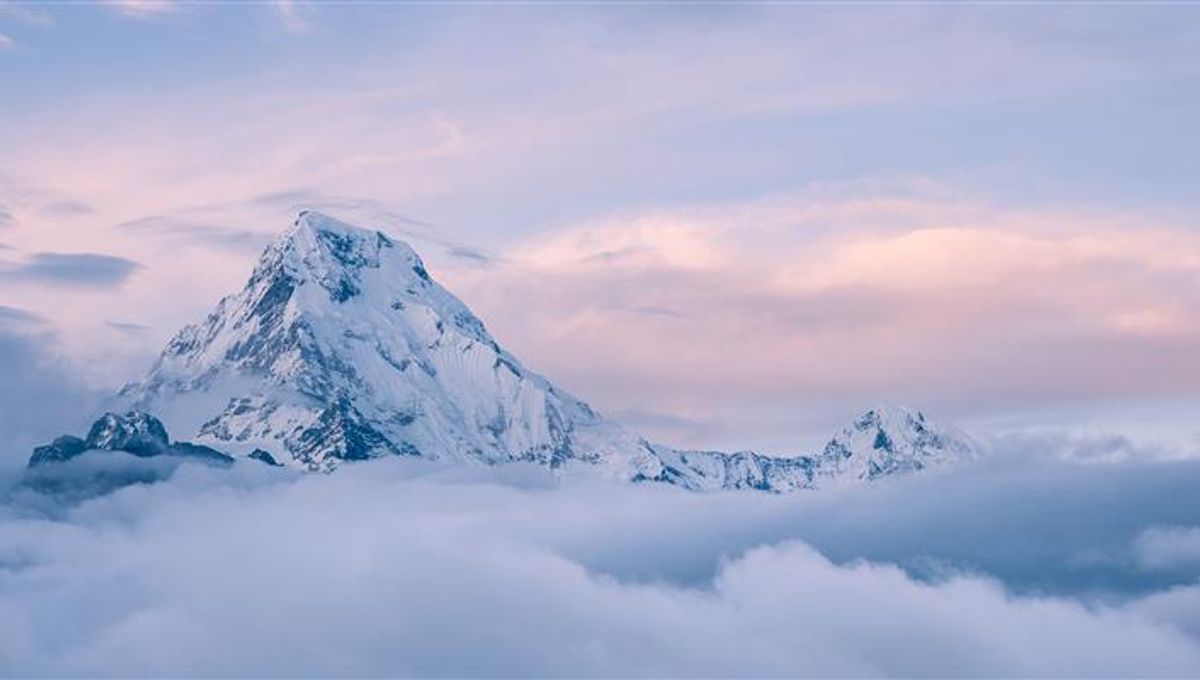
Few things in the world are more representative of strength and the passing of extreme time than mountains. On the face of it, these colossal formations look like they have always been there, untouched by time – but, of course, they were created millions and millions of years ago by the tumultuous forces of nature. But is the age of mountain formation behind us, or are there still new mountains forming today?
The short answer is yes, kind of, but it depends on how you define things – and that requires an explanation for how mountains come into being in the first place.
So how are mountains formed? A key factor, other than time, is the meeting of tectonic plates. When these large rocky plates that make up the Earth’s lithosphere (the outermost layer of its structure) collide, they can create mountains as well as other geological features. But these plates are not all alike.
There are two types of plate: continental and oceanic. The former is much lighter than the latter, so when they meet, oceanic plates will pass under their continental counterpart in a process called “subduction”. When this happens, magma can be forced up to form volcanos. Examples of these include Mount Saint Helens in North America and Mount Fuji in Japan. Volcanoes, unlike other mountains, are constantly forming from tectonic activity and can appear seemingly out of nowhere in a short period of time.
Sometimes, however, the pressure created by the subduction process can result in the creation of non-volcanic mountains.
Then there are the mountains formed when two continental plates collide. In these instances, the Earth’s crust is displaced and forced up, like a compressed accordion.
The most famous examples of this type of mountain are those that make up the Himalayas, which run over 1,500 miles (2,400 km) from end to end. These mountains were formed by the collision of the Indian tectonic plate with the Eurasian one, a process that started around 50 million years ago and is still taking place. As such, the Himalayas are actually pretty young, at least in terms of geological time, and are still growing today.
This growth occurs at a rate of about 1 centimeter (0.4 inches) each year, driven by the Indian continent’s relentless journey north. However, this is not overly noticeable to human eyes. Not only because the growth is, but also because the mountains are being eroded at a similar rate.
But what about the mountains of the future? In 2021, scientists published predictions regarding the emergence of new mountains – called the Somalaya – which will come into being in around 200 million years. These new mountains, so they claim, will be formed from a subduction process when Somalia and Madagascar break away from Africa and eventually collide with India.
But by the time this occurs, the Earth will generally be unrecognizable anyway and many other mountains will have come into existence elsewhere (especially when Europe collides with Africa in about 50 million years and when Australia merges with Indonesia).
For now, these predictions are simply thought experiments. The eventual configuration of these continents will occur long after we are gone and will continue to shift and change long after that. Still, these models that predict future configurations at least offer us a glimpse into a possible world we will never see.

Source Link: Are There Mountains Still Being Formed Today?
