• Email Us: [email protected]
  • Contact Us: +1 718 874 1545
  • Skip to main content
  • Skip to primary sidebar

Medical Market Report

  • Home
  • All Reports
  • About Us
  • Contact Us

“Asteroid Hunters Needed” – Astronomers Call On The Public To Join Search For More Space Rocks

May 18, 2023 by Deborah Bloomfield

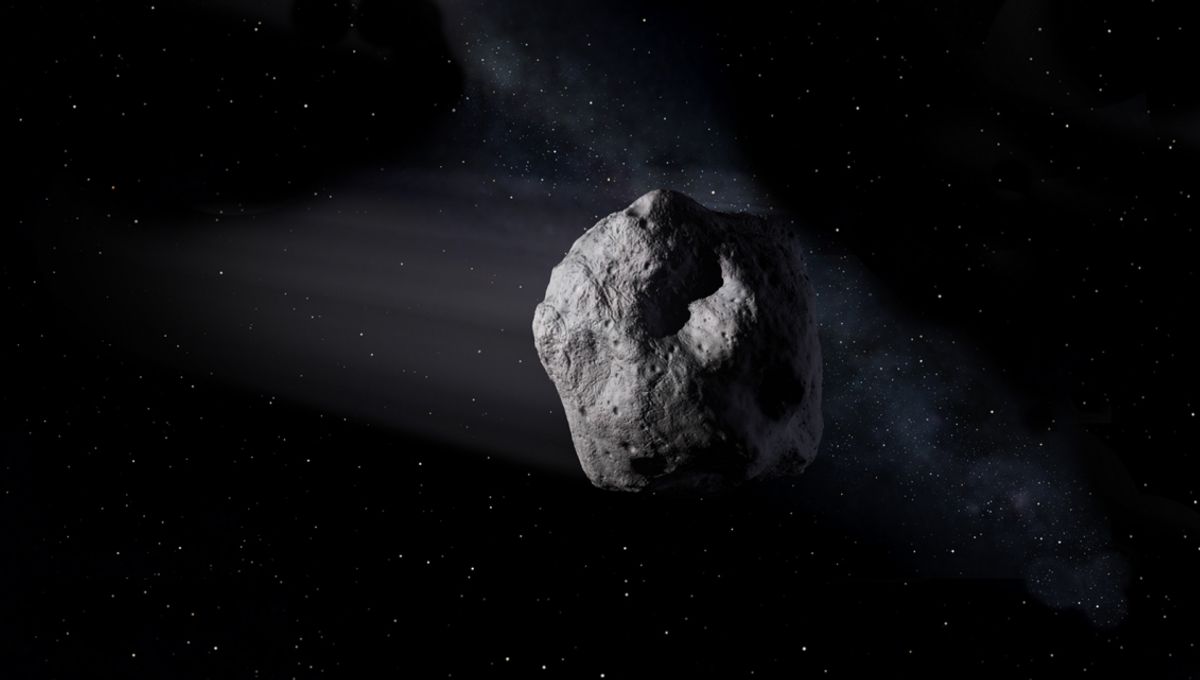
There are roughly 32,000 known asteroids that get close to our planet – an impressive number of objects, which has tripled in the last 10 years thanks to wider efforts in planetary defense. Almost half of all those detections (14,400) came from the NASA-funded Catalina Sky Survey, a project developed at the University of Arizona. Now, they want more people to help out.

Researchers with the project have launched a citizen science portal, part of the incredible Zooniverse program. No expertise is required to help, just an internet connection. The Daily Minor Planet consists of daily new images of the night sky. Asteroids move a fair bit with respect to the distant stars that are caught in the pictures, so citizen scientists are called upon to spot any movement from celestial bodies.

Advertisement

“I thought it would be great if people could do what we do every night,” Carson Fuls, a science engineering specialist for the Catalina Sky Survey who heads the project, said in a statement. “We see this website as throwing open the doors: Do you want to look for asteroids, too? If so, come on in.”

Images from the five telescopes of the survey are uploaded to the system. Not all the images, though: just those that had a speck of something moving in the field of view within six to seven minutes of the first observation. It could be a false alarm or the real thing, and that’s why you need a lot of people. There are already several hundred people who have joined, and more are coming on board. Good news for statistics, and you don’t need people to get it right every time.

“With enough people participating, you can establish a general consensus, so there’s less margin of error,” added Catalina Sky Survey director Eric Christensen.

In the testing phase, three citizen scientists spotted 64 candidate detections for unknown asteroids.

Advertisement

“We’ve sent these detections off to the Minor Planet Center as potential new discoveries, and most of these objects have not yet been linked to any object that has been detected before,” Fuls explained. “We anticipate that there will be many more discoveries like that going forward.”

The survey does not just detect new objects, but also keeps track of known asteroids. On a clear moonless night, they can spot up to 10,000 objects. The work of the citizen scientists will both help find new stuff and confirm candidates, helping the scientists in making sure we know the position of as many dangerous space rocks as possible. Just another way that citizen science is changing the world. 

Deborah Bloomfield
Deborah Bloomfield

Related posts:

  1. Factbox-Apple vs Epic case: heated arguments, dramatic calls
  2. While Britney Spears rejoices, her father’s attorney calls conservator suspension ‘wrong’
  3. Doctor Performs The World’s First Vasectomy Powered By A Car Battery
  4. The Creator Of The Internet Wants To Reinvent It By Giving Everyone Their Own AI

Source Link: "Asteroid Hunters Needed" – Astronomers Call On The Public To Join Search For More Space Rocks

Filed Under: News

Primary Sidebar

  • The Pinky Toe Has A Purpose And Most People Are Just Finding Out
  • What Is This Massive Heat-Emitting Mass Discovered Beneath The Moon’s Surface?
  • The Man Who Fell From Space: These Are The Last Words Of Cosmonaut Vladimir Komarov
  • How Long Can A Bird Can Fly Without Landing?
  • Earliest Evidence Of Making Fire Has Been Discovered, X-Rays Of 3I/ATLAS Reveal Signature Unseen In Other Interstellar Objects, And Much More This Week
  • Could This Weirdly Moving Comet Have Been The Real “Star Of Bethlehem”?
  • How Monogamous Are Humans Vs. Other Mammals? Somewhere Between Beavers And Meerkats, Apparently
  • A 4,900-Year-Old Tree Called Prometheus Was Once The World’s Oldest. Then, A Scientist Cut It Down
  • Descartes Thought The Pineal Gland Was “The Seat Of The Soul” – And Some People Still Do
  • Want To Know What The Last 2 Minutes Before Being Swallowed By A Volcanic Eruption Look Like? Now You Can
  • The Three Norths Are Moving On: A Once-In-A-Lifetime Alignment Shifts This Weekend
  • Spectacular Photo Captures Two Rare Atmospheric Phenomena At The Same Time
  • How America’s Aerospace Defense Came To Track Santa Claus For 70 Years
  • 3200 Phaethon: Parent Body Of Geminids Meteor Shower Is One Of The Strangest Objects We Know Of
  • Does Sleeping On A Problem Actually Help? Yes – It’s Science-Approved
  • Scientists Find A “Unique Group” Of Polar Bears Evolving To Survive The Modern World
  • Politics May Have Just Killed Our Chances To See A Tom Cruise Movie Actually Shot In Space
  • Why Is The Head On Beer Often White, When Beer Itself Isn’t?
  • Fabric Painted With Dye Made From Bacteria Could Protect Astronauts From Radiation On Moon
  • There Used To Be 27 Letters In The English Alphabet, Until One Mysteriously Vanished
  • Business
  • Health
  • News
  • Science
  • Technology
  • +1 718 874 1545
  • +91 78878 22626
  • [email protected]
Office Address
Prudour Pvt. Ltd. 420 Lexington Avenue Suite 300 New York City, NY 10170.

Powered by Prudour Network

Copyrights © 2025 · Medical Market Report. All Rights Reserved.

Go to mobile version