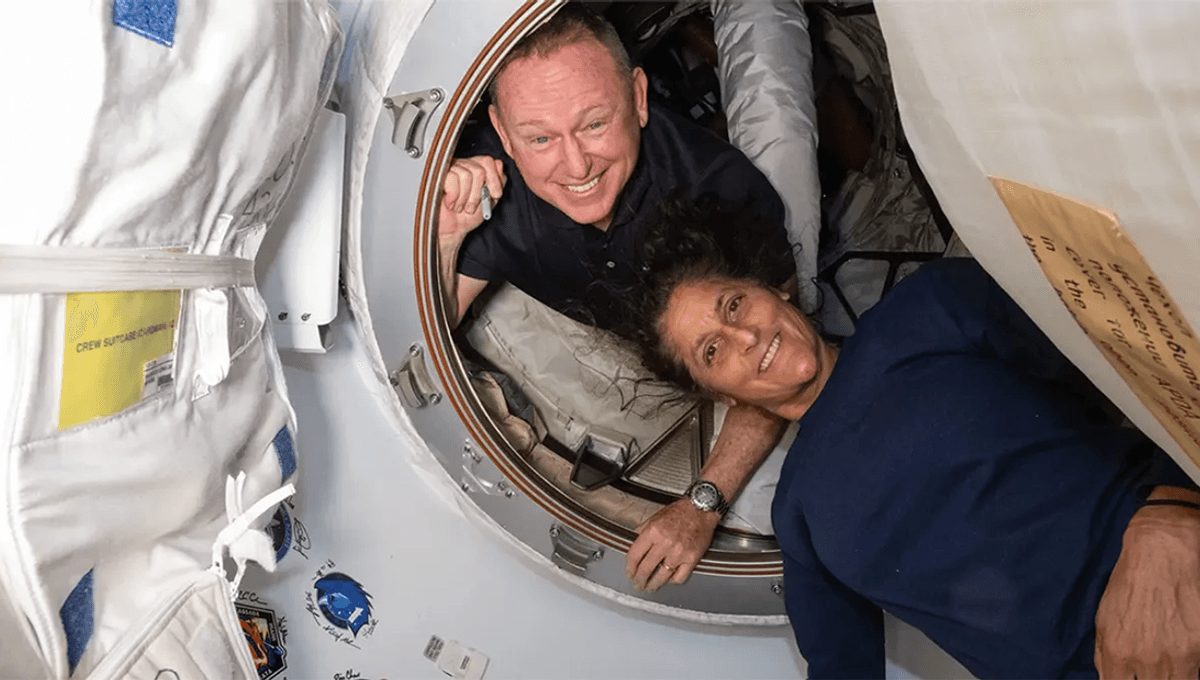
Astronauts stranded on the International Space Station (ISS) by Boeing’s faulty Starliner may have to wait until 2025 to return to Earth.
Suni Williams and Butch Wilmore departed for the ISS on June 5, the third and final test of Boeing’s new Starliner capsule, and its first launch with a crew. The mission was only expected to last for eight days, but due to problems with Starliner, the two remain stranded on the space station two months later.
The initial launch went to plan, but while in space and not yet docked to the ISS, the crew encountered problems.
“We lost an RCS jet, then we lost another one,” Wilmore explained in July. “And then you could tell the thrust, the control, the capability was degraded. The handling qualities were not the same.”
“From that point on you could tell that the thrust was degraded,” Wilmore added. “At the time we didn’t know why.”
Starliner performed well during precise docking with the ISS, and the astronauts got into their new living quarters. They have remained there while the crew and NASA attempted to fix the problems – including a helium leak – which prevented them from returning on board Starliner in June.
Months later, NASA is considering sending Starliner home without a crew and collecting the two astronauts with another spacecraft.
“As we’ve said before, our prime option is to return Butch and Suni on Starliner,” Steve Stich, NASA’s commercial crew program manager said in an update on Wednesday. “However we have done the requisite planning to make sure we have other options open.”
“We have been working with SpaceX to ensure that they’re ready to respond,” he added, “for a contingency of returning Butch and Suni on Crew 9 if we need that.”
That contingency plan would involve sending the Dragon for the next crew run, but with two empty seats for Williams and Wilmore to return in. Stich added that NASA has prepared this contingency plan, including identifying suits ready for the astronauts’ return.
While it’s good news that NASA has a backup plan for getting the astronauts home, it’s not ideal. The next mission to the ISS is scheduled to launch in September and return to Earth in February 2025. That’s a very long eight-day trip, and would see the astronauts have an unplanned summer, autumn, and winter aboard the space station.
NASA continues to work on the preferred option of returning the two on Starliner.
“But I would say that our chances of an uncrewed Starliner return have increased a little bit based on where things have gone over the last week or two,” Ken Bowersox, NASA’s director of space operations, added. “That’s why we’re looking more closely at that option to make sure that we can handle it.”
One problem they face is that Starliner was not designed to perform undocking procedures without a crew, according to sources speaking to Ars Technica. A significant software update is required in order to do so, contributing to the delay. Previous tests of a different Starliner vehicle, however, showed that the craft was capable of an uncrewed docking and undocking, raising questions as to why this version of Starliner did not have that capability.

Source Link: Astronauts Who Went To The ISS For A Week Could Be Stuck There For Half A Year
