You’d think it’d be hard to lose something as large and with as many legs as a giant millipede – but lo and behold, scientists managed to do so with one species for 126 years. Luckily, it’s been found again in Madagascar’s Makira Forest, joined by 20 other lost species ranging from ant-like flower beetles to iridescent fish and even jumping spiders.
The giant millipede in question, the long, dark-brown Spirostreptus sculptus, was first described by entomologist Henri de Saussure and naturalist Leo Zehntner back in 1897, having been discovered in Madagascar. Since that time, however, it had never been documented by scientists again – that is, until Re:wild’s Search for Lost Species came along.
The project, which has team members from multiple different organizations, seeks to find animals that have been lost to science for over a decade, but aren’t believed to be extinct – the number of which is thought to be at least 4,300.
As part of this search, they spent several weeks last year combing Makira Forest, one of Madagascar’s largest protected areas.
“Madagascar is a biodiversity hotspot and Makira is an underexplored area within the country, so we decided to pilot a new model for lost species searches there,” said Re:wild’s lost species officer Christina Biggs in a statement sent to IFLScience.

The search began in September 2023.
Image credit: Re:wild
After setting off with a list of 30 lost species to find, that search proved to be successful, with one of the more unexpected findings being the giant millipede – although it’s suspected that it hadn’t been lost to local communities at all.
“I personally was most surprised and pleased by the fact that the giant millipede Spirostreptus sculptus, not uncommon in Makira Forest, appeared to be another lost species known only from the type specimen described in 1897,” said Dmitry Telnov, an entomologist with BINCO.
Adding a particularly massive cherry on top of this find, the expedition member also noted: “The longest specimen of this species we observed in Makira was a really gigantic female measuring 27.5 centimeters [10.8 inches] long.”
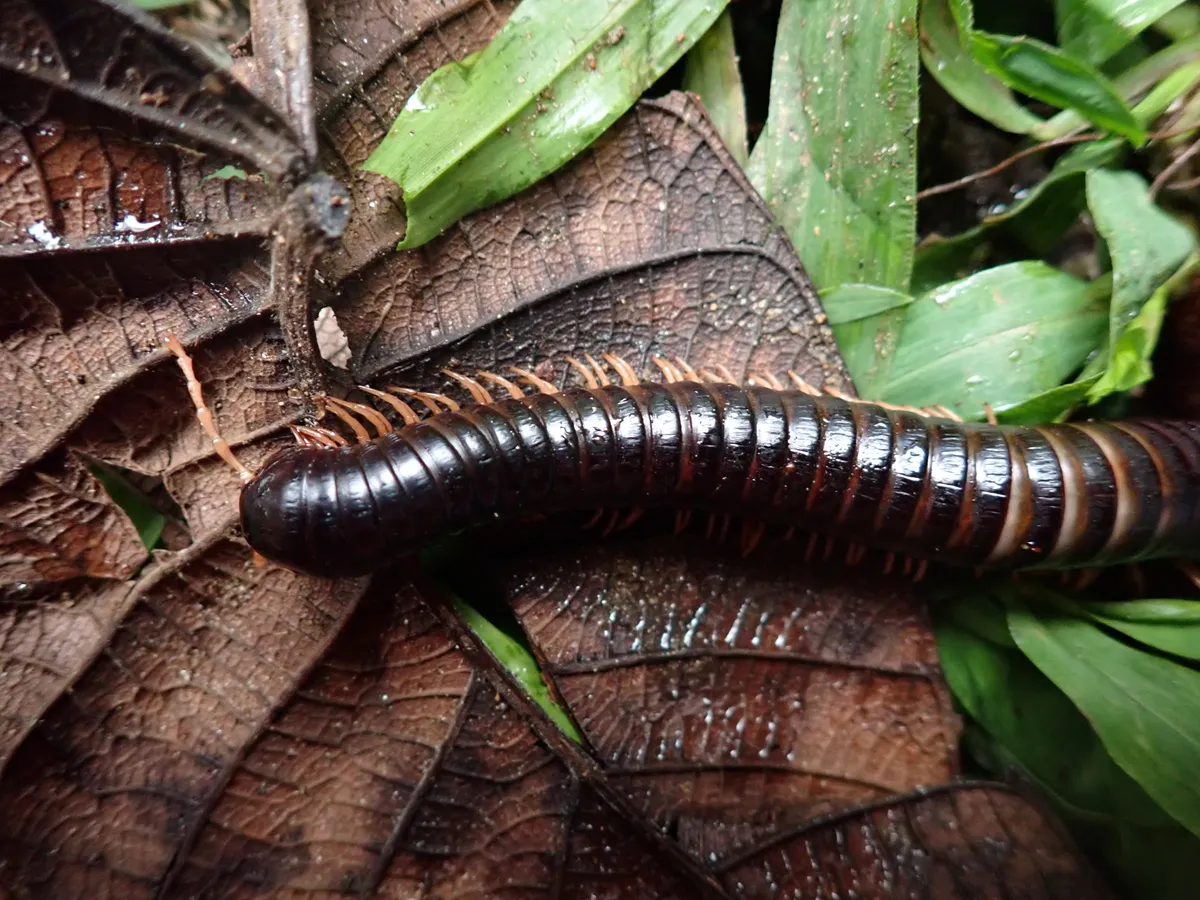
Ok, now I’m starting to see why it was so easy to lose.
Image credit: Re:wild
Although the team was unable to find a number of the species on the lost list, there were plenty that they did rediscover, including two species of ant-like flower beetles that hadn’t been documented since 1958 and a jumping spider, Tomocyrba decollate, that had been lost since first being discovered in 1900.
On top of that, the expedition uncovered a never-before-discovered species of zebra spider – quite the find considering they weren’t thought to live in Madagascan rainforests.
Having found some adult guarding egg sacs in a cave, Brogan Pett, director of the SpiDiverse working group at BINCO, commented: “[T]hey were quite large spiders and it was remarkable that they had gone unrecognized for so long.”
It’s hoped that the team will be able to return to Makira to get a second attempt at finding the species they couldn’t locate this time around – not just for the satisfaction of ticking something off a list, but because of the impact that rediscovering a species, or even finding brand-new ones, can have.
“It’s important to continue researching the biodiversity of Makira because although it is one of the largest rainforests in the country we still have relatively little idea which species occur, and there are likely to be many completely undescribed species as well,” said Julie Linchant from the Wildlife Conservation Society Madagascar.
“Having a better understanding of the biological riches of Makira will enable us to better target our protection efforts.”

Source Link: Giant Millipede Lost For Over 120 Years Rediscovered In Madagascan Forest
