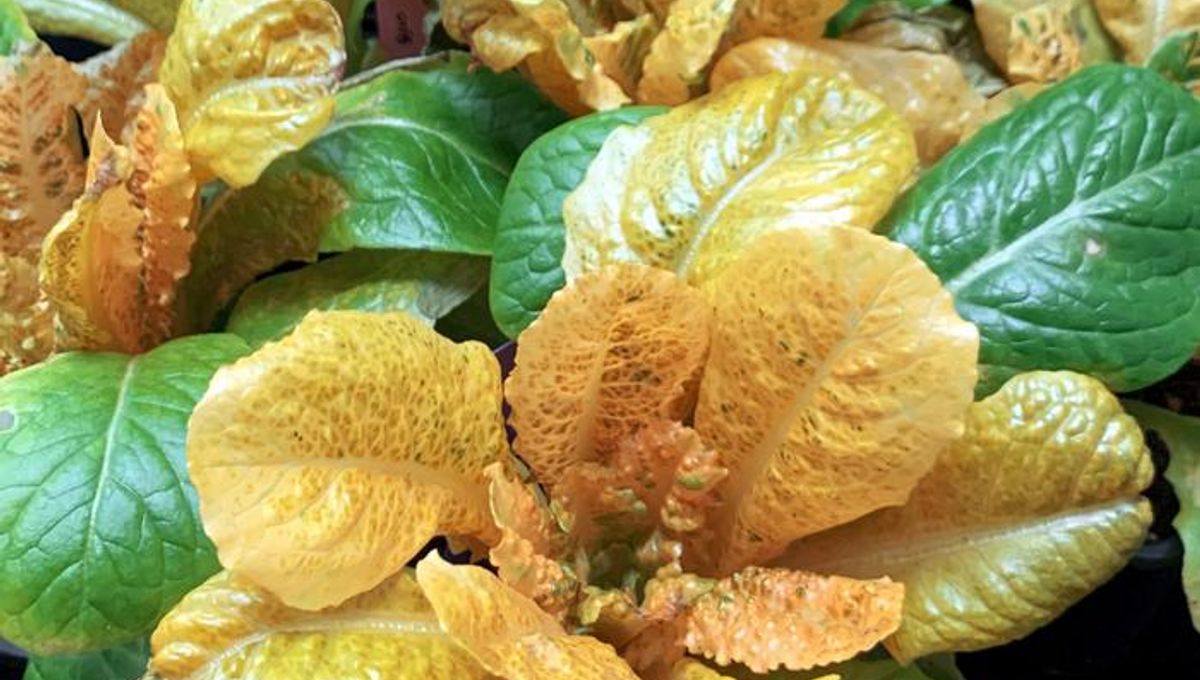
Lettuce has a reputation for being just crunchy water, but it’s actually an excellent source of vitamins and minerals. Scientists have recently found a way to add to the leafy vegetable’s nutritional profile by allowing it to brim with beta-carotene, a powerful pigment that’s converted into vitamin A in the human body.
Ultimately, the super-lettuce could be used to address the global struggle against vitamin A deficiency, a pervasive problem in developing countries that puts around 140 million children at risk of illness, hearing loss, blindness, and even death.
Researchers at the Universitat Politècnica de València in Spain looked into several ways to tweak the ability of common lettuce (Lactuca sativa) to produce more beta-carotene, a pigment it also produces naturally.
Firstly, they worked out how to provoke the plant to produce beta-carotene in the cytosol of leaf cells without disrupting photosynthesis, the energy-producing process that relies on green pigment chlorophyll. Secondly, they changed some parts of the leaf cells to store extra carotenoids (like beta-carotene) without harming the plant.
“Leaves need carotenoids such as beta-carotene in the photosynthetic complexes of chloroplasts for their proper functioning. When too much or too little beta-carotene is produced in the chloroplasts, they stop functioning, and the leaves eventually die,” Manuel Rodríguez Concepción, a researcher at the university’s Institute for Plant Molecular and Cell Biology, said in a statement.
While the team initially tried to achieve this using metabolic engineering, hormone treatments, and genetic screenings, they managed to get the desired results using intense treatments of light and enzymes found in bacteria.
The end result was a golden-colored lettuce that contains up to 30 times more accessible beta-carotene levels than untreated leaves.
“Our work has successfully produced and accumulated beta-carotene in cellular compartments where it is not normally found by combining biotechnological techniques and treatments with high light intensity,” Rodríguez added.
“Stimulating the formation and development of plastoglobules with molecular techniques and intense light treatments not only increases the accumulation of beta-carotene but also its bioaccessibility, i.e. the ease with which it can be extracted from the food matrix to be absorbed by our digestive system,” explained Luca Morelli, first author of the study.
The issue of vitamin A deficiency was the main drive behind golden rice, a variety of white rice genetically edited to produce beta-carotene. Despite its huge potential to save millions of lives, golden rice has proved to be controversial among some environmental groups, for example Greenpeace, which has continually opposed its use in Southeast Asia, a part of the world with very high levels of vitamin A deficiency.
It seems that many skeptics are dubious about the use of genetic engineering, despite the lack of evidence showing that it negatively impacts health or the environment.
While there are always going to be fears of so-called “Frankenfoods”, this latest study in lettuce shows another new and promising way of improving nutrition through the biofortification of plants.
The new study is published in The Plant Journal.

Source Link: Golden Lettuce: New Fortified Food Is Packed With 30 Times More Provitamin A
