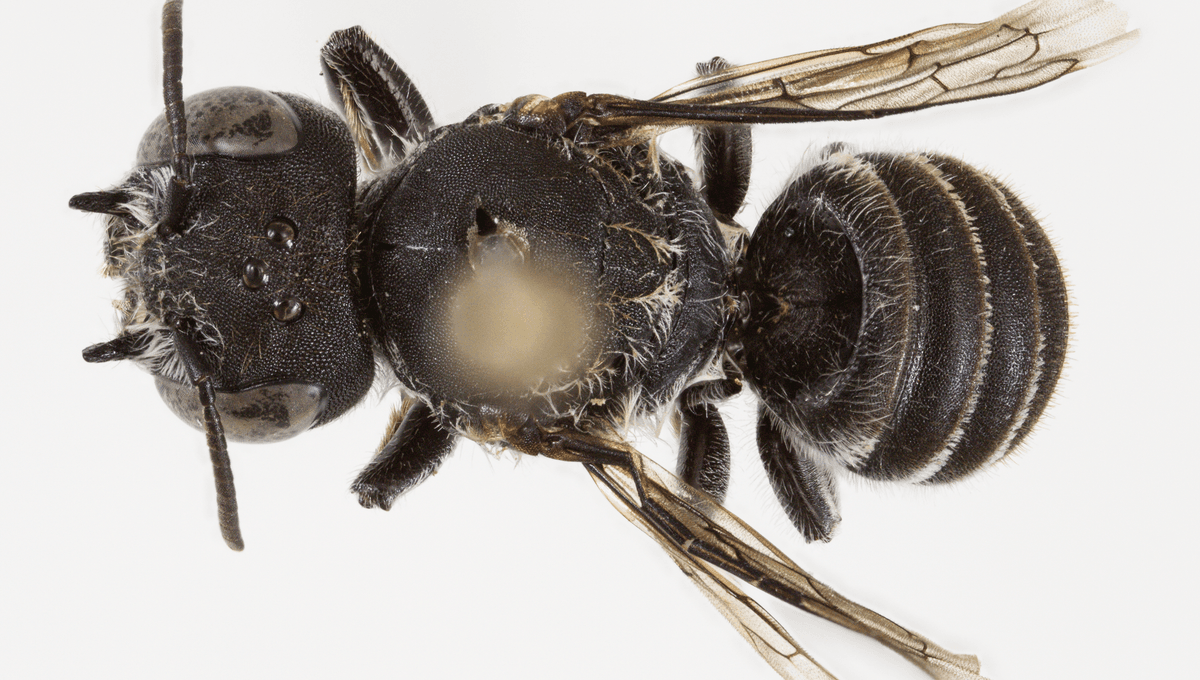
If you’ve ever been stung by a bee, you could be forgiven for shouting that the infernal beast must have been sent by the devil himself. Now, the discovery of a new species of the pied insect has added more evidence of their demonic nature, being as it is named Megachile (Hackeriapis) lucifer.
The rest of this article is behind a paywall. Please sign in or subscribe to access the full content.
That might seem like quite a lot of name for a little bee – but it’s fitting: the insect, found during a survey of endangered wildflowers in Western Australia, is bedecked with a group of tiny horns on its face. That detail, plus the discoverer’s TV bingeing habits, made the moniker a “no-brainer,” said Kit Prendergast, a research fellow at the Curtin School of Molecular and Life Sciences and lead author of a new paper detailing the species.
“I discovered the species while surveying a rare plant in the Goldfields and noticed this bee visiting both the endangered wildflower and a nearby mallee tree,” he explained in a statement.
“The female had these incredible little horns on her face,” he said. “When writing up the new species description, I was watching the Netflix show Lucifer […] and the name just fit perfectly.”
Unusually, these tiny horns are only present for the female bees – which makes them a bit of a mystery, evolutionarily speaking. Presumably, they aren’t related to male-male competition, but observations from similar species suggest they might help the insects access flowers and build nest sites – or to defend them once claimed. Perhaps the horns really are used for fighting, as in certain other Megachile species – the jury’s still out, and will be until further field research is done.
And it should really be done sooner rather than later. The area where M. lucifer was found has long been a hotspot for mining and pastoralism – both quite devastating for the native Australian ecosystem, and processes done, astonishingly, without all that much caution.
“Many mining companies still don’t survey for native bees,” pointed out Prendergast, “so we may be missing undescribed species, including those that play crucial roles in supporting threatened plants and ecosystems.”
While the discovery of this devilish little bee is delightful news, then, it’s also a stark warning about how little we still know about our environment – and how easily it can slip out of our reach, whether through climate change or more direct destruction.
“It’s the first new member of this bee group to be described in more than 20 years,” Prendergast said, “which really shows how much life we still have to discover – including in areas that are at risk of mining, such as the Goldfields.”
But, he added, “without knowing which native bees exist and what plants they depend on, we risk losing both before we even realize they’re there.”
The discovery is described in the Journal of Hymenoptera Research.

Source Link: New Bee Species With A Devilish Name Sports Horns On Its Head Like A Tiny Demon
