Why do dolphins end up stranded? In a new study, scientists have found evidence to suggest that some may be suffering from an Alzheimer’s-like disease, causing them to become disoriented much like humans do – and that harmful algal blooms could be to blame.
The rest of this article is behind a paywall. Please sign in or subscribe to access the full content.
Determining why dolphins end up stranded is an important question to answer, with reports of increased marine mammal strandings, and with the US having experienced its largest ever mass stranding event in July last year.
One place in the US that sees a seasonal increase in the number of dolphin strandings is Florida’s Indian River Lagoon, a 251-kilometer (156-mile) long estuary stretching along the state’s east coast. But strandings aren’t the only thing that increases there in the summer months – so do harmful algal blooms.
These are colonies of algae that grow out of control, producing toxins that can have devastating effects on the surrounding wildlife, with their occurrence only increasing with climate warming and pollution.
Given the seasonal increase in harmful blooms seen in the Indian River Lagoon, scientists suspected they might have something to do with the dolphin strandings. In particular, they had a theory that the toxins produced by the blooms were affecting the health of dolphins’ brains.
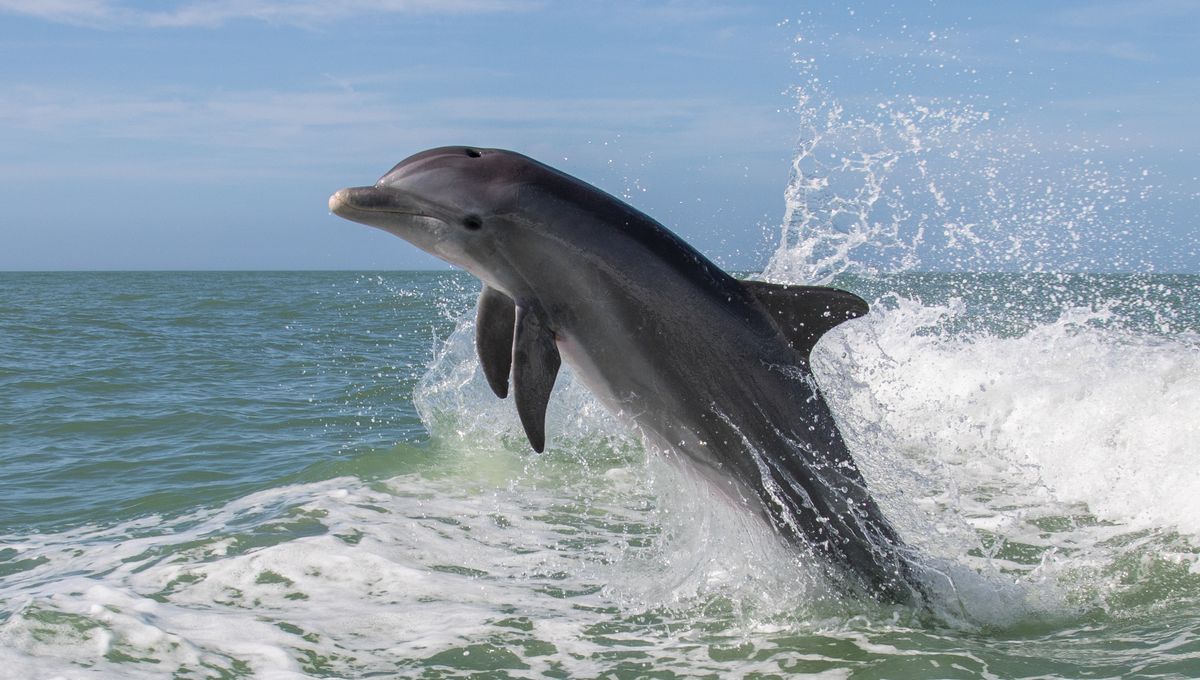
To find out, a team of researchers examined the brains of 20 common bottlenose dolphins (Tursiops truncatus) that were found stranded in the lagoon between 2010 and 2019, looking for signs of toxin exposure and changes in the brains’ gene expression, cells, and structure.
The signs of seasonal toxin exposure were pretty significant; the team found that a neurotoxin called 2,4-diaminobutyric acid (2,4-DAB) was 2,900 times more concentrated in the dolphins’ brains during algal bloom seasons compared to non-bloom seasons.
Those same brains also showed sweeping changes in gene expression and the appearance of protein-based structures characteristic of an Alzheimer’s-like disease: amyloid plaques. It’s not abnormal to see these plaques in dolphins – they’re considered to be a natural model of Alzheimer’s disease, as they develop these plaques with age – but this study suggests that harmful algal blooms may be accelerating the process.
It’s bad news for dolphins, but the findings might come as a warning for humans too. “Since dolphins are considered environmental sentinels for toxic exposures in marine environments, there are concerns about human health issues associated with cyanobacterial blooms,” said study author Dr David Davis, from the University of Miami’s Miller School of Medicine, in a blog post.
“Although there are likely many paths to Alzheimer’s disease, cyanobacterial exposures increasingly appear to be a risk factor,” Davis added.
The study is published in Communications Biology.

Source Link: Stranded Dolphins’ Brains Show Signs Of Alzheimer’s-Like Disease
