World powers are scrambling to get their hands on more rare earth elements to build clean energy infrastructure, batteries, and all kinds of high-tech wizardry. If only they grew on trees! Well, in a sense, they do.
The rest of this article is behind a paywall. Please sign in or subscribe to access the full content.
For the first time, scientists from the Guangzhou Institute of Geochemistry in China have identified a plant that naturally forms nanocrystals of monazite containing rare earth elements.
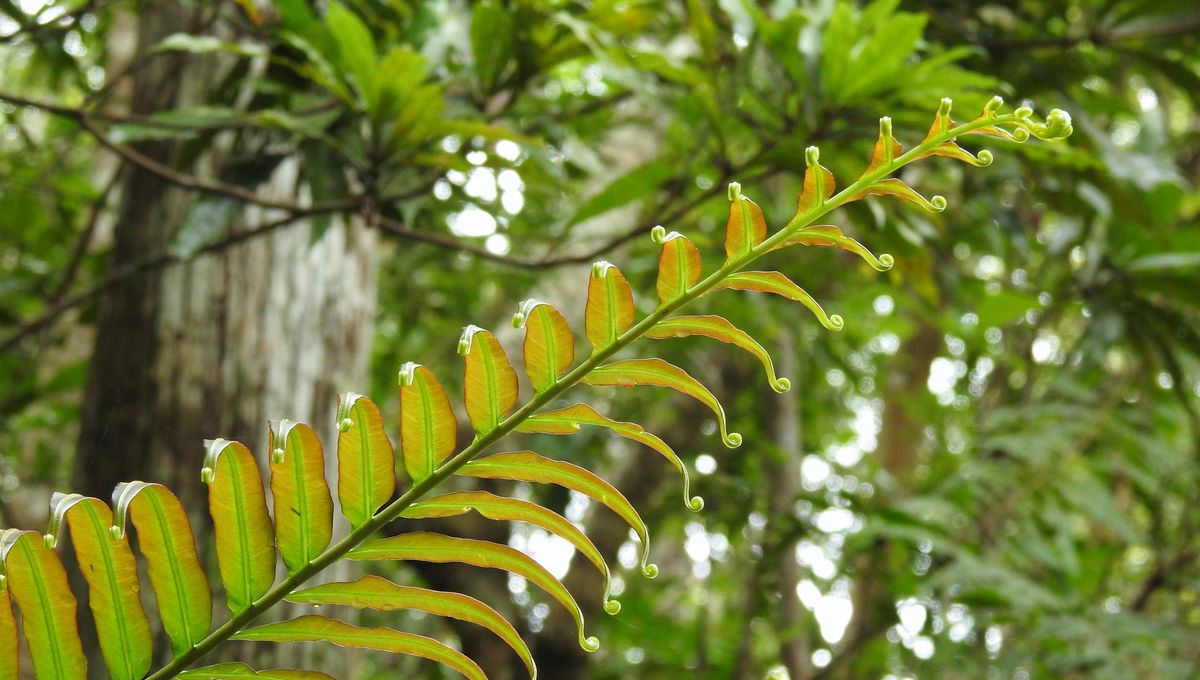
It’s a type of fern called Blechnum orientale that’s native to the tropical forest biomes of Asia and the Pacific region. In parts of Guangzhou in southern China, where rare earth elements are naturally abundant in the soil, the plant acts as a hyperaccumulator, sucking up significant quantities of these rare elements and storing them in nano-sized crystals.
The researchers looked at how many rare earth elements are present in different parts of the fern. They focused on two groups of rare earth elements: light ones, such as lanthanum, cerium, and neodymium, and heavy ones, such as gadolinium, dysprosium, and yttrium. Their findings showed that the fern doesn’t distribute these elements evenly, with some parts of the plant, like the leaves, storing much higher concentrations than others.
“These REE [rare earth elements] minerals crystallize within extracellular tissues under ambient conditions, forming dendritic nanocrystals through biologically induced mineralization coupled with a non-equilibrium self-organization process,” the study authors write in their paper.
“This represents the novel discovery of REE mineral crystals formed in living plants through a phytomineralization (i.e., plant-mediated mineralization) process,” they added.
Many of these metals are a hidden backbone of modern technology. Lanthanum is used to power hybrid car batteries and optical glass, while neodymium makes the super-strong magnets in electric motors. Heavy REEs like gadolinium show up in MRI contrast agents and nuclear reactors, while yttrium lights up LEDs and is used in superconductors.
Without them, much of today’s clean energy and electronics wouldn’t exist. This is why many of the world’s powers are fiercely competing to control the market and secure a strong supply of these critical elements for the future ahead.
The latest discovery in China raises the question of whether these humble ferns could be farmed for rare earth elements, which are tricky, expensive, and destructive to mine directly from the ground.
While the overall concentration of the elements in the plants is still relatively low, the study suggests that Blechnum orientale could hold some potential for phytomining, a process that uses plants to extract valuable metals from soil.
The study is published in the journal Environmental Science & Technology.

Source Link: This Plant Hoards Rare Earth Elements That The World Desperately Needs
