• Email Us: [email protected]
  • Contact Us: +1 718 874 1545
  • Skip to main content
  • Skip to primary sidebar

Medical Market Report

  • Home
  • All Reports
  • About Us
  • Contact Us

We’ve Finally Found The Atlanteans! No, Not Those Ones – They’re Volcanoes

August 15, 2024 by Deborah Bloomfield

Good news, conspiracy theorists: Atlanteans are real after all. There’s just one catch: they’re actually not a heroic race of people from an ancient and mythical land lost to Poseidon’s wrath. Turns out, they’re volcanoes.

Advertisement

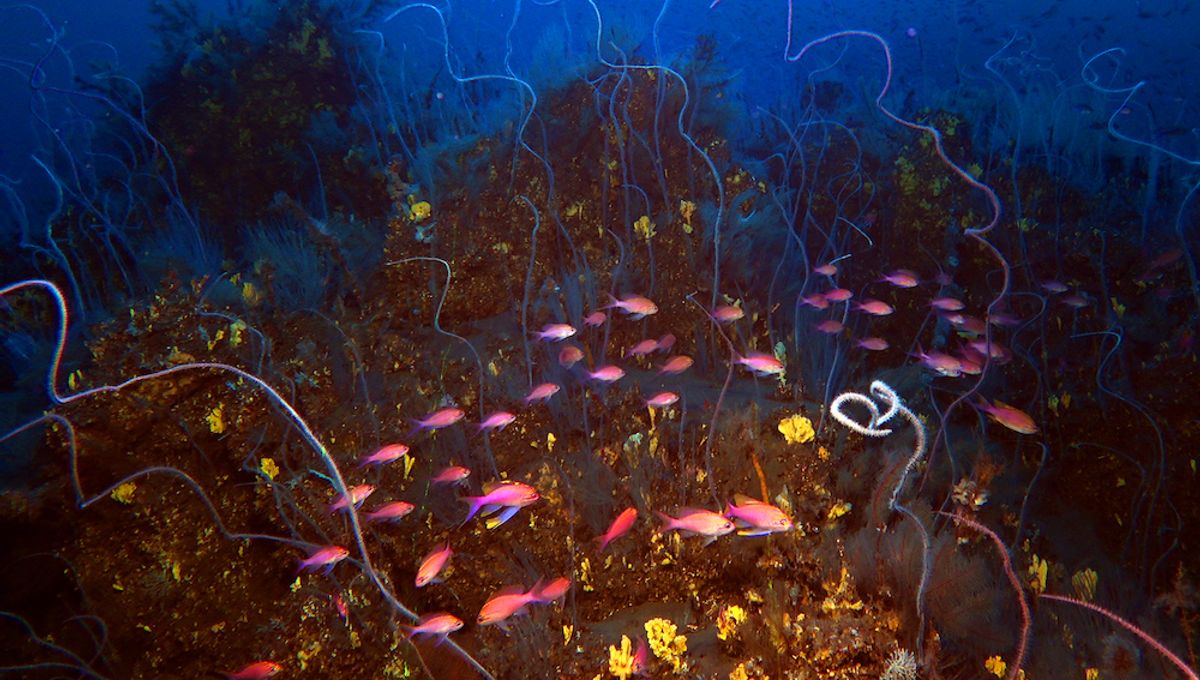
Discovered in the oceans north of the Canary Islands, the three underwater volcanoes have been named “Los Atlantes” – Spanish for “the Atlanteans” – by the team who found them. The title isn’t random: it’s a reference to the “Atlantis” research project, launched in late June by institutions across Spain and Portugal to investigate features of the local marine environment, during which the trio was accidentally discovered.

That’s not the only thing the volcanoes have in common with the myth. While the discovery of hitherto unknown geological features is always pretty cool, Los Atlantes are far more than just a zit on the ocean bed: sitting as they do in the Canaries – a Spanish archipelago off the northwest coast of Africa, comprising the islands of Lanzarote, Tenerife, La Palma, and so on – they speak to a history millions of years in the making. 

“They were islands in the past and they have sunk,” explained geologist Luis Somoza, coordinator of the Atlantis project, in a translated statement. “They are still sinking, as the legend of Atlantis tells us.” 

Indeed, the geological story of the Canary Islands is much more tempestuous and mysterious than the region’s reputation as a vacation spot would suggest. Located firmly inside the African continental shelf, the archipelago is nevertheless a hotbed of volcanic activity: all seven islands currently making up the region began as submarine volcanoes, built through millions of years of eruptions into the landmasses we know today. 

Evidently, however, not all the islands were so lucky. Los Atlantes haven’t been above the waves since the Eocene age some 56 to  34 million years ago – with an honorable mention for a few of the inactive volcanoes during the last ice age, when sea levels were lower and they could poke their calderas out into the air for a while. Now, though, these three mounts are at least 60 meters (200 feet) below the surface, home to marine microorganisms and crucial elements.

Advertisement

Which is a shame, really – because Los Atlantes sounds just as idyllic as their sisters. The team has “been able to verify that they still maintain their beaches,” Somoza explained in the statement; the team also identified “cliffs and sand dunes at the flat summit of the seamount,” he told Live Science. During the last ice age, he said, “these islands could […] be used for inhabiting wildlife.”

“This could be the origin of the Atlantis legend,” Somoza suggested.

Deborah Bloomfield
Deborah Bloomfield

Related posts:

  1. Ecuador eyes new Galapagos marine reserve to limit commercial fishing
  2. Pirates recall Max Kranick, place Bryse Wilson on 10-day IL
  3. San Diego Zoo Penguin Gets Fancy New Footwear In Form Of Orthopedic Boot
  4. Laser Experiment Breaks Record While Crossing University Hallway

Source Link: We've Finally Found The Atlanteans! No, Not Those Ones – They're Volcanoes

Filed Under: News

Primary Sidebar

  • US Just Killed NASA’s Mars Sample Return Mission – So What Happens Now?
  • Art Sleuths May Have Recovered Traces Of Da Vinci’s DNA From One Of His Drawings
  • Countries With The Most Narcissists Identified By 45,000-Person Study, And The Results Might Surprise You
  • World’s Oldest Poison Arrows Were Used By Hunters 60,000 Years Ago
  • The Real Reason You Shouldn’t Eat (Most) Raw Cookie Dough
  • Antarctic Scientists Have Just Moved The South Pole – Literally
  • “What We Have Is A Very Good Candidate”: Has The Ancestor Of Homo Sapiens Finally Been Found In Africa?
  • Europe’s Missing Ceratopsian Dinosaurs Have Been Found And They’re Quite Diverse
  • Why Don’t Snorers Wake Themselves Up?
  • Endangered “Northern Native Cat” Captured On Camera For The First Time In 80 Years At Australian Sanctuary
  • Watch 25 Years Of A Supernova Expanding Into Space Squeezed Into This 40-Second NASA Video
  • “Diet Stacking” Trend Could Be Seriously Bad For Your Health
  • Meet The Psychedelic Earth Tiger, A Funky Addition To “10 Species To Watch” In 2026
  • The Weird Mystery Of The “Einstein Desert” In The Hunt For Rogue Planets
  • NASA Astronaut Charles Duke Left A Touching Photograph And Message On The Moon In 1972
  • How Multilingual Are You? This New Language Calculator Lets You Find Out In A Minute
  • Europa’s Seabed Might Be Too Quiet For Life: “The Energy Just Doesn’t Seem To Be There”
  • Amoebae: The Microscopic Health Threat Lurking In Our Water Supplies. Are We Taking Them Seriously?
  • The Last Dogs In Antarctica Were Kicked Out In April 1994 By An International Treaty
  • Interstellar Comet 3I/ATLAS Snapped By NASA’s Europa Mission: “We’re Still Scratching Our Heads About Some Of The Things We’re Seeing”
  • Business
  • Health
  • News
  • Science
  • Technology
  • +1 718 874 1545
  • +91 78878 22626
  • [email protected]
Office Address
Prudour Pvt. Ltd. 420 Lexington Avenue Suite 300 New York City, NY 10170.

Powered by Prudour Network

Copyrights © 2026 · Medical Market Report. All Rights Reserved.

Go to mobile version