Pugs, Mastiffs, Chihuahuas, and Greyhounds didn’t splinter off from wolf-like wild dogs in a matter of generations – the story runs far deeper. The forms we recognize in our canine companions today began to appear surprisingly early, at a time when the Ice Age was ending and agriculture was just beginning to take root around the world.
A new study looked at the early diversification of domestic dogs and discovered that major, distinct genetic lineages started appearing at least 11,000 years ago.
Dogs were domesticated by humans at some point during the last 40,000 years, with some of the most acute analyses saying it happened in Siberia around 23,000 years ago. While we don’t have a firm date on when exactly they became “man’s best friend,” it is possible to see when their domestication started to form the dogs we recognize today.
In a new study, scientists from multiple institutions looked at 3D scans of 643 canid skulls from the past 50,000 years.
Most of the skulls from the Ice Age (over 11,700 years ago) looked much like wolf skulls. However, around 11,000 years ago, visible traits of domestication started to become clear: shorter snouts, smaller teeth, and a more rounded skull shape, all hallmarks of domestic dogs.
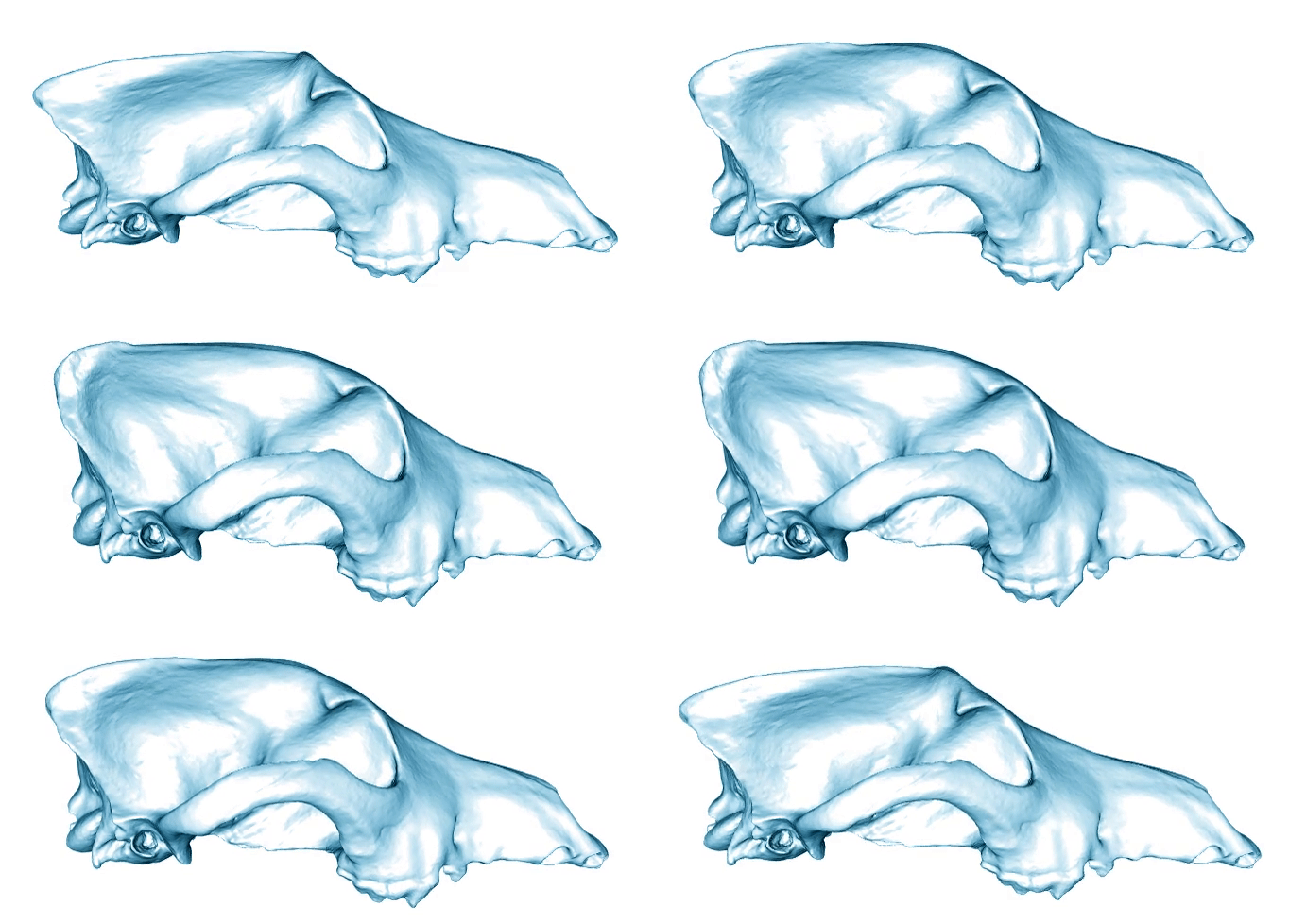
Shapeshifter: changes in the skull between dog and wolf, illustrating the profound morphological difference driven by human societies since the beginning of the Holocene.
Image credit: A. Evin (CNRS/ISEM)
The earliest skull that clearly fits in the bracket of being like a modern dog comes from northwest Russia and dates to around 10,800 years ago. After this point, dog-like skulls start to emerge all over the world. Over in the Americas, the earliest dates to around 8,650 to 8,250 years and was unearthed at a site in modern-day Illinois.
The diversity among these early dogs was striking. Early Holocene dogs exhibited roughly twice that of their Ice Age ancestors, suggesting that significant variation in dog form had already arisen thousands of years before the advent of modern breeding practices.
Importantly, these dates nicely align with our broader understanding of history. It’s well-established that human societies and cultures started to undergo a radical transformation around 11,700 years ago with the thawing of the last Ice Age.
Agriculture took root in the Fertile Crescent, while other regions around the globe were independently sowing the seeds of farming at the same time. Growing crops in set spaces created surpluses of food and reinforced the need to establish territories, two forces that allowed the emergence of more complex societies, centralized power, and great cities.
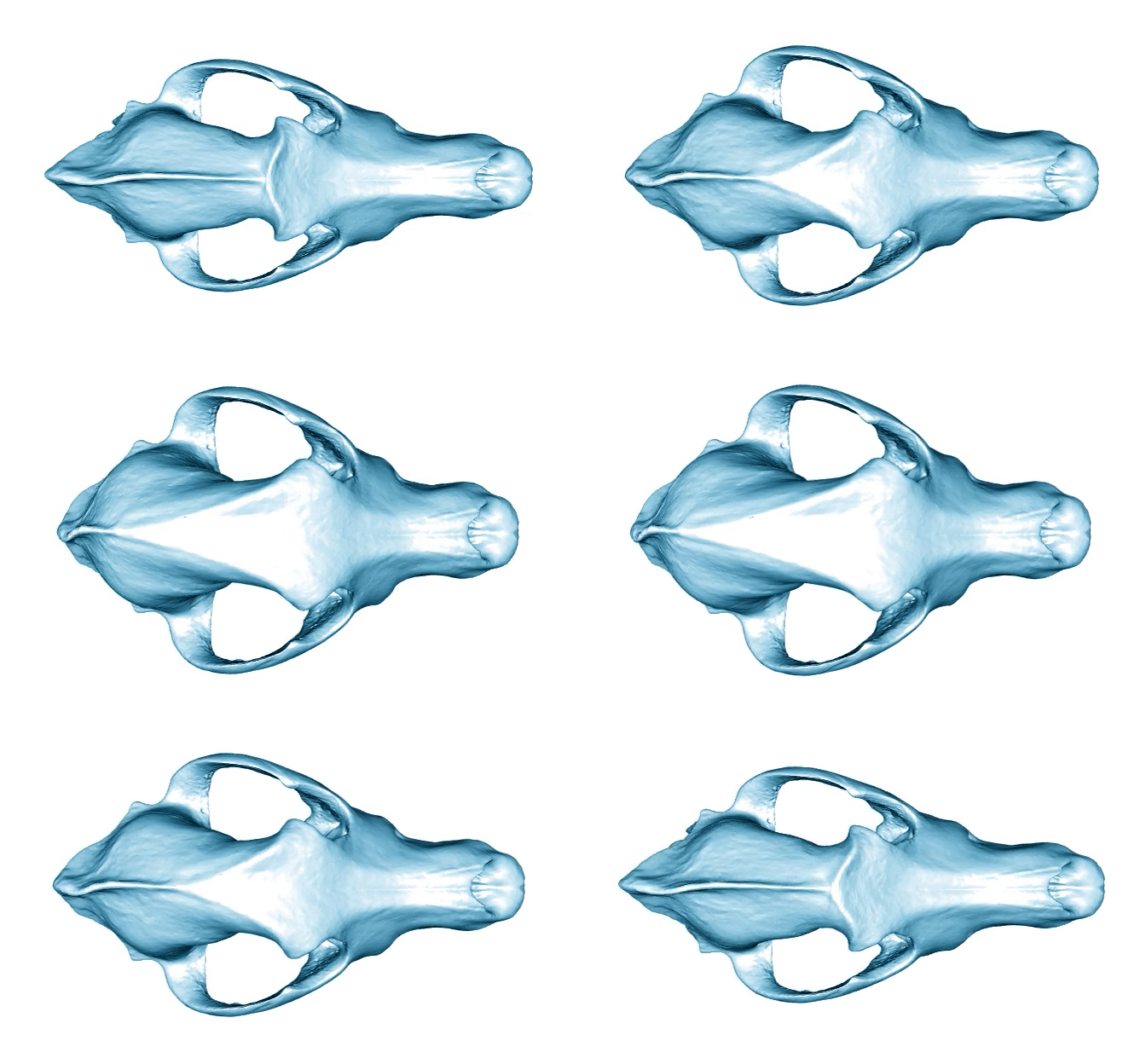
Another GIF showing changes in the skull between dog and wolf.
Image credit: A. Evin (CNRS/ISEM)
In light of the new study, it’s clear that dogs were woven into the fabric of this story. As our societies transformed, so too did their shapes and sizes, evolving alongside us and becoming partners in building the complex communities that would change the world forever.
“The relationship between humans and animals is as old as humanity itself. Dogs are believed to be the first animals domesticated by humans, and much of the wide physical variation that exists in dogs today is thought to result from this long-term relationship,” Melanie Fillios, an anthropological archaeologist at the University of New England, writes in an accompanying Perspective paper.
“The domestication of dogs has captivated attention because of the close bonds that many humans share with dogs,” she added. “[The new] research contributes to the wider understanding of domestication as a complex, multifaceted biological and cultural process in which thousands of years of human and animal history are intertwined.”
The new study is published in the journal Science.

Source Link: When Did Dogs Become Dogs? Familiar Forms Started To Arise Over 10,000 Years Ago
