• Email Us: [email protected]
  • Contact Us: +1 718 874 1545
  • Skip to main content
  • Skip to primary sidebar

Medical Market Report

  • Home
  • All Reports
  • About Us
  • Contact Us

Where Did The Expression “Roger!” Come From?

June 29, 2024 by Deborah Bloomfield

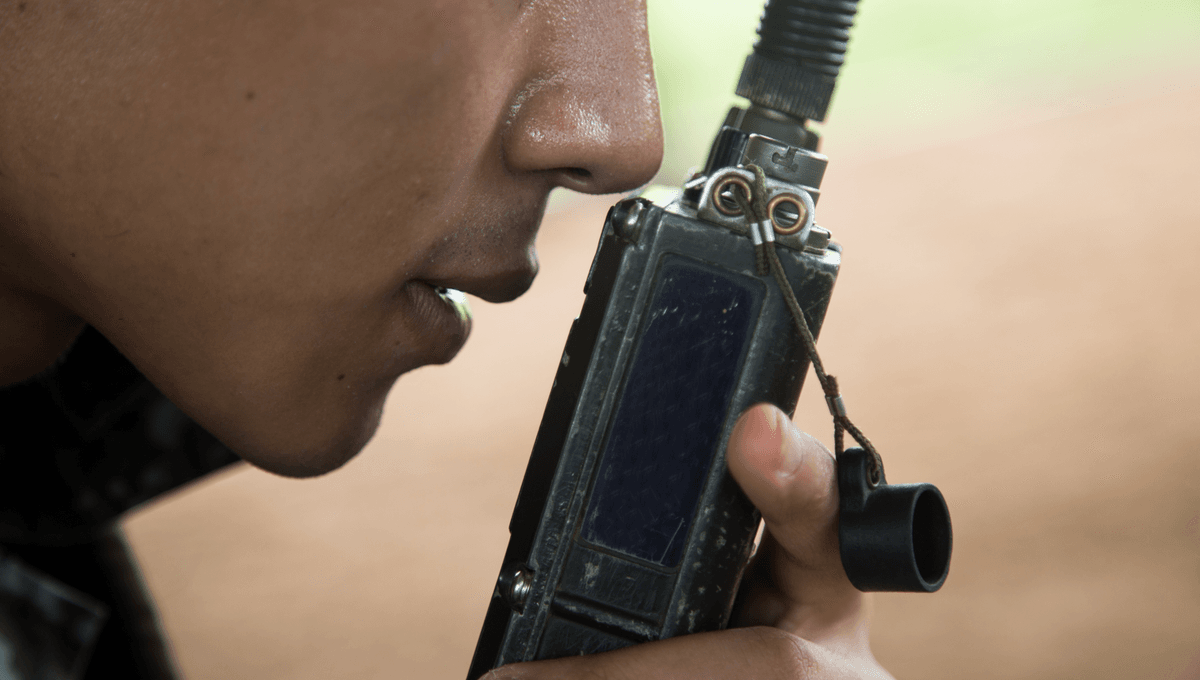
“Roger!” has become a go-to expression to acknowledge a message, most often uttered over the phone or a radio transmitter when doing something vaguely important. However, the origin of this cool sign-off is less well-known. And no, it doesn’t have anything to do with a guy named Roger.

Advertisement

The term can be traced back to the early days of radio when crackly lines and muffled voices meant communications had to be short and sweet. Particularly in World War 2, when two-way radio communications had a big break, “Roger” was widely used by the British and Americans to acknowledge a command or statement. 

Advertisement

This is because “R” was represented by the word “Roger” in the old phonetic alphabet. To say “R” was shorthand for saying “received,” as in “message received.” Simply, “Roger” is much easier to hear in the heat of battle than “Received” or even just “R.” 

Additionally, as explained in a blog post by Jakub Marian, the tradition of using “R” as an abbreviation for “received” has some link to a time before World War 2 when Morse code was the most widely used form of communication. 

During the Second World War, the most common phonetic alphabet used by the British and American militaries was: “Able, Baker, Charlie, Dog, Easy, Fox, George, How, Item, Jig, King, Love, Mike, Nan, Oboe, Peter, Queen, Roger, Sugar, Tare, Uncle, Victor, William, X-ray, Yoke, Zebra.”

Since the 1950s, however, the phonetic alphabet has changed. The standard one used by NATO operators goes as follows: “Alfa, Bravo, Charlie, Delta, Echo, Foxtrot, Golf, Hotel, India, Juliett, Kilo, Lima, Mike, November, Oscar, Papa, Quebec, Romeo, Sierra, Tango, Uniform, Victor, Whiskey, X-ray, Yankee, Zulu.”

Advertisement

It’s not crystal clear why “Roger” stuck around and wasn’t replaced with “Romeo,” but it perhaps has something to do with the way the Second World War had a profound and lasting influence on culture. 

It was also used prolifically in the transcripts of the Apollo 11 mission in 1969, an event that was beamed across every corner of planet Earth. It’s estimated that around 650 million people watched the first Moon landing, approximately a fifth of the world’s population at the time. Countless humans must have sat around their television screens or radio sets and heard the phrase, embedding it in their brains as a symbol of cool, calm, and collected communication. 

With that level of exposure, it’s no wonder the expression didn’t sink into obscurity. 

Deborah Bloomfield
Deborah Bloomfield

Related posts:

  1. Rape drama in medieval France reunites Affleck, Damon on big screen
  2. Wall Street eyes four more years for Powell at Fed
  3. Soccer-Gavi gives glimpse of Spain’s future with debut showing
  4. What Is The Heaviest Object In The Universe?

Source Link: Where Did The Expression "Roger!" Come From?

Filed Under: News

Primary Sidebar

  • Why Does My Belly Button Smell?
  • 2,500-Year-Old Chronicle Is Oldest Known Record Of A Total Solar Eclipse And Reveals Some Surprises
  • RIP Claude: San Francisco’s Iconic Albino Alligator Dies Aged 30
  • Nitrous Oxide: Inhaling “Laughing Gas” Could Be Surprisingly Effective For Treating Severe Depression
  • JWST Discovers A Milky Way-Like Spiral Galaxy Where It Shouldn’t Exist
  • World’s Largest Dinosaur Tracksite Has At Least 16,600 Footprints And Sets Many World Records
  • Interstellar Comet 3I/ATLAS Will Make Its Closest Approach To Earth This Month, Just 270 Million Kilometers Away
  • How Does Time Pass On Mars? For The First Time, We Have A Precise Answer
  • Is This How The Voynich Manuscript Was Made? A New Cipher Offers Fascinating Clues
  • An Extremely Rare And Beautiful “Meat-Eating” Plant Has Been Found Miles From Its Known Home
  • Scheerer Phenomenon: Those White Structures You See When You Look At The Sky May Not Be “Floaters”
  • The Science Of Magic At CURIOUS Live: Psychologist Dr Gustav Kuhn On Using Magic To Study The Human Mind
  • Around 5 Percent Of Cancers Are Of “Unknown Primary”. Could A New Blood Test Track Them Down?
  • With Only 5 Years Left In Space, The International Space Station Just Hit A New Milestone
  • 7,000-Year-Old Atacama Mummies May Have Been Created As “Art Therapy”
  • In 1985, A Newborn Underwent Heart Surgery Without Pain Relief Because Doctors Didn’t Think Babies Could Feel Pain
  • Ancient Roman Military Officers Had Pet Monkeys, And The Pet Monkeys Had Pet Piglets
  • Lasting 29 Hours, The World’s Longest Commercial Scheduled Flight Is Set To Take Off This Week
  • What Is Christougenniatikophobia, And What Do I Do About It?
  • Sun’s Ancient Encounter With Two Hot Stars Left A Legacy In The Solar System’s Neighborhood
  • Business
  • Health
  • News
  • Science
  • Technology
  • +1 718 874 1545
  • +91 78878 22626
  • [email protected]
Office Address
Prudour Pvt. Ltd. 420 Lexington Avenue Suite 300 New York City, NY 10170.

Powered by Prudour Network

Copyrights © 2025 · Medical Market Report. All Rights Reserved.

Go to mobile version