• Email Us: [email protected]
  • Contact Us: +1 718 874 1545
  • Skip to main content
  • Skip to primary sidebar

Medical Market Report

  • Home
  • All Reports
  • About Us
  • Contact Us

Firefighters Sometimes Use “Wet Water” Rather Than Water To Put Out Fires

July 4, 2023 by Deborah Bloomfield

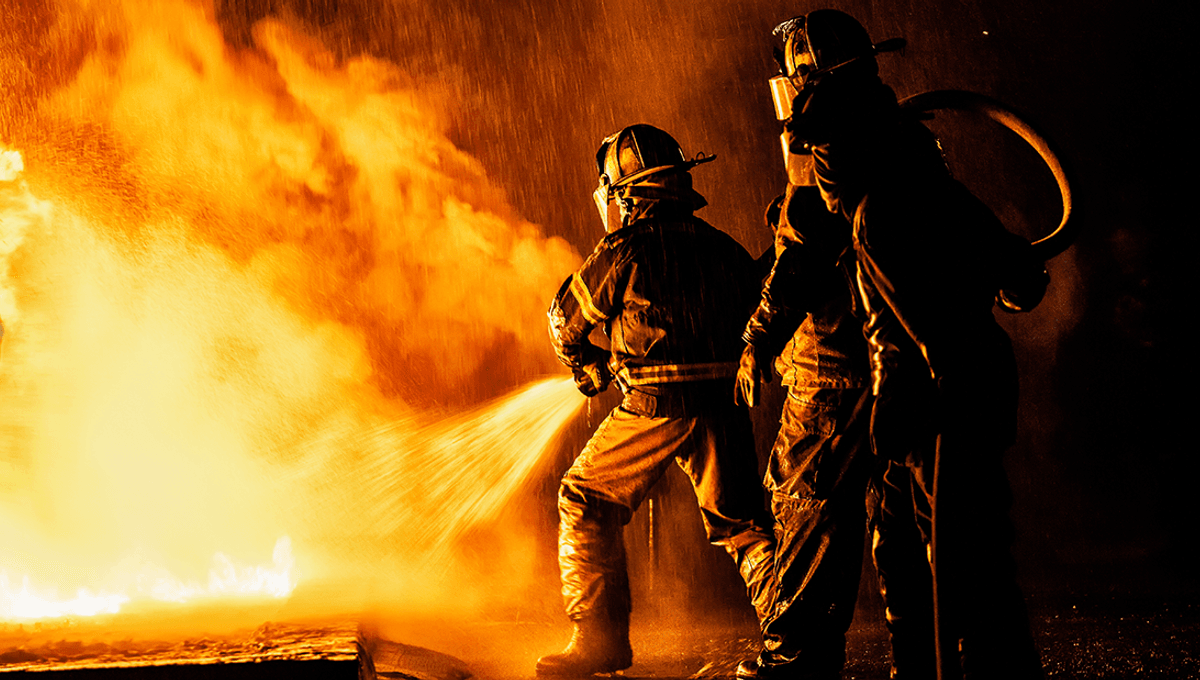
If you’ve ever had the misfortune to witness a fire or just watch Fireman Sam, you may have wondered whether the water fire brigades use to extinguish the flames is in any way different, or special, when compared to ordinary water.

Well, it is. Since the first fire brigade in 6 CE, fire brigades have had millennia to perfect their techniques. This is good, because the original Roman “fire brigade” – known as vigiles – would pass buckets of water down a line, as well using sponges, siphons, and brooms to tackle the fire. Though of course a great first step in the world of organized firefighting, imagine showing up to a modern fire with several buckets and a sponge like it’s bath time.

Advertisement

Since the early 1900s, firefighters have used foams to tackle fires, which have improved in the century since. Foam concentrate is added to the water, creating a foam that can flow over liquid surfaces – say a fuel – cooling the area and starving the fire of oxygen. Some foams will also form a vapor-sealing film on top of a fuel surface.


In the mid-1960s, fire brigades began to use wetting agents in order to make the water “wetter“. The chemical agents are “liquid concentrates which, when added to plain water in proper quantities, materially reduce the surface tension of plain water and increases its penetration and spreading ability,” according to the Underwriters Laboratories Inc. (UL) Directory. The result is sometimes called “wet water”, given its ability to seep into the target better than regular water.

Firefighters use a mix of foams and wetting agents in tackling fires, as well as emulsifiers, which mix with fuel sources and break it into small droplets, surrounded and extinguished by the water.

Deborah Bloomfield
Deborah Bloomfield

Related posts:

  1. Italian film brings circus freaks to Venice festival
  2. France says Mali must stick to election timetable
  3. Blinken meets Lopez Obrador to soothe thorny U.S.-Mexico relations
  4. What Would Happen To Humanity If All Microbes Suddenly Disappeared?

Source Link: Firefighters Sometimes Use "Wet Water" Rather Than Water To Put Out Fires

Filed Under: News

Primary Sidebar

  • IFLScience The Big Questions: Answering Some Of The Biggest Scientific Mysteries Of 2025
  • Astronomers Catch Incredible First Direct Images Of Objects Colliding In Another Star System
  • Billionaire Jared Isaacman Finally Confirmed As Head Of NASA, As Agency Faces Uncertain Future
  • Something Just Crashed Into The Moon – And Astronomers Captured The Whole Event
  • These “Living Rocks” Are Among The Oldest Surviving Life And Are Champion Carbon Dioxide Absorbers
  • Ambitious Iguana “Love Island” For Near-Extinct Reptiles Becomes Epic Conservation Success Story
  • Sol 1,540: NASA Releases Video Of Perseverance Rover’s Record-Breaking Drive On Mars
  • Why Carl Sagan Was Way Ahead Of His Time And The Legacy He Left Behind
  • Why Were Pompeii Victims All Wearing Thick Woolly Cloaks In August?
  • We May Finally Know What Causes These Bizarre Bright Blue Cosmic Flashes
  • What’s The Biggest Rock In The World?
  • There Is A Very Simple Test To See If You Have Aphantasia
  • Bringing Extinct Animals To Life: Is Artificial Intelligence Helping Or Harming Palaeoart?
  • This Brilliant Map Has 3D Models Of Nearly Every Single Building In The World – All 2.75 Billion Of Them
  • These Hognose Snakes Have The Most Dramatic Defense Technique You’ve Ever Seen
  • Titan, Saturn’s Biggest Moon, Might Not Have A Secret Ocean After All
  • The World’s Oldest Individual Animal Was Born In 1499 CE. In 2006, Humans Accidentally Killed It.
  • What Is Glaze Ice? The Strange (And Deadly) Frozen Phenomenon That Locks Plants Inside Icicles
  • Has Anyone Ever Actually Been Swallowed By A Whale?
  • First-Known Instance Of Bees Laying Eggs In Fossilized Tooth Sockets Discovered In 20,000-Year-Old Bones
  • Business
  • Health
  • News
  • Science
  • Technology
  • +1 718 874 1545
  • +91 78878 22626
  • [email protected]
Office Address
Prudour Pvt. Ltd. 420 Lexington Avenue Suite 300 New York City, NY 10170.

Powered by Prudour Network

Copyrights © 2025 · Medical Market Report. All Rights Reserved.

Go to mobile version