• Email Us: [email protected]
  • Contact Us: +1 718 874 1545
  • Skip to main content
  • Skip to primary sidebar

Medical Market Report

  • Home
  • All Reports
  • About Us
  • Contact Us

Pretty In Purple: Why Do Some Otters Have Purple Teeth And Bones? It’s All Down To Their Spiky Diets

September 12, 2025 by Deborah Bloomfield

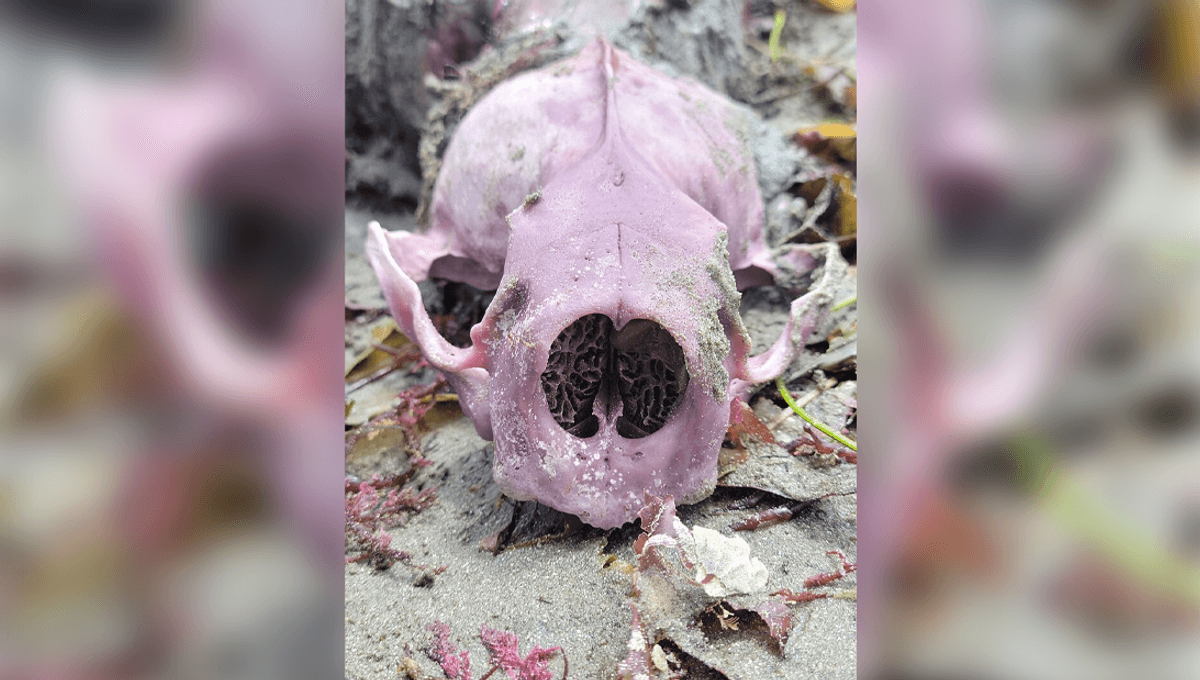
Sea otters are surprising creatures. They’re athletic, intelligent, and actually incredibly scandalous with disturbingly precise diets (don’t be fooled by all that fluffy hand holding). Another surprise they’ve been keeping from you? Sometimes their bones and teeth are purple.

The rest of this article is behind a paywall. Please sign in or subscribe to access the full content.

Not all sea otters have purple bones and teeth, but it isn’t all that uncommon. The purple coloration can be subtle or really quite pronounced, and the culprit behind this strange phenomenon? Sea urchins.

Purple urchins = purple otters

To a human, a sea urchin looks to be about the most exhausting snack ever. They’re covered in defensive spines that deter a lot of predators, but not sea otters.

Sea otters love munching on urchins, including the purple sea urchin Strongylocentrotus purpuratus. As its name would suggest, it’s very purple, and this is the key to the purple otter bone mystery.

Purple sea urchins contain echinochrome pigments, and when a sea otter swims about gorging itself on these urchins, they can uptake that pigment and it can show up quite dramatically in their teeth and bones. The degree of purple is dependent on how much that individual loved eating urchins, with more urchins resulting in a richer purple.

A 2013 study that looked at the California Academy of Science’s sea otter specimen collection – which is the largest in the world, by the way – found that purple discoloration (known as echinochrome staining) was more common in male specimens. They also saw that the staining could affect the whole tooth or skull, or just parts of it, giving rise to a groovy variety of purple-hued specimens.

Diets that make you change color

If you’re thinking this all sounds a bit made up, there are plenty of photos to support the idea. Furthermore, the idea that diet might change an animal’s appearance is something we see in humans, too.

Alpha- and beta-carotene are the pigments that make carrots so fabulously orange, and if you go to down on carrots daily and for a prolonged period of time, you too can turn a bit orange. It’s even got a name: carotenoderma, but please don’t try this at home (unlike some people in 2023 did, thinking it would give them a great tan – it didn’t).

And as for that other rumour about carrots – you know, the one about them giving you incredible vision – well, it turns out that was all just a bit of WWII propaganda.

Deborah Bloomfield
Deborah Bloomfield

Related posts:

  1. Catwalk shows return at hybrid London Fashion Week
  2. See The Mesmerizing Winners From Ocean Photographer Of The Year 2022
  3. 3D-Printed Hearts Are The Future Of Valve Replacement Surgery
  4. After A 100-Year Absence, Grizzly Bears Could Be Reintroduced To California. Here’s How

Source Link: Pretty In Purple: Why Do Some Otters Have Purple Teeth And Bones? It’s All Down To Their Spiky Diets

Filed Under: News

Primary Sidebar

  • US Just Killed NASA’s Mars Sample Return Mission – So What Happens Now?
  • Art Sleuths May Have Recovered Traces Of Da Vinci’s DNA From One Of His Drawings
  • Countries With The Most Narcissists Identified By 45,000-Person Study, And The Results Might Surprise You
  • World’s Oldest Poison Arrows Were Used By Hunters 60,000 Years Ago
  • The Real Reason You Shouldn’t Eat (Most) Raw Cookie Dough
  • Antarctic Scientists Have Just Moved The South Pole – Literally
  • “What We Have Is A Very Good Candidate”: Has The Ancestor Of Homo Sapiens Finally Been Found In Africa?
  • Europe’s Missing Ceratopsian Dinosaurs Have Been Found And They’re Quite Diverse
  • Why Don’t Snorers Wake Themselves Up?
  • Endangered “Northern Native Cat” Captured On Camera For The First Time In 80 Years At Australian Sanctuary
  • Watch 25 Years Of A Supernova Expanding Into Space Squeezed Into This 40-Second NASA Video
  • “Diet Stacking” Trend Could Be Seriously Bad For Your Health
  • Meet The Psychedelic Earth Tiger, A Funky Addition To “10 Species To Watch” In 2026
  • The Weird Mystery Of The “Einstein Desert” In The Hunt For Rogue Planets
  • NASA Astronaut Charles Duke Left A Touching Photograph And Message On The Moon In 1972
  • How Multilingual Are You? This New Language Calculator Lets You Find Out In A Minute
  • Europa’s Seabed Might Be Too Quiet For Life: “The Energy Just Doesn’t Seem To Be There”
  • Amoebae: The Microscopic Health Threat Lurking In Our Water Supplies. Are We Taking Them Seriously?
  • The Last Dogs In Antarctica Were Kicked Out In April 1994 By An International Treaty
  • Interstellar Comet 3I/ATLAS Snapped By NASA’s Europa Mission: “We’re Still Scratching Our Heads About Some Of The Things We’re Seeing”
  • Business
  • Health
  • News
  • Science
  • Technology
  • +1 718 874 1545
  • +91 78878 22626
  • [email protected]
Office Address
Prudour Pvt. Ltd. 420 Lexington Avenue Suite 300 New York City, NY 10170.

Powered by Prudour Network

Copyrights © 2026 · Medical Market Report. All Rights Reserved.

Go to mobile version