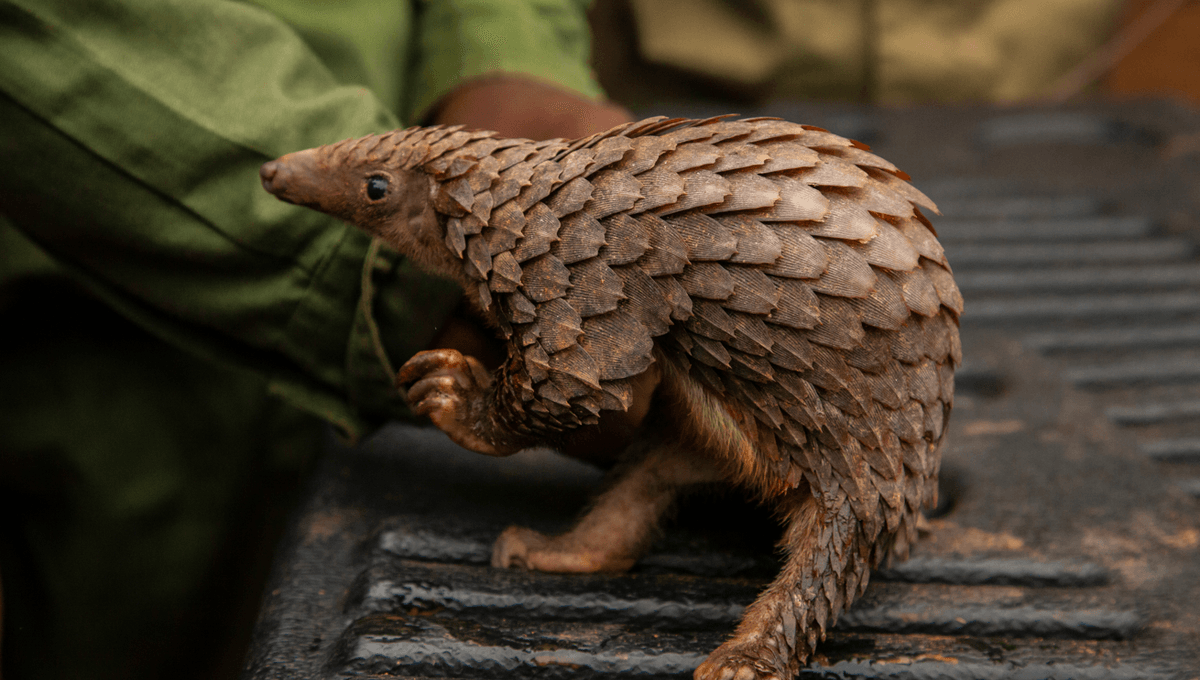
Small, scarce, and shy, the white-bellied pangolin has one of the highest number of chromosomes among all mammals: a total of 114 chromosomes. However, this is just the beginning of these animals’ bizarre genetic quirks.
Pangolins are a family of small, scale-covered mammals that includes eight species, four of which live in Asia and four in Africa.
In 2023, scientists from UCLA studied the genomes of three of these species – white-bellied, Chinese, and Sunda pangolins – and stumbled across what they called a true “scientific surprise”.
They found the white-bellied pangolin had 114 chromosomes, significantly more than any mammal except the Bolivian bamboo rat, which has 118.
However, it was only the females that had 114 chromosomes. The males have just 113 chromosomes, which is really strange since in almost all species, both sexes carry the same number.
“There’s nothing else like them on the planet,” Jen Tinsman, an evolutionary biologist at UCLA and co-author of the 2023 study, said in a statement.
Chromosomes are thread-like structures within a cell’s nucleus that package DNA. Coming in pairs, they compact the genome so it fits inside the cell while safeguarding the genetic instructions that are passed from one generation to the next.
Different species have different numbers of chromosomes: Homo sapiens typically have 23 pairs, chimpanzees have 24 pairs, dogs have 39 pairs, fruit flies have four pairs, and Tasmanian devils have seven pairs. The highest chromosome count of any animal is the Atlas blue butterfly, which has 229 pairs.
The number of chromosomes isn’t necessarily linked to a species’ size, intelligence, or complexity. Over evolutionary time, chromosomes can split or merge. Many of these fissions and fusions don’t affect survival; they just persist in the population by chance.
It isn’t quite clear why the white-bellied pangolin has such an unusual genome assembly, but a greater understanding of it could be very useful.
Pangolins are the world’s most trafficked animal. Smugglers prize their scales, believed by some cultures to hold medicinal value, and their meat, considered a delicacy in some regions. Despite all eight species being protected by international trade bans, the illegal market thrives, pushing these shy creatures closer to extinction.
By learning about their genetics, researchers and conservationists can work out where the pangolin products have come from, a tool that could help dismantle trafficking networks and protect the species.
“Understanding chromosomes and the structure of genes is important for conservation. It can determine how we manage populations – if you found big genetic differences between two groups, you might manage them differently,” noted Ryan Harrigan, an adjunct professor at the UCLA Center for Tropical Research and a co-author of the 2023 paper.

Source Link: This Cute Creature Has One Of The Largest Genomes Of Any Mammal, With 114 Chromosomes
