• Email Us: [email protected]
  • Contact Us: +1 718 874 1545
  • Skip to main content
  • Skip to primary sidebar

Medical Market Report

  • Home
  • All Reports
  • About Us
  • Contact Us

Newly Discovered Cell Structure Might Hold Key To Understanding Devastating Genetic Disorders

July 1, 2025 by Deborah Bloomfield

Imagine you open up the hood of your car and take a look inside. You see an engine, the battery, various fluid reservoirs; all the normal stuff… and then it catches your eye. An extra component, never noticed before – but evidently doing something as it chugs away in front of you.

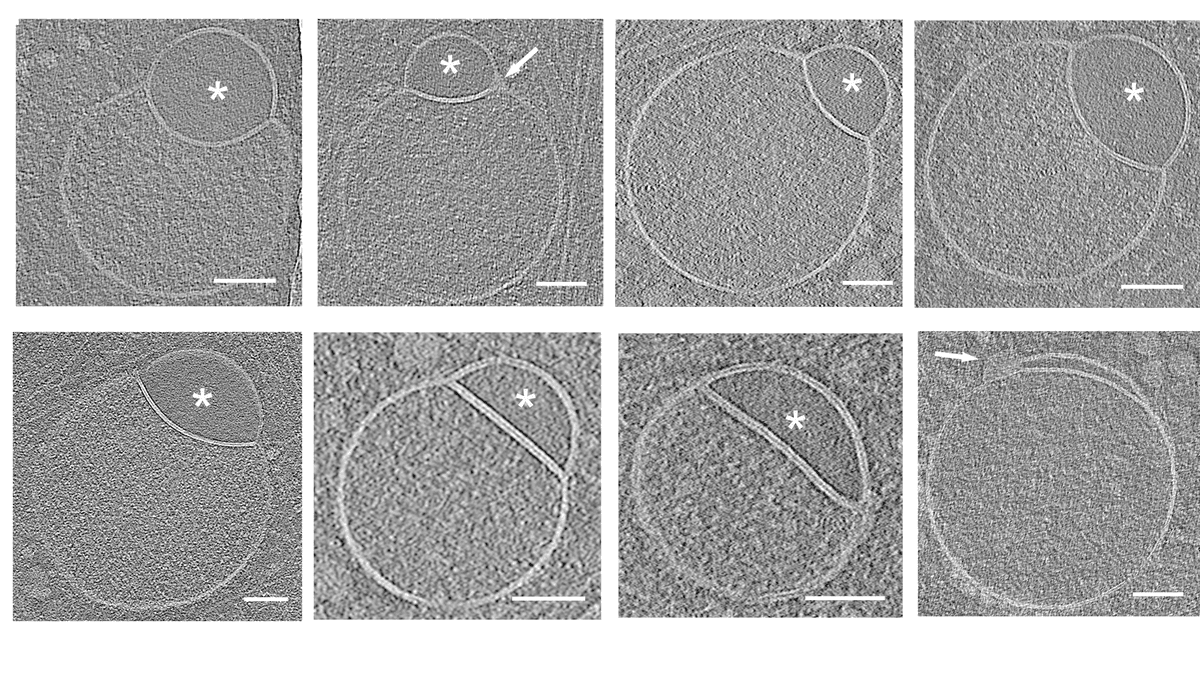
That’s basically what happened to a team of researchers from the University of Virginia School of Medicine and the National Institutes of Health recently – except on a minute scale. They’ve discovered a previously unknown organelle – that is, a specialized structure that performs some specific function – inside human cells. The team named it the “hemifusome”, and in a paper published just last month, they’ve explained what makes it so important.

“This is like discovering a new recycling center inside the cell,” said study author Seham Ebrahim, a researcher in UVA’s Department of Molecular Physiology and Biological Physics, in a statement. “We think the hemifusome helps manage how cells package and process material, and when this goes wrong, it may contribute to diseases that affect many systems in the body.”

It all comes down to vesicles – “like little delivery trucks inside the cell,” Ebrahim explained. These are the Swiss Army knife of the cell, acting variously as a mixing bowl for chemical reactions, a storage facility for food and enzymes, a disposal and recycling system for cellular debris, and a host of other functions. 

In amongst all this, the newly discovered hemifusome “is like a loading dock,” Ebrahim said, where the vesicles “connect and transfer cargo. It’s a step in the process we didn’t know existed.”

That extra step, however, might hold a key for better understanding certain genetic conditions, many of which stem from problems in how cells handle that “cargo”. With further research, the team hope to better understand precisely what the hemifusome’s role is within this system – as well as what happens when things go wrong.

Figure that out, and the next step may well be a new approach to treatments for a whole range of serious genetic disorders.

“This is just the beginning,” Ebrahim said. “Now that we know hemifusomes exist, we can start asking how they behave in healthy cells and what happens when things go wrong. That could lead us to new strategies for treating complex genetic diseases.”

“We’re just beginning to understand how this new organelle fits into the bigger picture of cell health and disease,” she continued. “It’s exciting because finding something truly new inside cells is rare – and it gives us a whole new path to explore.”

The study is published in the journal Nature Communications.

Deborah Bloomfield
Deborah Bloomfield

Related posts:

  1. Britain’s Raab, in Qatar, says need to engage with Taliban on Afghanistan
  2. First Week Of July Was The Hottest On Record And El Niño Will Make This Worse
  3. Why Do Animals Have Different Pupil Shapes?
  4. Beneath The Middle East, An Ancient Seabed Is Splitting From The Continental Plates

Source Link: Newly Discovered Cell Structure Might Hold Key To Understanding Devastating Genetic Disorders

Filed Under: News

Primary Sidebar

  • US Just Killed NASA’s Mars Sample Return Mission – So What Happens Now?
  • Art Sleuths May Have Recovered Traces Of Da Vinci’s DNA From One Of His Drawings
  • Countries With The Most Narcissists Identified By 45,000-Person Study, And The Results Might Surprise You
  • World’s Oldest Poison Arrows Were Used By Hunters 60,000 Years Ago
  • The Real Reason You Shouldn’t Eat (Most) Raw Cookie Dough
  • Antarctic Scientists Have Just Moved The South Pole – Literally
  • “What We Have Is A Very Good Candidate”: Has The Ancestor Of Homo Sapiens Finally Been Found In Africa?
  • Europe’s Missing Ceratopsian Dinosaurs Have Been Found And They’re Quite Diverse
  • Why Don’t Snorers Wake Themselves Up?
  • Endangered “Northern Native Cat” Captured On Camera For The First Time In 80 Years At Australian Sanctuary
  • Watch 25 Years Of A Supernova Expanding Into Space Squeezed Into This 40-Second NASA Video
  • “Diet Stacking” Trend Could Be Seriously Bad For Your Health
  • Meet The Psychedelic Earth Tiger, A Funky Addition To “10 Species To Watch” In 2026
  • The Weird Mystery Of The “Einstein Desert” In The Hunt For Rogue Planets
  • NASA Astronaut Charles Duke Left A Touching Photograph And Message On The Moon In 1972
  • How Multilingual Are You? This New Language Calculator Lets You Find Out In A Minute
  • Europa’s Seabed Might Be Too Quiet For Life: “The Energy Just Doesn’t Seem To Be There”
  • Amoebae: The Microscopic Health Threat Lurking In Our Water Supplies. Are We Taking Them Seriously?
  • The Last Dogs In Antarctica Were Kicked Out In April 1994 By An International Treaty
  • Interstellar Comet 3I/ATLAS Snapped By NASA’s Europa Mission: “We’re Still Scratching Our Heads About Some Of The Things We’re Seeing”
  • Business
  • Health
  • News
  • Science
  • Technology
  • +1 718 874 1545
  • +91 78878 22626
  • [email protected]
Office Address
Prudour Pvt. Ltd. 420 Lexington Avenue Suite 300 New York City, NY 10170.

Powered by Prudour Network

Copyrights © 2026 · Medical Market Report. All Rights Reserved.

Go to mobile version